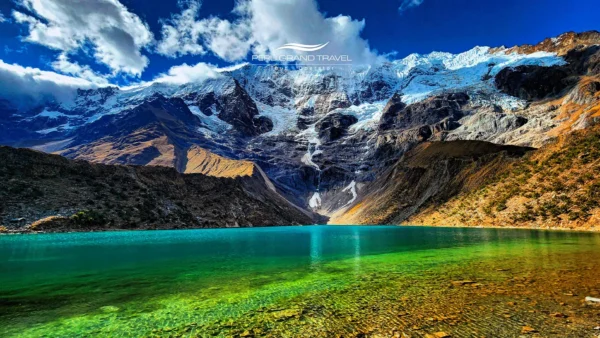
Imagine walking along a trail where the air has a faint salty touch, yet you are thousands of feet above sea level, surrounded by the jagged, snow-capped peaks of the Andes. Suddenly, the mountainside opens up to reveal a shimmering white desert: thousands of salt ponds that look like spilled snow against the reddish earth. Shortly after, you encounter gigantic amphitheaters—perfect circles carved into the ground that defy both logic and time.
Table of Contents
This is the essence of visiting Maras and Moray. As someone who has traveled these paths countless times, I can tell you: no matter how many photos you see, the actual impact of standing before these wonders is indescribable. I’ve felt the sun warming my face while watching saltwater flow silently through ancestral channels, and I’ve seen how the stone walls of Moray keep alive the genius of a civilization that mastered nature with poetry.
If you are planning your journey, this guide is not just informative; it is an invitation to understand why these two destinations are mandatory stops on the best Peru tours. Shall we explore every detail together?
Why visit the salt mines and the terraces? | The Inca Genius

When we think of major tours in Peru, traditional ruins always come to mind. But why do Maras and Moray capture the attention of scientists, chefs, and photographers from all over the world? The answer is simple: Science and Survival.
- The Visual Contrast: Visiting these two sites on the same day offers an incomparable visual impact. In the morning, you see the perfect green circles of Moray; in the afternoon, the thousands of brilliant white pools of Maras reflecting the sun.
- Living History: Unlike Machu Picchu, which was abandoned, the Maras Salt Mines are active. Local families continue to harvest salt the same way their ancestors did millennia ago. You aren’t just looking at history; you are witnessing the continuity of life.
To understand how this trip fits perfectly into your Andean journey, be sure to read our definitive guide on Things to do in the Sacred Valley.
DID YOU KNOW?
Andean Pink Salt: The salt harvested in Maras is not just ordinary table salt. It is rich in minerals like iron, magnesium, and zinc, giving it a subtle pink hue and a flavor revered by the top chefs in Latin America.
What are Maras and Moray? | The Names and Their Meanings
Before we walk through these sites, we need to understand their purposes.
What is Moray, Peru?
- The Meaning: It is believed that the word “Moray” is related to the corn harvest or the dehydration of tubers (Moraya).
- The Laboratory: Moray looks like a Greek amphitheater built by giants. They are enormous circular depressions excavated into the earth, with concentric terraces supported by stone walls. What makes Moray fascinating is that the temperature difference between the top and the bottom of the ring can reach an impressive 27°F (15°C). The Incas used this as an open-air greenhouse to acclimate seeds from different altitudes of the empire.
Maras Moray Salineras
- The Origin: Maras is a small colonial town near the salt mines. Super-salty water emerges from a subterranean spring (Qoripujio) and is channeled into about 3,000 ponds. When the water evaporates under the strong Andean sun, pure salt crystals remain.
Where is it and how to get to Maras and Moray, Peru?
Logistics in the Sacred Valley are crucial. You want to avoid the crowds and arrive when the light is best.
- Location: Both sites are situated about 31 miles (50 kilometers) northwest of the city of Cusco, on the plateau above the Sacred Valley. They are relatively close to each other (only about 4 miles apart in a straight line).
- How to Get There:
- The Classic Tour: The most efficient way. Our expert guides pick you up from your hotel in Cusco in the morning. The drive to the top of the valley offers breathtaking views of the snow-capped Chicon and Verónica peaks. Explore the full itinerary in our Maras and Moray Full Day Tour.
ADVICE GRAND
Order Matters: Ask your guide to visit Moray first and the Maras Salt Mines second. The strong late-morning sun evaporates the moisture over the salt ponds, making them sparkle incredibly for your photos!

Beyond the Stones: Flavors and Festivities
A destination is not just what you see, but what you taste and feel.
The Taste of the Mountain | Food
When visiting the town of Maras and its surroundings, gastronomy provides a sense of comfort.
- Choclo con Queso: You cannot pass through the Sacred Valley without stopping at the roadside to buy giant boiled corn, served with a thick slice of fresh, salty Andean cheese.
- Chocolate with Maras Salt: This is the ultimate souvenir. Many local artisans blend Amazonian cacao with pink salt crystals from Maras. It is the perfect balance of sweet and salty.
Maras, Moray, and Chinchero | The Cultural Route
Frequently, a visit to Maras and Moray is combined with the charming village of Chinchero.
- The Textile Tradition: In Chinchero, you will see women with long braids and red hats dyeing alpaca wool using ancient techniques, such as using cochineal and lemon juice. It is an explosion of color and a tribute to the living culture of the Andes.
What kind of travel experience is the Maras and Moray Tour?
The beauty of this destination is its versatility. How do you wish to experience the Andes?
The Relaxing and Historical Experience
If you appreciate comfort and scholarship, the classic private van tour is perfect. You descend to the ruins with ease, listen to the deep history of the Inca laboratories with an expert guide, and admire the landscape without breaking a sweat.
Which tours include Maras and Moray, Peru?
If you are planning your logistics, there are several ways to fit these destinations into your itinerary. At Perú Grand Travel, we design experiences that make the most of every minute.
- Maras and Moray Full Day: A tour focused exclusively on them, ideal for those who want to take their time with photography. You can check the details of this Maras y Moray full day tour.
- Maras, Moray, and Chinchero: The perfect triad. You experience the salt, the laboratories, and the ancestral textile art of Chinchero in a single day.
- Sacred Valley Connection: An excellent option for those heading toward Ollantaytambo to catch the train to Machu Picchu.
When choosing your Peru tours, consider that Maras and Moray are fundamental complements to understanding the complexity of the Inca Empire before arriving at the sacred citadel.
Adrenaline in the Valley | ATVs and Horseback Riding
If dust and wind are part of your definition of luxury, this region was made for you.
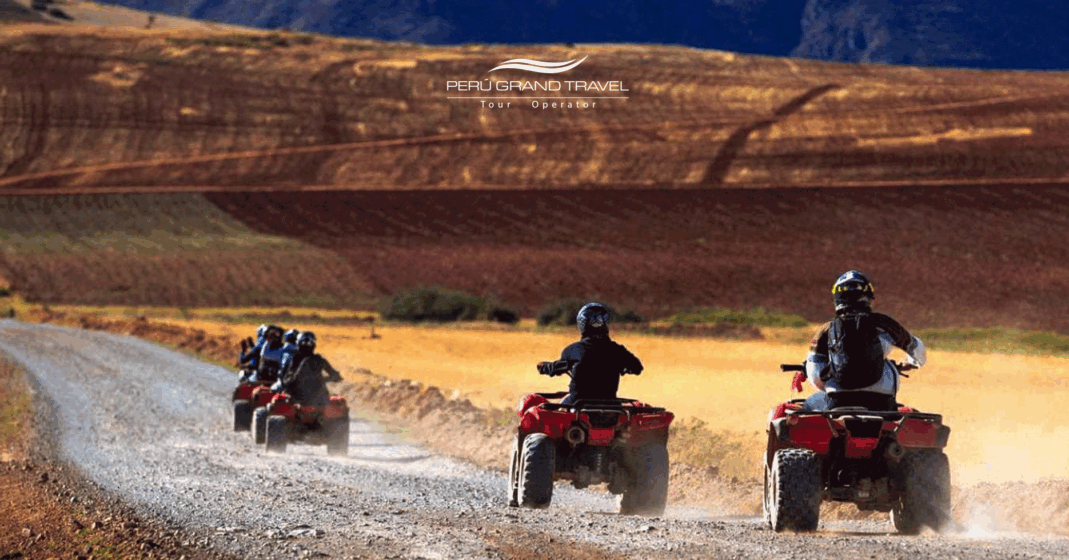
- ATVs in Maras and Moray: The plateau surrounding these sites is vast, and the dirt roads are perfect for riding. Racing through barley fields with glacial peaks in the background guarantees an adrenaline rush. This is the top choice for young couples and groups of friends. Discover the adventure in our Maras ATV Tour.
- Horseback Riding: For a more noble approach, exploring the area on horseback (Peruvian Paso Horses) offers a silent and majestic connection with the rural environment.
Destination Data: How to Plan Your Visit
The geography here demands respect and preparation. Here is the crucial information to ensure your visit to Maras and Moray is flawless.
Altitude, Weather, and What to Wear
- Maras Moray Altitude: Both sites are at approximately 11,500 feet (3,500 meters) above sea level, slightly higher than the city of Cusco.
- Weather: The air is dry, and the sun is unforgiving due to the altitude. The wind can be biting, especially on the Moray plateau.
| Required Item | Practical Reason |
| Windbreaker Jacket | The wind blows cold high on the plateau. |
| Sunglasses & Sunscreen | The sun’s reflection on the white salt of Maras is blinding. |
| Comfortable Sneakers or Boots | Walking involves uneven ground and steep descents in Moray. |
| Water & Coca Leaves | The altitude requires continuous hydration and acclimation. |
| Cash (Soles) | To buy pink salt or handcrafted souvenirs from the locals. |
How many days are needed?
A visit to Maras and Moray is a classic Half-Day Tour (about 5 to 6 hours). It leaves your afternoon free to explore the city or dine at a fine restaurant. It can be comfortably included in any itinerary, even the shortest ones. Read more about quick tour options in our article on Half-Day Tours in Cusco.
If you are unsure how to fit this into your total days in Peru, read our guide on How many days to stay in Peru.

Comparison: Maras and Moray vs. Pisac and Ollantaytambo
Why should you add Maras and Moray to your itinerary if you already plan to see other ruins in the Sacred Valley?
| Feature | Maras and Moray | Pisac and Ollantaytambo |
| Visit Focus | Agricultural Science and Geological Nature | Military Architecture, Citadels, and Urban Temples |
| Time Required | Half-Day (Quick and direct) | Full Day (Extensive with many stairs) |
| Crowds | Generally quieter (wide-open space) | Can be very crowded (classic train route) |
| The Vibe | Contemplative, Photographic, Off-Road | Monumental, Historical, Urban |
Host’s Conclusion: One does not replace the other. They showcase completely different sides of Inca intelligence.
Frequently Asked Questions | FAQ
As your travel advisor, I’ve anticipated the questions I receive most often.
1. What are Maras and Moray?
Moray is an Inca archaeological complex of circular terraces used as an agricultural laboratory. Maras is a hillside with over 3,000 shallow ponds fed by a saltwater spring that is evaporated to harvest pure salt.
2. Can I walk among the salt ponds in Maras?
Since 2019, regulations have changed. Tourists can no longer walk between the crystallization ponds to prevent salt contamination. The view and photos are now taken from a specially built viewpoint above the salt pans, which is still an incredible sight.
3. Is the entrance to Maras and Moray included in the Tourist Ticket (Boleto Turístico)?
The answer is twofold: Moray is included in the Cusco Tourist Ticket (either the Partial Sacred Valley or the Integral ticket). The Maras Salt Mines, however, are managed by the local community and require a separate entry fee (about 10 to 15 soles, paid at the entrance in cash). Ensure you have the correct documents and tickets when traveling; find more details in our guide on Documentation for Traveling to Peru.
4. How can I avoid altitude sickness when visiting Moray?
At 11,500 feet, you may feel short of breath. My advice is: take this tour on your second or third day in Cusco. Most of the walking in Moray consists of gentle descents or walking along the rim of the terraces—no massive steps like at Machu Picchu.
5. Is it worth doing a Maras and Moray tour from Cusco if I have limited time?
Absolutely. Since it is a half-day tour, it’s the perfect excursion for your arrival day (after a good rest) or the morning of the day you depart in the late afternoon.
6. When is the best time for photography?
For the Maras Salt Mines, midday or early afternoon is best to see the sun reflecting off the salt. For Moray, the morning light creates soft shadows that highlight the depth of the circles.
7. Is it very difficult to walk in Moray?
The trails are well-marked, but there are inclines and descents. The biggest challenge is the altitude. Go at your own pace. The goal isn’t to arrive first, but to feel the place.
IMPORTANT FACT
Maras salt is harvested manually only during the dry season. During the rains, the ponds fill with brown water, and the crystallization process is interrupted, making the landscape look completely different (yet still impressive).
The Laboratories of the Earth
My friend, travel is not just about the luxury of hotels, but about the luxury of knowledge. When you find yourself at the top of Moray, looking down into that deep green amphitheater, you realize the Incas were not just warriors; they were botanists, astronomers, and geniuses of adaptation. And when the brilliance of Maras dazzles your eyes un
der the midday sun, you understand the perfect symbiosis between the Andean people and the mountain water.
These are not mass tourism destinations. These are the details that enrich the soul. At Perú Grand Travel, we don’t just offer transportation; we offer context. Our guides know why the terraces heat up and how the salt gets its pinkish hue. We plan the timing so the light is always on your side.
Are you ready to decipher the science of the Andes?
Contact us today, and let’s design an itinerary that gets your heart racing—whether in a comfortable van or revving an ATV through the dust of the plateau.
And remember, your adventure can be even deeper if you are traveling with senior parents who love culture; we adapt all these tours for them. Discover how in our guide on Peru for Seniors.

Experiences

Machu Picchu Challenge 8D/7N
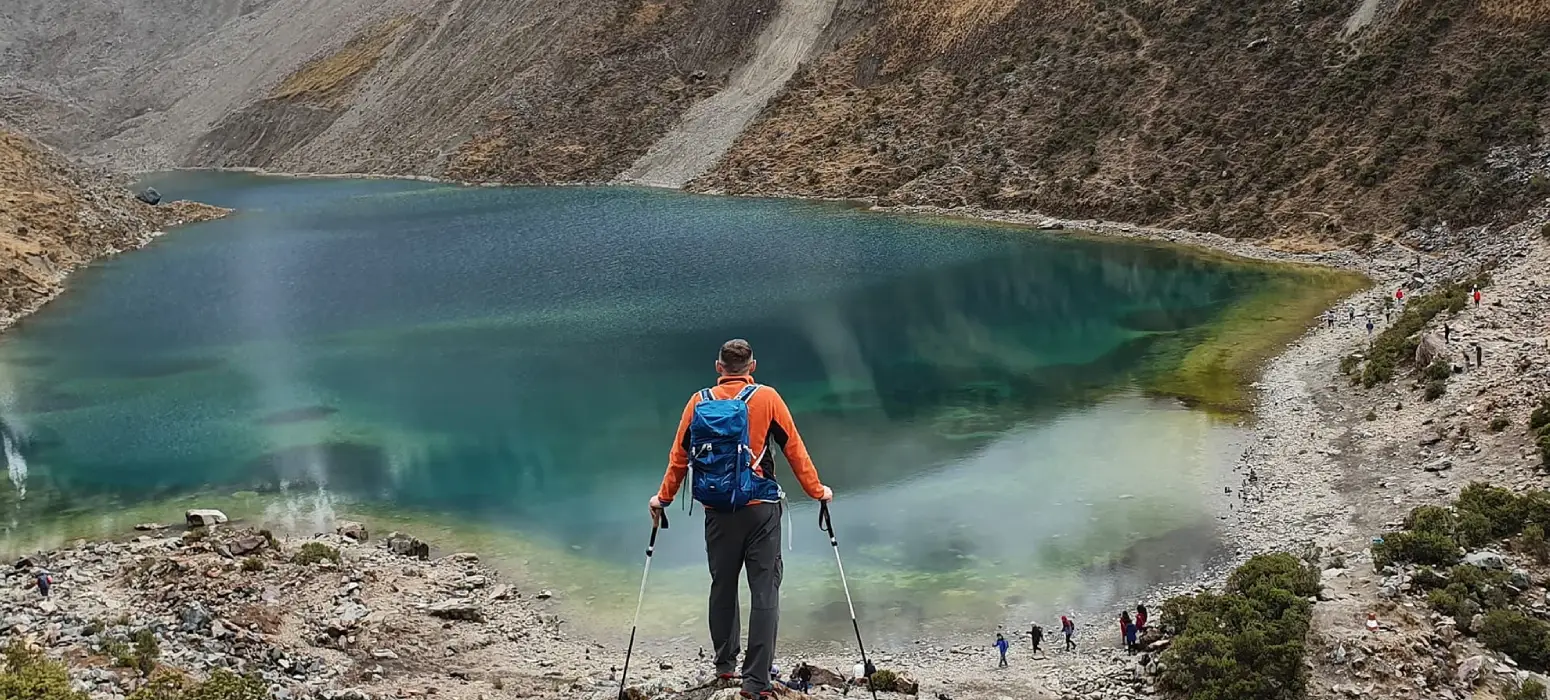
Cusco, Sacred Valley Humantay Lagoon, Rainbow Mountain & Machu Picchu.
View Tour
Colonial Lima and Sacred land of the Incas 7D/6N
Lima, Cusco, Sacred Valley & Machu Picchu.
View Tour