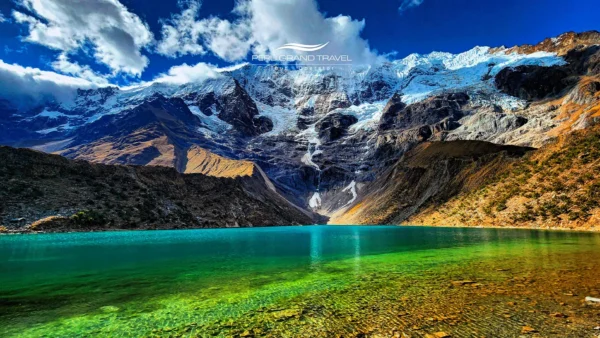
The Sacred Valley Peru, as well as Cusco itself, are some of the most popular places for tourists and travellers to visit in Peru. These 2 adjacent valleys are very conveniently located near Machu Picchu, which is probably why most people come to Peru in the first place! It is important to know, however, that this should really not be the only reason you pass through this wonderful valley in the Andes.
Table of Contents
The reasons to visit the Sacred Valley, Cusco Peru, are as vast as the Andean plains where the valley is located. With original Inca stone streets, and being the gateway to some breathtaking hikes, authentic traditional handicrafts. You can gaze in wonder at ancient ruins or dive headfirst into Inca history and see how the local Quechua communities still live traditionally, even today. We are only scratching the surface when it comes to things to do in the Sacred Valley. If you’re not exactly sure what a visit to the Sacred Valley entails or even where to visit. Our ultimate Sacred Valley travel guide has got you covered! Read on for more essential information about this magical valley in Peru!
The Sacred Valley is a beautiful region, approximately an hour drive from Cusco. Peru’s Sacred Valley is also the gateway to Machu Picchu. Make sure you visit the stunning archaeological sites of Pisac, Ollantaytambo, and Chinchero on a Sacred Valley tour from Cusco and find out exactly what this valley is all about!

Sacred Valley Inca Sites
The Inca Valley in Peru is most famous for its incredible Inca ruins. Here is a breakdown of each site you can visit.
Pisaq
The best Sacred Valley tours will generally pass through the quaint town of Pisaq. The Pisaq archaeological site guards the southern entrance to the Sacred Valley. Very little is known for sure about the site, including when and why it was built. The Killke culture occupied Pisac in the Late Intermediate Period, from 900 – 1200 AD. Ceramics found during the excavation and during the expansion of the Incas in the 1400s, Pachacutec the ninth Inca king, ordered the site’s construction. Pisac was an important centre for agriculture, trading, and a religious site during the Inca Empire’s height. The Incas built a large Pisac complex, including temples, farming terraces, storage buildings, and homes for the nobility.
Pisac is located at the intersection of the Sacred Valley of the Incas, the Amazon Rainforest, and the South of Cusco. Due to its strategic location, Pisac was also an important military centre, as it served to control the neighbouring regions. One theory is that it was built by Inca ruler Pachacutec to commemorate his victory over the Cuyos people. Another possibility is that Pisac was constructed to protect Cusco from attacks by tribes from the Antis nation. Regardless of why it was built, there’s no doubt that the Pisaq ruins occupy a strategic location. Perched high on a mountain ridge above the village of Pisaq, there’s a clear view of the surrounding valley. The ancient city is also protected by a plunging gorge. One of the things Pisaq is most famous for is its magnificent terraces that reach as far as the eye can see. Q’alla Q’asa is the highest point of the archaeological site, and although the Incas may not have had top-of-the-line construction techniques, it still shows some impressive building techniques. Most of the buildings are built onto the side of a rocky cliff, making the most of the few areas of flat land and blending in nicely with the surroundings.

Ollantaytambo
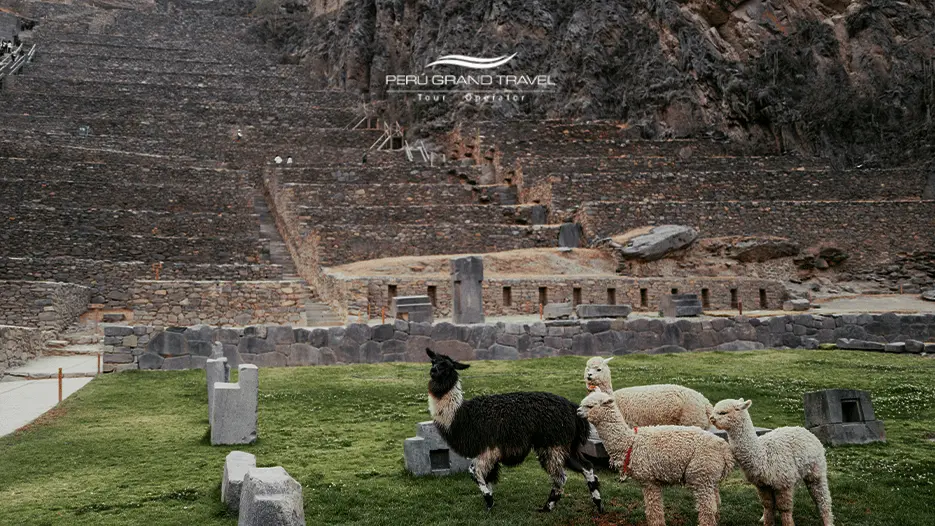
Many people want to know how to visit the Sacred Valley from Cusco to catch the train to Machu Picchu. However, to just see the train station would be a travesty. Ollantaytambo is home to some of the most beautiful mountain scenery in Peru, and some of the most extensive and fascinating Inca ruins you’ll find anywhere in the country. Ollantaytambo was an important Incan city in its time, and the royal estate of the Incan Emperor Pachacutec. Upon the arrival of the Spanish, it was the site of the Battle of Ollantaytambo in 1537, led by the Inca resistance leader Manco Inca against the conquistador Hernando Pizarro. Today, Ollantaytambo is one of the most important destinations in the Sacred Valley. The Sacred Valley ruins at Ollantaytambo are some of the most visited in the Sacred Valley of the Incas.
This traditional village has picturesque cobblestone streets lined with Inca canals that still flow with water. Walking along the narrow alleyways has a way of transporting you back in time, when this was not only a strategic centre, but a ceremonial hub of the Incas. Offering a rich history and the absolute sheer beauty of the Urubamba River Valley, there are endless things to do in Ollantaytambo, Peru. For a geographically small area, Ollantaytambo boasts both Pre-Inca and Inca ruins, superb hiking routes, lesser-visited ruins, and ancient Peruvian culture among the mighty snow-capped mountains. This is the perfect inclusion for the best Sacred Valley tours.
Chinchero
One of the lesser-visited Sacred Valley attractions is Chinchero. This was the royal estate of the tenth Inca leader, Topa Yupanqui, who was the son of Pachacutec. He built this estate during his reign in the late 1400s. Most of the buildings have either been lost or incorporated into the church or other structures; all that’s really left are the terraces. But what terraces they are! They are in excellent condition and are overlooking a sharp ravine. In the near distance, the mountains of the Sacred Valley Peru, rise, and beyond them stand the high peaks. In addition to the terraces, Chinchero has three sets of large wak’a, or shrines carved in large rock outcrops. It is a huge split rock with each section as large as a house.
The ancient town of Chinchero comes alive on a Sunday when it is market day. This local market is one of the most authentic traditional markets in The Sacred Valley, with plenty of local women in their traditional dress, food, and drink. Although you can buy authentic souvenirs, this market is not just for tourists. Many stalls sold fresh fruit & vegetables, bread, and cheese for the folks living in Chinchero and the surrounding villages. The food consists of local delicacies such as fried trout, chilli relleno, chicha, the fermented corn beer, scooped from a bucket. A popular variation of chicha is called Frutillada. It is made with strawberries in it, making it bright pink.
Hike up To Pinkuylluna Ruins
Your best Sacred valley tours, Pinkuylluna on the way to Ollantaytambo Blink and you may miss them ! Just before the entrance to Ollantaytambo town, you can see the archaeological site of Pinkuylluna up on the hill to the right. The ruins of Pinkuylluna are completely free to enter. However, you do need an uphill hike to reach them! Once you reach the top of these Sacred Valley ruins, you will have a stunning panoramic view of the Sacred Valley of the Incas. You can also admire the surrounding mountains and the ruins of Ollantaytambo. This option is definitely for the adventurous-minded traveller, and is so well worth the effort to get up there!
Moray
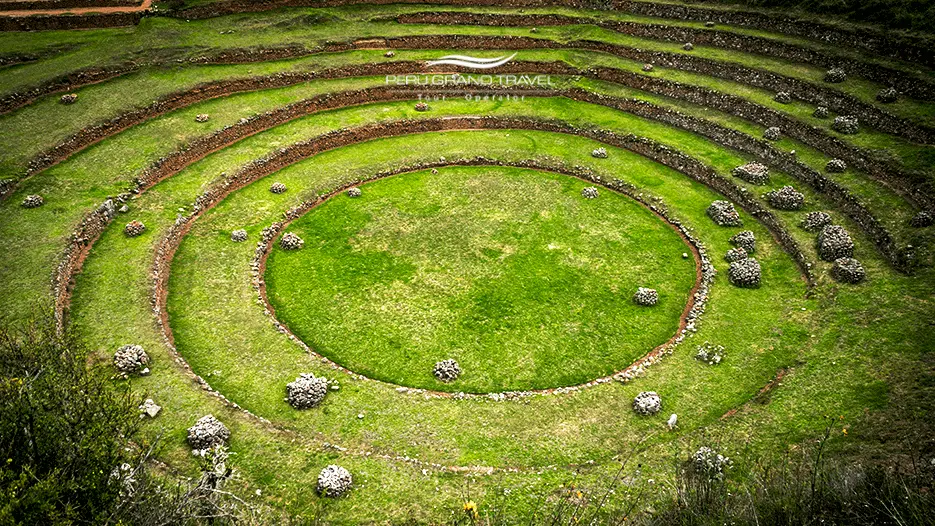
The Sacred Valley, Cusco Peru, is also the home of the circular ruins of Moray, a surreal sight in the valley. It is composed of three groups of circular terraces (“muyus” in Quechua) that descend 490 feet (150 meters) from the highest terrace to the lowest. Each circle has 12 levels of terraces, with the largest depression having a diameter of over 180 meters. Surrounded by the towering Andes mountains, looking into the depths of these man-made craters will fill you with awe. Believed by archaeologists to be agricultural terraces, Moray consists of layered terraces, and each one has a different temperature. This helped the Incas to grow certain crops that would not usually grow at these elevations. There is also evidence to suggest that Moray was an Inca Ceremonial Centre. Locals from the nearby communities tell stories that date back to Inca times, of celebrations and ceremonies being held at Moray. Some people have even suggested that Moray was an alien landing site! The Moray ruins invite you to delve into the minds of ancient people to try and decipher why this location had so much meaning to the Inca culture and why they put so much effort into shaping the landscape in this way.
Maras Salt Pans
The best Sacred Valley tours include the Maras Salt Mines. There are more than 6,000 salt ponds carved into the ground by the Incas. These pools have been in operation for over 500 years in the middle of the Qori Pujio mountain slopes, in the Sacred Valley of the Incas, Peru. From a distance, these white ponds resemble a layer of snow. This unparalleled view of the pools shows the various shades of white or earthy brown. The precious Peruvian pink Maras salt is one of the treasures that ancient ancestral civilizations have left us. Although the salt flats themselves were created by humans, the water that is channelled into these pools comes from a natural underground spring. This practice has been passed down through the generations, and local people continue to practise the traditional solar evaporation farming method just as their ancestors once did. The salt pools allow the natural spring water to enter these salt puddles, and then the local people wait until it evaporates naturally in the sun. This is one of the most unique local experiences in the Sacred Valley. The salt extracted from Maras has a distinct flavour and is nutrient-rich with low sodium levels. It makes a great souvenir of the Sacred Valley Peru!
The Weaving Communities of Chinchero
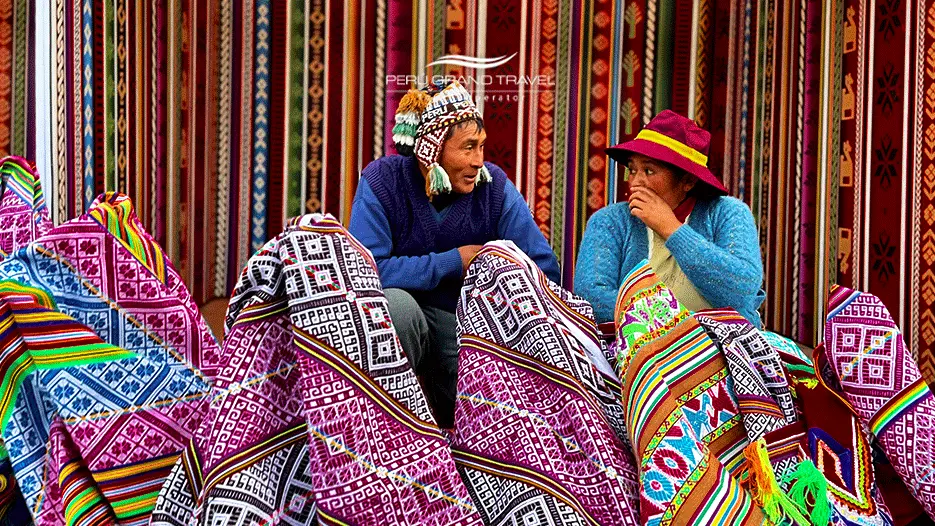
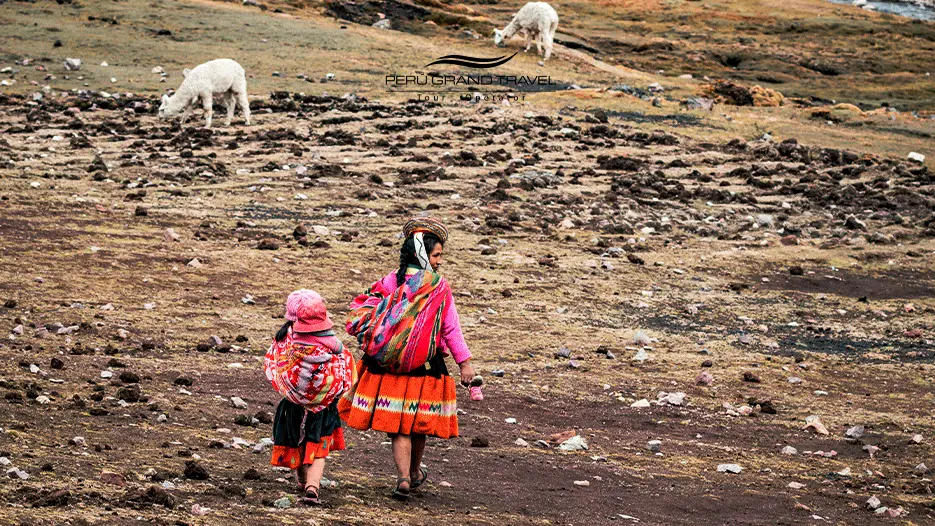
It is a wonderful plan to stop and visit a weaving community for more local experiences in the Sacred Valley. The village is famous for its traditional dress and the ancient weaving techniques that are still in use today. The women artisans of Chinchero are famous in the Sacred Valley for their exquisite textile making. A visit here offers a glimpse into things like how the white, brown, and black shades of alpaca wool are dyed into whatever color you want, using all-natural plant-based dyes!

How To Get To the Sacred Valley
You can visit the spectacular Sacred Valley attractions with Peru Grand Travel. Notable stops along the way: Saqsayhuaman, Qenqo, Puka Pukara, Tambomachay, and the lookout of Corao. Sacred Valley tours from Cusco can be arranged any day of the week! I would recommend tying on a Sacred Valley tour to your Machu Picchu visit so that you are not retracing your steps.
FAQS
When is the best time to visit the Sacred Valley?
The best time to visit the Sacred Valley is during Peru’s dry season between May and September. During this time of the year, you will generally experience warm sunny days and blue skies. However, it’s also winter in Peru, so it does get chilly in the evenings. This also coincides with peak hiking season. To avoid the crowds, we recommend visiting in either May or September.
Is the Sacred Valley worth visiting?
Absolutely! You have to pass through the Sacred Valley to get from Cusco to Machu Picchu anyway, so it is absolutely worth it to explore. The best Sacred Valley tours include incredible ruins in the Sacred Valley, like Moray, Ollantaytambo, and Pisac. There are also great adventure activities like ziplining, rafting, and hiking if you want something more active. Also, cultural experiences like cooking classes, weaving demonstrations, or a Pachamama ceremony. Some of the best Sacred Valley attractions in Peru are found here!
What is the tourist ticket? What sites in the Sacred Valley can I use it for?
The tourist ticket (or boleto turistico as it’s called in Spanish) is an official entrance ticket which gives you access to a variety of museums and Inca ruins in Cusco and the Sacred Valley. The Full Ticket is valid for 10 days and includes entry to 16 attractions. including the archaeological ruins in Pisac, Ollantaytambo, Moray, and Chinchero in the Sacred Valley. Please note that the tourist ticket does not include entry to the Maras Salt Mines or Machu Picchu. The best advice we can give in our Sacred Valley travel guide is to check the inclusions in your package!.
How much time should I spend in The Sacred Valley?
We recommend having at least a full day to visit the Sacred Valley. While one full day is enough for standard touring. People, especially nature lovers, love their hotel so much that they usually wish they had more time to just relax and just enjoy the surroundings, or take part in local experiences in the Sacred Valley. For people who prefer cities, a one-day tour of the valley is usually enough.
How far is the Sacred Valley from Cusco?
This depends on where in the Sacred Valley. Here is a summary:
Cusco to Pisac is 34 km / 20 miles (50 minutes).
Cusco to Urubamba is 53 km / 32 miles (1 hour and 20 minutes).
Cusco to Ollantaytambo is 61 km /37 miles (1 hour and 30 minutes).

Experiences

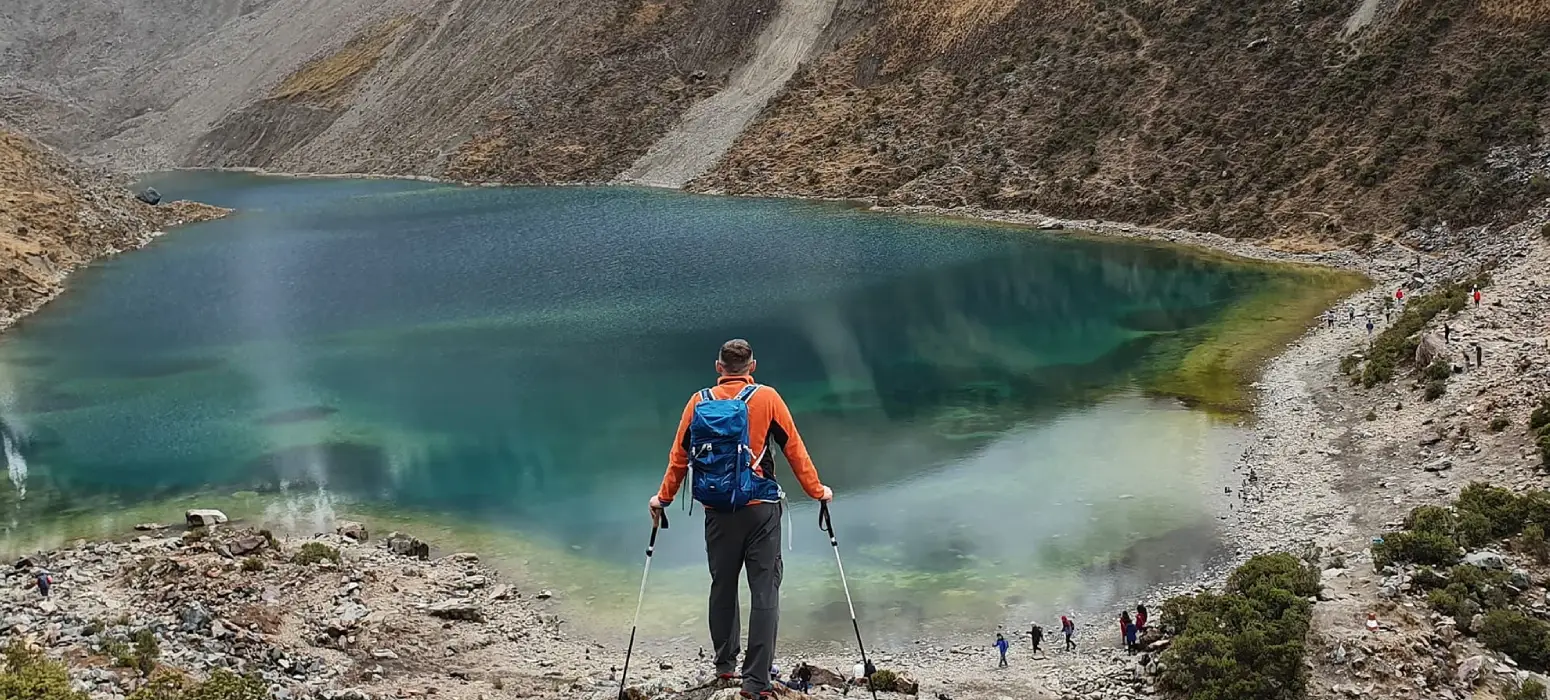
Machu Picchu Challenge 8D/7N
Cusco, Sacred Valley Humantay Lagoon, Rainbow Mountain & Machu Picchu.
View Tour
Colonial Lima and Sacred land of the Incas 7D/6N
Lima, Cusco, Sacred Valley & Machu Picchu.
View Tour