

I still remember the first time I stepped onto the ancient limestone plaza of Chinchero. The air was thin, smelling of eucalyptus and the faint, sweet scent of boiling cochineal. As I watched a master weaver—her hands weathered like the mountains she calls home—pass a bone needle through vibrant threads, I realized that I wasn’t looking at a simple product. I was witnessing a living prayer.
Table of Contents
The art of the Chinchero communities is not just about aesthetics; it is a profound dialogue between the Incan past and the modern traveler. If you are tired of the mass-produced, neon-colored alpaca blends found in standard markets, Chinchero is where your soul will find rest. Here, every thread tells a lineage, and every brushstroke honors a deity.
As your “Anfitrión Cosmopolita,” I want to take you beyond the surface. We aren’t just talking about shopping; we are talking about the privilege of owning a piece of a culture that refuses to fade. Let’s explore why the art of the Chinchero communities remains the gold standard of Peruvian craftsmanship.
Why are souvenirs from the art of the Chinchero communities completely different?
The most striking difference lies in the intention. In many tourist hubs, “art” is a commodity produced at scale. However, the art of the Chinchero communities is a slow process that respects the rhythm of the earth. When you hold a Chinchero textile, you are holding months of work—from the shearing of the sheep or alpaca to the intricate “Ley” (warping) process that defines the patterns.
These communities have resisted the lure of synthetic dyes. They still use volcanic stones, dried insects, and mountain herbs to create a palette that feels organic and sophisticated. This dedication to tradition is what we celebrate every year during Craftsmen’s Day, honoring the legendary masters who keep these techniques alive.
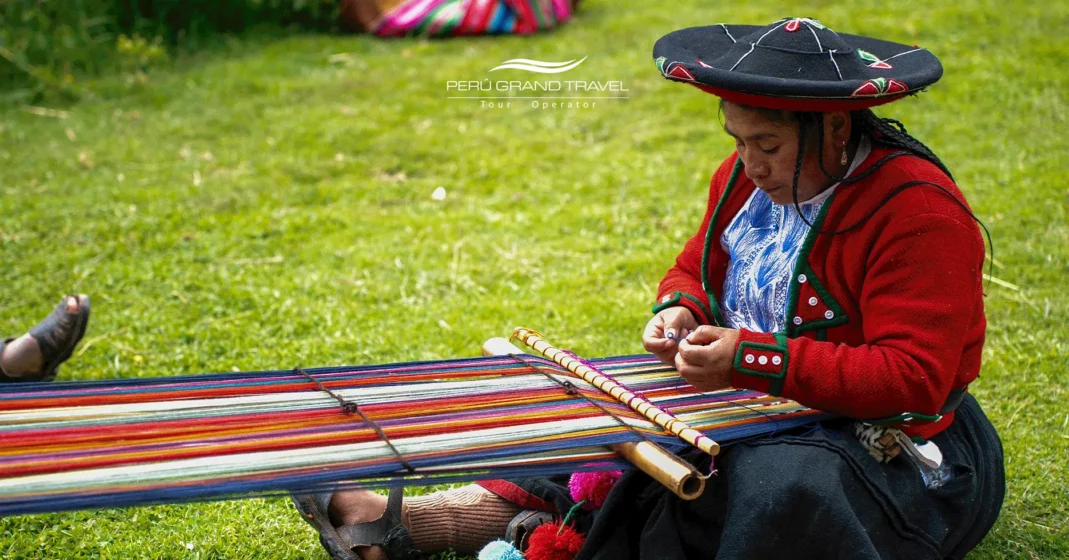
What are the traditional weaving techniques of Chinchero communities?
The most famous pillar of the art of the Chinchero communities is undeniably their textiles. But how exactly do they achieve such vibrant, lasting colors without a single drop of synthetic chemicals?
It all begins with the shearing of alpacas and sheep. The wool is then washed using sacha inchi or a natural soap root called saqta, which grows wild in the Andes. It lathers beautifully and cleans the wool perfectly.
Then comes the true alchemy: the dyeing. The vibrant reds, which dominate the art of the Chinchero communities, are derived from cochineal, a tiny insect that lives on cacti. By mixing crushed cochineal with natural fixatives like salt, volcanic ash, or lime juice, the weavers can produce over twenty different shades of red and purple! Other colors are born from local flora: the ch’illca plant for greens, and kulli corn for deep blues.
ADVICE GRAND
When you visit a weaving cooperative in Chinchero, you will be offered a cup of muña (Andean mint) tea. Sip it slowly while you watch the demonstration. The altitude is high here (about 12,300 feet / 3,760 meters), and the tea will help you acclimatize while you absorb the beauty of the art of the Chinchero communities.
Beyond clothing: What other forms of art of the Chinchero communities can you find?
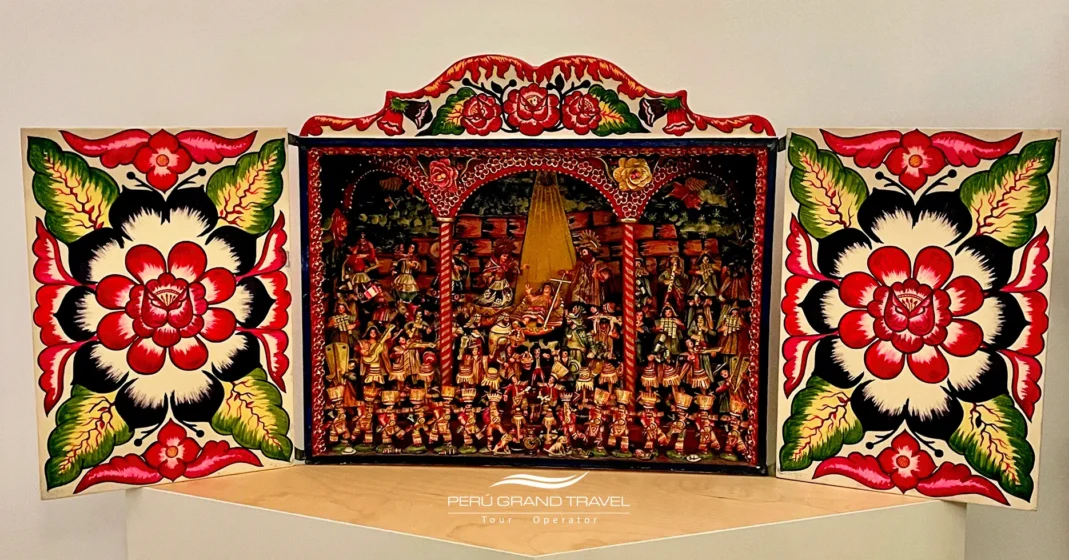
While the woven mantles (Llicllas) and ponchos are the most famous exports, the art of the Chinchero communities extends far beyond the loom.
When you explore the local markets or private artisan homes with our expert guides, you will discover a treasure trove of different media:
- Wood Carving: Local craftsmen carve intricate ceremonial masks and wooden staffs (varayoc) used by community leaders, often inlaid with silver or semi-precious stones.
- Ceramics: Pottery painted with the same geometric patterns (Tocapus) found in the textiles, representing rivers, mountains, and the Andean cross (Chakana).
- Painting: Small-scale paintings on leather or canvas depicting daily life, agricultural cycles, and the syncretism of Catholic and Incan beliefs.
Acquiring these varied pieces of the art of the Chinchero communities allows you to curate a sophisticated, authentic collection for your home.
US, UK & Aussie Travelers Ask: How can I identify genuine Chinchero artisan crafts?
Our English-speaking guests often ask how to distinguish a genuine piece of the art of the Chinchero communities from a factory-made imitation. It is a vital question for the discerning traveler.
- The Touch Test: Authentic alpaca or sheep wool feels heavy and slightly coarse (though baby alpaca is incredibly soft). Synthetic blends feel artificially smooth and lightweight.
- The Reversibility: In traditional Chinchero weaving, the geometric patterns are identical on both sides of the fabric. There is no “front” or “back” to a masterful piece of the art of the Chinchero communities.
- The Irregularity: Look closely. Hand-spun yarn is never perfectly uniform in thickness, and natural dyes have slight variations in hue. These “imperfections” are the hallmark of human hands and true luxury.
| Feature | Genuine Art of the Chinchero Communities | Factory-Made Imitation |
|---|---|---|
| Material | 100% Alpaca or Sheep Wool | Acrylic or Synthetic Blends |
| Colors | Natural dyes (Cochineal, local plants) | Chemical dyes (Neon or overly bright) |
| Pattern | Identical and clear on both sides | Often faded or messy on the reverse side |
| Price | Premium (Reflects weeks of labor) | Very cheap |
How to immerse yourself deeply into the art of the Chinchero communities?
To truly understand the art of the Chinchero communities, you must go beyond the transaction of buying a souvenir. You must engage with the culture.
At Perú Grand Travel, we design itineraries that foster this deep connection. Through our initiatives in experiential rural tourism in Peru, we take you into the private courtyards of the master weavers. You will sit with them, touch the raw wool, and perhaps even try throwing the shuttle on the loom yourself.
The spirit of Chinchero is profoundly calming. In fact, many of our guests find the rhythm of the loom and the serene environment to be highly therapeutic. It is a similar sense of peace that travelers seek when they participate in llama therapy in Peru, connecting with the gentle animals that provide the very wool used in the art of the Chinchero communities.
Furthermore, if you are planning a romantic journey, the stunning textiles of Chinchero often feature prominently in the breathtaking ceremonies of an Andean wedding, wrapping the couple in the protective embrace of ancestral artistry.

Frequently Asked Questions | FAQ
To ensure your cultural exploration is seamless, here are the answers to the most common inquiries regarding the art of the Chinchero communities:
1. Where can I buy textiles inspired by the art of the Chinchero communities?
The best place is directly in Chinchero! When you travel with us, we arrange private visits to established weaving cooperatives where 100% of your purchase goes directly to the artisans.
2. Are the prices for the art of the Chinchero communities negotiable?
While light, respectful bargaining is common in large city markets, we encourage our guests to pay the asking price at the cooperatives. A single table runner can take an artisan a month to weave. The price reflects true luxury and fair trade.
3. Can I wash my Chinchero textiles when I get home?
Yes, but with extreme care. The art of the Chinchero communities should be hand-washed in cold water using a very mild, natural soap (like baby shampoo). Never wring them out; lay them flat to dry in the shade to preserve the natural dyes.
4. Are the paintings from the art of the Chinchero communities easy to transport?
Yes, most galleries can safely roll the canvases for international travel, or we can assist in shipping them directly to your home in the US, UK, or Australia.
5. What is the best time of year to visit?
While you can visit year-round, the Sunday market in Chinchero is legendary. It’s the day when the art of the Chinchero communities is on full, vibrant display.
6. How can I verify if a piece is authentic Chinchero art?
Authentic pieces will have variations in color (natural dyes aren’t perfectly uniform) and will feel heavier and warmer than synthetic versions.
Weave Your Own Andean Legacy Today
My friend, taking home a piece of the art of the Chinchero communities is not just buying a souvenir; it is adopting a piece of the Andean soul. Every time you look at that vibrant red runner on your dining table, or wrap yourself in that alpaca mantle, you will be transported back to the crisp air and the majestic peaks of the Sacred Valley.
🚨 URGENT NOTICE FOR 2026 TRAVELERS:
As the world shifts toward sustainable and authentic travel, the demand for private, culturally immersive experiences in the Sacred Valley is soaring. The dry season (May through October) is rapidly booking up. If you want to experience the true art of the Chinchero communities—far away from the crowded tourist traps—you must secure your itinerary now.
Do not settle for a surface-level vacation. You deserve the exclusivity, the deep cultural connection, and the seamless logistics that define a true Cosmopolitan Host.
Explore our exclusive Machu Picchu travel packages today. Let our luxury travel designers weave an impeccable itinerary just for you, ensuring that your encounter with the artisans of Chinchero is as authentic as it is unforgettable. The magic of the Andes is waiting to be touched—reserve your privilege before the season is fully booked!

Experiences

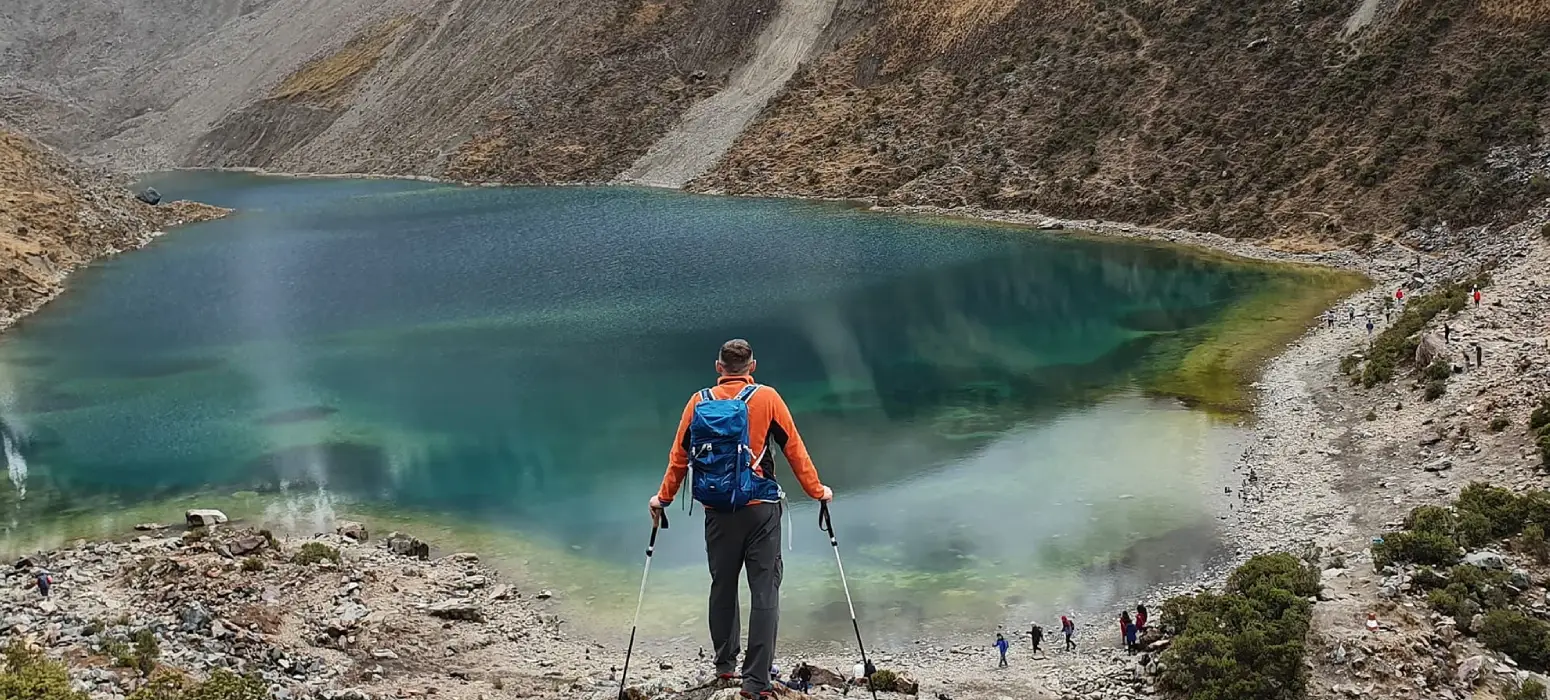
Machu Picchu Challenge 8D/7N
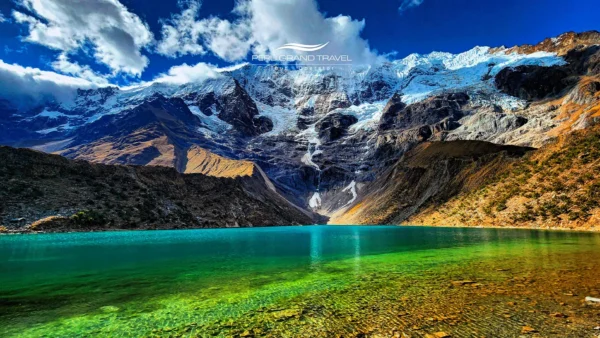
Cusco, Sacred Valley Humantay Lagoon, Rainbow Mountain & Machu Picchu.
View Tour
Colonial Lima and Sacred land of the Incas 7D/6N
Lima, Cusco, Sacred Valley & Machu Picchu.
View Tour



There are 4 comments
This article really opened my eyes to the rich art of the Chinchero communities. I had no idea there was so much depth and tradition behind their creations.
We’re so glad this touched your heart! Every textile in Chinchero tells an ancient family story. Would you love to visit an authentic weaving workshop on your trip to Peru? Drop us a message, we’d love to arrange it for you! 🧵❤️
This article really opened my eyes to the beauty and significance of the art in Chinchero communities. I had no idea there was so much depth and tradition behind each piece.
Spot on! There is so much ancestral knowledge behind every single piece. Chinchero has a truly unique soul. Are you planning a trip to Peru soon? We’d love to help you add this magical stop to your itinerary! 🌟