Welcome, my dear traveler. If we were sitting together right now on a balcony overlooking the Plaza de Armas in Cusco, sipping a freshly brewed coffee, I would tell you that you haven’t truly seen Peru until you have seen it dance.
Table of Contents
I have walked the avenues of New York and felt the rhythm of São Paulo, but I assure you, with the hand of a host who loves his land, nothing prepares you for the sheer magnitude of the Top 7 most famous Peruvian festivals.
You see, in the Andes, we do not just celebrate holidays; we inhabit them. A festival here is a rupture in time. It is the moment when the silence of the mountains is broken by brass bands, when the Catholic saints wear Andean ponchos, and when history is not something you read in a book, but something you feel vibrating in your chest.
Many travelers come for the stones of Machu Picchu, and rightly so. But those who leave with their souls changed are the ones who stumbled upon a comparsa of dancers in a remote village or watched the Inca Emperor speak to the sun.
Allow me to curate this journey for you. I have selected the seven celebrations that define our identity—the ones that, if you are lucky enough to witness, will transform your trip from a vacation into a legacy.
Why is Inti Raymi considered the Festival of the Sun and the soul of Cusco?
We must start with the crown jewel. If there is one event that encapsulates the glory of the Inca Empire, it is the Inti Raymi. Celebrated every June 24th, this is not merely a festival; it is a resurrection of our past.
A Theatrical Masterpiece in Three Acts
Imagine the city of Cusco, usually calm and colonial, turning back the clock to the 15th century. The celebration begins at the Qorikancha (Temple of the Sun), where the Sapa Inca (the Emperor) delivers an invocation to the Sun God, Inti. It is a moment of profound silence followed by the roar of the crowd.
Later, the procession moves to the Plaza de Armas. As a local, I love this part. Seeing the Inca carried on a golden litter, surrounded by his entourage in multicolored woven tunics, passing in front of the Spanish Cathedral, is a powerful visual paradox. It is the indigenous culture reclaiming its space.
Finally, the main event happens at the fortress of Sacsayhuaman. Over 700 actors, dancers, and musicians recreate the ancient winter solstice ceremony. The sound of the pututus (conch shells) echoing off the massive limestone walls is a sound you will never forget.
Did you know?
The Inti Raymi was prohibited by the Spanish viceroy Francisco de Toledo in 1535 because it was considered pagan. It remained hidden in the shadows of memory until 1944, when a group of intellectuals and artists from Cusco decided to revive it to restore pride to the Andean people. Today, it is the second-largest festival in South America.
Why You Cannot Miss It
It is the only time of the year you can see what the Inca Empire truly looked like in its prime. The colors, the gold, the Quechua language spoken with authority—it is immersive theater on a grand scale. That’s why we decided to include it in our Top of the Most Famous Peruvian Festivals.

Is the Virgen de la Candelaria really the biggest party in South America after Rio?
Let us move south, to the shores of the mystical Lake Titicaca. If Inti Raymi is solemn and regal, the Virgen de la Candelaria in Puno (early February) is an explosion of unbridled energy. And to answer the question: Yes, in terms of the sheer number of dancers and musicians, it rivals the Carnival of Rio de Janeiro, but at 3,800 meters above sea level.
The Dance of the Demons
The highlight here is the Diablada (Dance of the Devils). I remember the first time I saw it; I was mesmerized by the masks. They are terrifyingly beautiful—bulging eyes, twisted horns, and dragons, weighing up to 10 kilos each.
These dancers represent the struggle between good and evil, but also the history of the miners who worked deep in the earth, afraid of the demons of the dark.

Syncretism at its Finest
Puno is known as the “Folklore Capital of Peru” for a reason. During Candelaria, 40,000 dancers and 5,000 musicians take over the city. What fascinates me is the devotion. These dancers are not just performing; they are praying with their feet. They dance for the Mamita Candelaria (the Virgin), but the rhythm and the connection to the earth are deeply Andean.
Dato Importante
Lung Power: Dancing for hours in heavy costumes at this altitude is an athletic feat. If you plan to visit, I strongly recommend spending at least three days acclimatizing in Cusco or Arequipa beforehand. Do not underestimate the thin air!
How is Semana Santa (Holy Week) celebrated in the Andes compared to the rest of the world?
In the Western world, Easter might mean chocolate eggs and a Sunday brunch. In the Andes, Semana Santa (March/April) is a display of dramatic faith that will move you to tears, regardless of your religious beliefs.
Ayacucho: The City of Churches
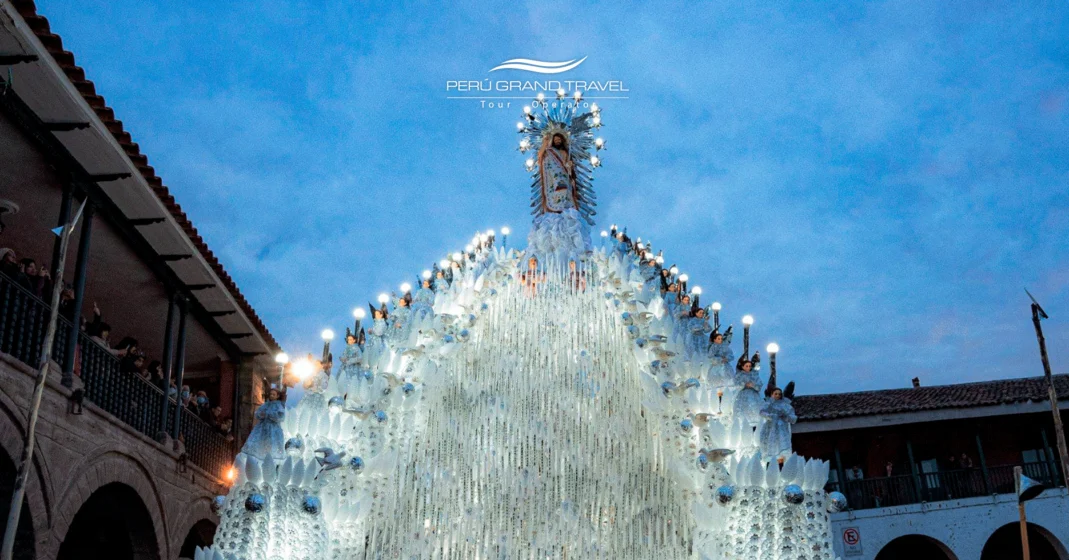
If you seek tradition, Ayacucho is the place. For ten days, the city shuts down. The processions here are candlelight marches where thousands of people walk in silence. The highlight is the dawn of Easter Sunday, when a massive pyramid-shaped litter carrying the resurrected Christ, adorned with thousands of white wax candles, is carried out of the cathedral. It is a scene reminiscent of centuries past, untouched by modernity.
Cusco and the Lord of Earthquakes
In my hometown, we venerate the Taitacha Temblores (Lord of Earthquakes). On Holy Monday, this black statue of Christ is paraded through the streets.
The most beautiful detail? The Ñucchu flowers. These are crimson-red flowers that grow in the highlands. As the statue passes, people on the balconies throw baskets of these petals onto the Christ. The contrast of the dark statue against the rain of red flowers is an image of haunting beauty.
Consejo Grand
Culinary Tradition: On Good Friday in Cusco, we have the tradition of the “12 Dishes.” We fast from red meat, but we feast on soups, fish, and desserts. Visit the San Pedro Market to see the locals preparing these meals. It is a feast for the senses.
Why is Cajamarca known as the Capital of the Peruvian Carnival?
February is the month of joy in Peru, and while every town celebrates, Cajamarca holds the title of the “Capital of Carnival.” If you are the type of traveler who likes to participate rather than just watch, this is for you. But be warned: you will not stay clean.
The Reign of King Momus
The festival revolves around “Ño Carnavalón,” a giant puppet representing the spirit of the carnival. For days, the city is a battlefield of joy. The weapons? Water balloons, buckets of water, colored flour, and paint.
It is chaotic, yes. But it is a friendly chaos. Barriers dissolve. In the heat of the carnival, the banker and the farmer are equal—both covered in blue paint, both dancing around the Unsha (a decorated tree), and both drinking Chicha de Jora.

The Burial
The festival ends with the symbolic “death” and burial of Ño Carnavalón. It is a satire of a funeral, where “widows” (usually men dressed in black drag) cry dramatically over the puppet. It is hilarious, irreverent, and deeply cathartic.
Did yoy know?
The Unsha or Yunza: This tradition involves planting a tree laden with gifts (plastic buckets, blankets, clothes) in the middle of a neighborhood. Couples dance around it and take turns chopping it with an axe. The couple that finally fells the tree becomes the “godparents” for next year and must provide the new tree. It is a beautiful cycle of community reciprocity.
What makes the Corpus Christi procession in Cusco so unique?
If you visit Cusco in May or June, you might witness Corpus Christi. In other parts of the world, this is a modest religious date. In Cusco, it is a competition of heavyweights.
The Meeting of the Saints
Fifteen massive statues of Saints and Virgins are brought down from their respective neighborhood churches to the Cathedral in the Plaza de Armas.
When I say massive, I mean it. Some of these litters weigh over a ton. It takes up to 60 men to carry them. The swaying motion of the saints, the sweating bearers, the bands playing martial music—it is intense.
Historically, this replaced the Inca tradition of parading the mummies of their ancestors. The Spanish swapped the mummies for Saints, but the ritualistic fervor remains exactly the same.
The Flavor of the Festival: Chiriuchu
You cannot talk about Corpus Christi without mentioning Chiriuchu. It is a cold dish (the name literally means “Cold Aji” in Quechua) that challenges the Western palate. It includes guinea pig, boiled chicken, jerky, fish eggs, seaweed, toasted corn, and cheese. It is the culinary representation of the festival: a mix of everything, from the coast to the jungle to the Andes.
Planning Your Festival Calendar
Before we continue to the mystic lands of Paucartambo, a small word of advice from your host. The sheer variety of festivals in Peru can be overwhelming. Some happen in the rain, some in the dry season. Some require tickets, others just require courage.
If you are trying to align your travel dates with these magnificent events, or if you want to know what else is happening during your specific month of travel, I have prepared a comprehensive, month-by-month breakdown. I highly recommend you read our complete guide to Festivals in Peru 2026. It is the perfect tool to ensure you don’t miss the magic by just a day or two.

Why do travelers flock to Paucartambo for the Mamacha Carmen?
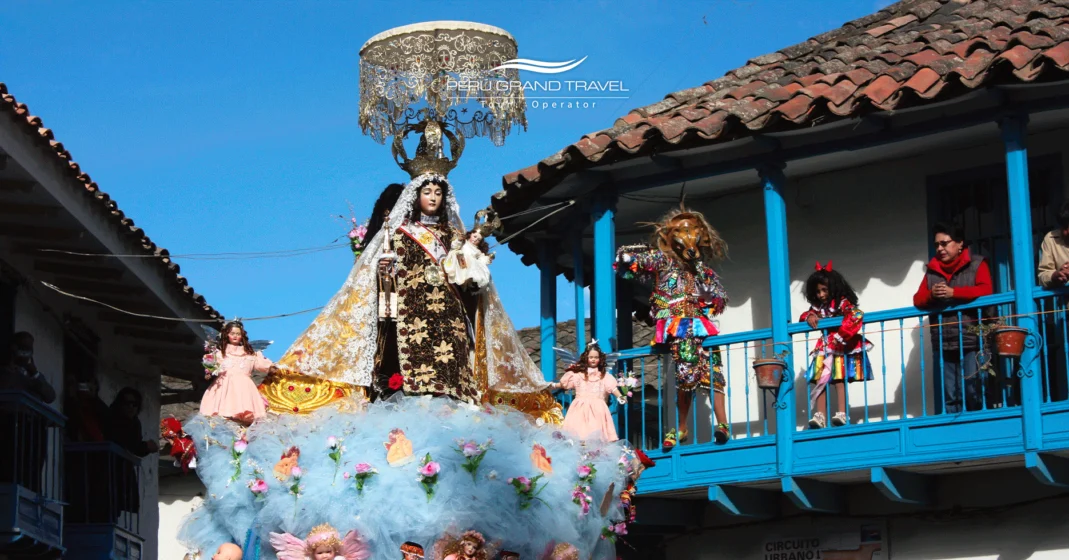
In mid-July, a quiet colonial bridge town called Paucartambo, about four hours from Cusco, becomes the center of the Andean universe. This is the festival of the Virgen del Carmen, affectionately known as “Mamacha Carmen.”
Dancers on the Rooftops
What makes this festival visually unique is the interaction with the architecture. The dancers, specifically the Saqras (devils), climb onto the white balconies and red clay rooftops of the town. They wait there, teasing the crowd, representing the temptation that watches over us.
There are 19 different groups of dancers, each telling a story of Peruvian history. You have the Qhapaq Negro (representing the slaves), the Qhapaq Chunchu (the jungle warriors), and the Majeños (the liquor traders). It is history told through choreography.
The Sunrise at Tres Cruces
The festival concludes with a pilgrimage to Tres Cruces, a viewpoint on the edge of the Andes looking down into the Amazon basin. Watching the sun rise here is a psychedelic experience. Due to the humidity and optics, the sun often appears to split into multiple colors or “dance” on the horizon. It is the perfect spiritual ending to days of partying.
Booking is Essential: Paucartambo is a small town with very limited accommodation. Most locals sleep in open halls or camp. If you want comfort, you must book a specialized tour months in advance or be prepared for a very rustic (but authentic) adventure.
Is Qoyllur Rit’i the most challenging pilgrimage in the Americas?
Finally, we arrive at the most extreme and perhaps the most ancient of them all: Qoyllur Rit’i (Star Snow Festival). Held in late May or early June, this is not for the faint of heart.
The Trek to the Stars
Tens of thousands of pilgrims hike up to the Sinakara Valley, located at 4,700 meters (15,400 ft) at the base of the Ausangate mountain. Temperatures drop well below freezing. There are no hotels, only tents on the frozen ground.
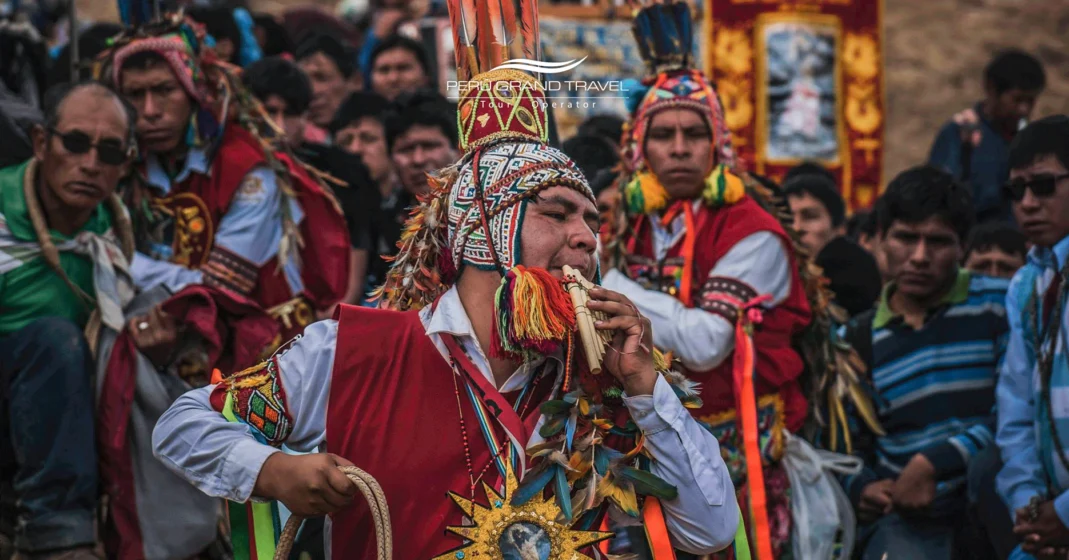
Why do they go? To honor the Apu (Mountain Spirit) and the image of Christ painted on a rock. It is the ultimate expression of Andean syncretism.
The Ukukus: Guardians of the Ice
The stars of this festival are the Ukukus, dancers dressed as half-man, half-bear creatures. They are the only ones allowed to climb the glaciers. Legend says they battle spirits on the ice. They act as disciplinarians and mediators between the people and the gods.
Consejo Grand
A Dry Festival: Unlike other fiestas where alcohol flows freely, Qoyllur Rit’i is strictly dry. No alcohol is allowed. It is a place of discipline, prayer, and endurance. It is a privilege to witness it, but you must approach it with absolute respect and physical preparation.
Quick Comparison: Which Festival fits your style?
As a cosmopolitan traveler, you know that luxury is about choice. Here is a quick guide to help you decide which event aligns with your spirit.
| Festival | Month | Location | Vibe | Best For |
| Inti Raymi | June | Cusco | Regal, Theatrical, Historic | History Buffs & Photographers |
| Candelaria | February | Puno | Energetic, Loud, Massive | Folklore Lovers & Party Seekers |
| Semana Santa | Mar/Apr | Ayacucho/Cusco | Solemn, Spiritual, Moving | Those seeking cultural depth |
| Carnival | February | Cajamarca | Chaotic, Wet, Playful | Families & Fun-loving spirits |
| Corpus Christi | May/June | Cusco | Heavy, Traditional, Culinary | Foodies & Tradition Seekers |
| Virgen del Carmen | July | Paucartambo | Mystical, Visual, Intense | Adventurous souls |
| Qoyllur Rit’i | May/June | Ausangate | Extreme, Freezing, Devotional | Trekkers & Spiritual Pilgrims |
Frequently Asked Questions (FAQ)
Here are the answers to the questions I hear most often from my guests while planning their itineraries.
What are the top festivals in Peru to visit for cultural experiences?
If you have to choose just one for pure culture, Inti Raymi offers the most accessible window into Inca history. However, for living culture (not theatrical), the Virgen de la Candelaria in Puno is unmatched in South America.
Which travel companies offer guided tours to major Peruvian festivals?
Authorized operators like Peru Grand Travel specialize in these logistics. We handle the complex tickets (like the grandstands for Inti Raymi), transportation to remote towns like Paucartambo, and comfortable accommodation during peak seasons when everything is sold out.
Where can I buy tickets for popular Peruvian music and dance festivals?
For street festivals like Candelaria or Carnival, you don’t need tickets; the streets are the stage! However, for Inti Raymi, you absolutely need to purchase official tickets through the municipal website (EMUFEC) or your travel agency well in advance, as the best seats sell out months prior.
What are the best apps for discovering upcoming festivals in Peru?
While there isn’t one single “festival app,” using “Tu Boleto” or “Teleticket” can show concerts and events. For traditional festivals, the official PromPeru website provides a detailed calendar. However, relying on a knowledgeable local operator is always more accurate than an app.
Can I find festival packages that include accommodation and transportation in Peru?
Yes, and it is highly recommended. During festivals like Fiestas Patrias or Holy Week, hotel prices skyrocket and availability disappears. Booking a package locks in your room and transport, saving you from the stress of last-minute logistics.
What are the most famous food festivals in Peru, and how to attend them?
While the massive Mistura festival is no longer active, we have incredible regional options. The Vendimia (Wine Festival) in Ica in March is fantastic. In Cusco, culinary fairs pop up during Corpus Christi (for Chiriuchu). You attend simply by showing up hungry!
Which airlines provide special deals for flights to Peru during festival seasons?
Major carriers like LATAM often have sales, but be careful: during festivals, prices usually go up, not down, due to domestic demand. The “deal” is booking 4-6 months in advance.
Are there any festival-themed cruises available along the Peruvian coast?
Not specifically “festival cruises,” but luxury Amazon cruises (like Delfin or Aqua) often have special New Year’s or Christmas itineraries. On the coast, seeing the festivals is a land-based adventure.
What local brands or artisans feature prominently at Peruvian festivals?
During Christmas, the Santurantikuy fair in Cusco features the best artisans in the region, like the Mendívil family, known for their long-necked llamas and saints. It is the best place to buy authentic high-end folk art.
How to book a festival tour that covers both Lima and Cusco celebrations?
H3: How to book a festival tour that covers both Lima and Cusco celebrations?
This requires strategic planning. For example, you can enjoy the Anniversary of Lima (Jan 18th) on the coast and then fly to Cusco for the lush green season. Contacting a specialized designer at Peru Grand Travel allows us to weave these dates into a seamless itinerary for you.
Before Your Trip
My dear friend, Peru is waiting for you. But remember, reading about the most famous Peruvian festivals is one thing; feeling the bass drum vibrate in your chest in Puno or smelling the incense in Cusco is another.
Don’t just be a tourist who passes through. Be a guest who joins the celebration. Come and dance with us.
Are you ready to experience the magic? Contact us today to secure your spot at the next great celebration.
We invite you to explore our offers at festivals! Your experience in Peru is just one step away! Contact us now and start living the unique experience you’ve always dreamed of.
More information:
- Visit our English website: Peru Grand Travel
- Visit our Spanish website: Viajes Machu Picchu Tours
- Visit our Portuguese website: Machu Picchu Pacotes

Experiences

Machu Picchu Challenge 8D/7N
Cusco, Sacred Valley Humantay Lagoon, Rainbow Mountain & Machu Picchu.
View Tour
Colonial Lima and Sacred land of the Incas 7D/6N
Lima, Cusco, Sacred Valley & Machu Picchu.
View Tour