

Discover the magic of llama therapy in the Andes. Boost your mental health and experience authentic rural tourism in Peru with Perú Grand Travel’s VIP touch.
I vividly remember the first time I felt the deep, calm gaze of a llama in the Sacred Valley. I was sitting on a stone bench, surrounded by the earthy scent of eucalyptus and the crisp breeze descending from the snow-capped peaks. The silence was absolute, interrupted only by the gentle sound of the animal chewing beside me. In that moment, as my hand sank into the dense, soft wool, all the anxiety of urban life simply evaporated. It was then that I understood: llama therapy is not just a tourist activity; it is a portal to serenity.
For those seeking authentic rural tourism in Peru, this connection with Andean camelids represents the pinnacle of a sensory journey. It is not about taking photos for social media; it is about allowing the energy of these animals—considered sacred by the Incas—to harmonize your inner self. If you are planning your next adventure and desire something that transcends the obvious, join me in discovering how llama therapy can transform your perception of well-being. Settle in. Let us begin this healing journey.
What is llama therapy, and how does it work?
Llama therapy is an animal-assisted wellness practice where travelers interact, walk, and meditate in the company of trained llamas, promoting deep relaxation and anxiety reduction.
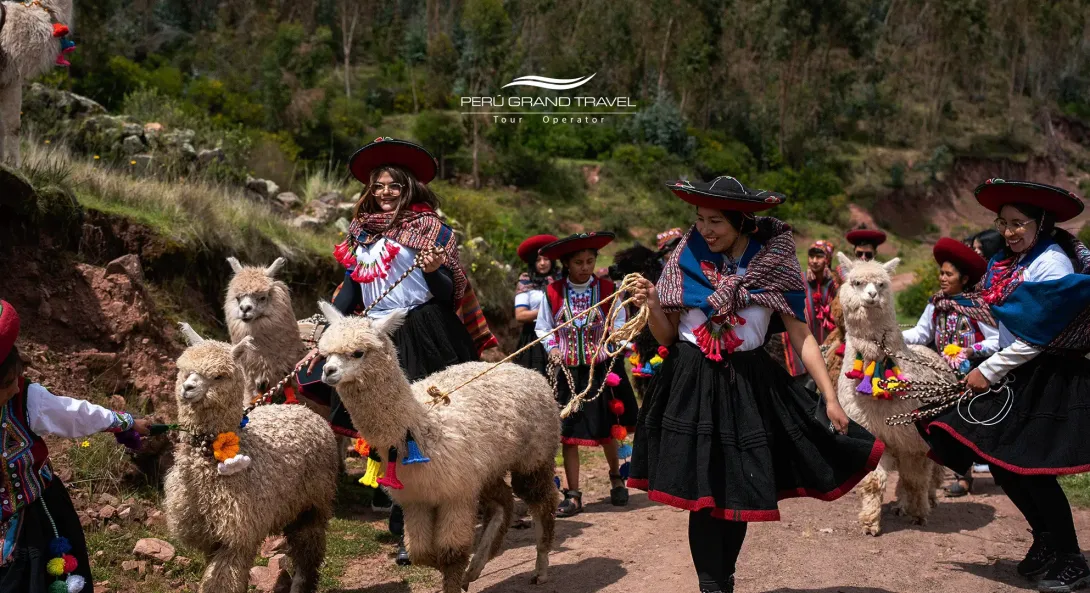
Far from being just a photo op, llama therapy (llama-assisted therapy) is based on the incredible sensitivity of these animals. When you walk beside them, feeling the dirt floor and the damp grass beneath your boots, you must adjust your pace to theirs. They are in no hurry. They demand calmness, presence, and mindfulness.
During a session, local guides and therapists encourage you to stroke the thick wool, observe the animal’s serene body language, and participate in a contemplative walk through the mountains. Your heart rate slows, your blood pressure drops, and a busy mind finally finds rest.
FACT CURIOUS
The Hum of Peace: Did you know that llamas communicate through a soft sound similar to a hum (called “humming”)? Experts claim this sound has a relaxing frequency that instinctively calms the human nervous system during llama therapy.
Why are llamas good therapy animals?
Llamas are exceptional therapy animals due to their inherently docile, curious, and intelligent nature, as well as their instinct to mirror human emotions.
Contrary to what popular culture (and some cartoons!) might suggest, llamas do not spit at humans without reason; they are extremely gentle and respectful creatures. In fact, in the Andean worldview, they are considered sacred animals that connect the earth (Pachamama) to the mountain gods (Apus).
They possess what we call a “grounding presence.” If you approach them anxiously or aggressively, they will move away. But if you approach with a quiet heart and steady breathing, they will draw near and offer companionship. This interaction forces the traveler to regulate their own emotions, which is at the heart of the effectiveness of llama therapy.
Llama and alpaca therapy: What is the difference?
Confusion is common, but llama and alpaca therapy offer distinct experiences. While alpacas are smaller and shyer—making them ideal for touch and observing their incredibly silky wool—the llama has a more imposing and protective posture. The llama is the ideal partner for therapeutic hikes (the famous llama treks), where they carry your light gear and guide your steps through the mountain.
FACT CURIOUS
While both are excellent, llamas are often used to help people develop personal boundaries and self-confidence, as they respond very well to calm and assertive leadership.
Where to experience llama therapy in the Peruvian mountain peaks? | Mountain peaks therapy llamas & alpacas
The best llama therapy experiences take place in exclusive retreats and traditional communities located in the Sacred Valley and the highlands surrounding the city of Cusco. To find a real immersion, we need to get away from the asphalt. It is high up, where the air is purest, that the magic happens.
- The Sacred Valley: There are boutique hotels and private haciendas between Urubamba and Ollantaytambo that keep herds of llamas rescued or raised with a focus on wellness. Practicing llama therapy while walking through ancient Inca agricultural terraces is an absolute privilege.
- High-Altitude Communities | Ausangate: For the more adventurous, the areas near the snow-capped Ausangate offer rustic and deeply authentic interactions where local shepherds share their traditions of respect for camelids.
Knowing the exact time to climb to these altitudes under blue skies is crucial. To get it right, check our exclusive guide on when to travel to Peru.
How does llama therapy transform travel with children? | Llama therapy with children
Llama therapy with children helps in the development of empathy, the reduction of childhood anxiety, and provides a deep lesson in respecting animals and nature.
Traveling with family requires activities that capture attention without exhausting energy. We always recommend llama therapy for families for one simple reason: it is magical to see the sparkle in a child’s eyes.
Children often feel intimidated by the scale of the ruins, but an animal with huge eyes and long lashes creates an instant connection. They learn to lead the llama by the rope gently, understanding responsibility and patience. This activity easily beats any hour spent on screens or tablets.
To discover other unforgettable activities for the whole family, explore our curated list of what to do in Peru 2026.
IMPORTANT FACT
Emotional Accessibility: Children on the autism spectrum or with ADHD (Attention Deficit Hyperactivity Disorder) show incredibly positive responses to contact with llamas. The animal’s lack of judgment and inherent calm provide a safe space for them to express themselves.
For Travelers: Why llama therapy is the perfect retreat?
For the modern traveler immersed in the frantic rush of major metropolitan cities, llama therapy offers the necessary contrast: a slow pace, silence, and visceral contact with the sacred.
In our fast-paced routines, even the strongest need to recharge their batteries. Llama therapy acts as a luxurious counterpoint to the accelerated world. Imagine waking up to a gourmet breakfast—no traffic, no meetings—and spending the morning simply walking beside a llama, gazing at the Andes. It is a “detox” from the big city. The cold Andean air clears the lungs, and the animal’s silence organizes one’s thoughts. It is an experience that fills the soul and brings a status of exclusivity that no urban spa can replicate.
To understand the full scope of possibilities the country offers beyond the classic itineraries, I invite you to read about the complete tourism in Peru landscape.
What type of trip includes llama-assisted therapy?
Llama therapy integrates perfectly into trips focused on rural tourism in Peru, wellness, slow luxury, and immersive cultural expeditions. This experience isn’t something you rush through in 15 minutes between bus rides. It is the complete opposite of mass tourism.
The Heart of Rural Tourism
The core of this experience lies in the rhythm of the land and communal living. By booking these moments, you are directly supporting the communities that maintain these sacred animals and protect ancient herding methods. To deepen your understanding of how this immersion transforms an ordinary trip into a privilege, I strongly recommend reading our cornerstone guide on rural tourism in Peru. It is there that the true luxury of the human-animal encounter happens.
Weddings and Vow Renewals
The peaceful energy of these camelids is so potent that many couples choose to have them present during spiritual ceremonies in the Andes. It is a union of souls blessed by nature—a sublime experience that we detail in our article on Andean weddings.
To orchestrate a journey that merges this peace with archaeological wonders in a flawless itinerary, explore our Peru tours.
ADVICE GRAND
Embrace Time: Reserve a full day of your itinerary to do “nothing” but relax in the Sacred Valley, focus on your breathing, and experience llama therapy. Haste is the greatest enemy of the luxury traveler.
How to prepare for your llama experience?
To get the most out of llama therapy, you should dress in layers, respect the guide’s instructions regarding animal behavior, and stay well-hydrated at high altitudes. Being physically comfortable is essential so that your mind can truly relax. Remember, you will be walking on uneven terrain and under the capricious Andean sky.
Quick Preparation Guide | Altitude and Clothing
To ensure your only concern is absorbing the peace of the moment, follow this preparation table:
Why experience llama therapy with Peru Grand Travel?
Peru Grand Travel guarantees exclusivity, specialized guides, and access to private estates and select communities where llama therapy is conducted ethically, with luxury and deep respect for the animals.
We know there are roadside options to “take a photo with a llama for a coin.” We categorically reject this. That is not therapy; it is exploitation. We orchestrate experiences where animal welfare comes first. We work with communities and retreats that treat llamas like the royalty they are. Our bilingual guides explain the historical and spiritual importance of the animal while ensuring your picnic blanket—complete with Andean wines and cheeses—is perfectly laid out at the end of the walk.
It is the “white glove” service you expect, in the heart of the vast Andes. We design journeys that enrich your life with absolute peace of mind.
DID YOU KNOW?
Llamas were fundamental to the survival of the Inca Empire, serving as the primary pack animals that carried up to 66 lbs of weight through the complex mountain trail network. Respect for them transcends utility; they were part of the family.
Frequently Asked Questions | FAQ
As an expert, I have compiled the most refined questions from our clients:
1. Is llama therapy safe?
Absolutely. The llamas selected for these experiences are docile, trained, and accustomed to human presence. Experienced guides always supervise the interaction to ensure the safety and comfort of everyone.
2. Will the llamas spit on me?
This is the biggest myth! Llamas generally only spit at each other to establish hierarchy or when they feel extremely threatened. In a relaxed llama therapy environment, this is extremely rare with humans.
3. Do I need prior experience with animals?
None at all. You will not ride the animal (llamas cannot support the weight of a mounted adult). The interaction involves walking beside them, petting them, and observation.
4. How long does a typical session last?
Generally, the experience lasts between 1 to 3 hours, depending on the chosen program. It can include a gentle walk, time for meditation, and a picnic or rural lunch.
5. Can I do this if I have mobility restrictions?
Yes. Peru Grand Travel can organize sessions in the flat gardens of luxury hotels in the Sacred Valley, where you can interact with the animals without needing to hike on uneven terrain.
6. What is the difference between hugging a llama and an alpaca?
The alpaca is famous for its extremely fine, soft, and warm wool; hugging one feels like sinking your hands into cotton candy. The llama has a hardier coat, but its tall, tranquil presence offers a sense of protection and calm during therapy.
7. Where should I focus if I want tourism and emotional healing in Peru?
The best approach is to blend experiences. We recommend anchoring your trip based on our guide to rural tourism in Peru, adding wellness retreats, llama therapy, and peaceful stays in the Sacred Valley.
8. Can I feed the llamas during therapy?
Yes, and it’s one of the most fun parts! We use natural treats like alfalfa or carrots. Feeling their soft lips taking the food from your hand is a unique sensory experience.
9. Is there a difference between therapy in Cusco and in other regions?
Cusco offers the historical and mystical weight of the Incas, which enhances llama therapy. It is where the energy of the Apus (mountain spirits) is most present.
The Silence that Transforms
At the end of every llama therapy session, there is a common feeling among travelers: a sense of lightness, as if worries were left behind on the trail. Peru has this magical ability to heal us through its sophisticated simplicity.
Llama therapy is not just an eccentric activity; it is a bridge. It is an invitation for you to synchronize your breathing with that of a wise animal, feeling the energy of the Inca land beneath your feet. When you rest your hand on a llama’s warm wool and gaze at the Apus, you understand why Peru is a privilege.
At Perú Grand Travel, we don’t just sell itineraries; we create memories where your soul finds rest. We are the curators of your days of peace.
Are you ready to slow down and experience the embrace of the Andes?
Contact us today and allow us to design a journey where healing, luxury, and authenticity walk side-by-side with you. The mountains and our Andean friends are waiting for you.