

Welcome, my dear traveler. If we were standing together right now on the stone atrium of the church in Pomata, looking out over the infinite, deep blue expanse of Lake Titicaca, I would tell you to simply breathe. The air here is thin, yes, but it is also incredibly pure.
Table of Contents
Many travelers rush through the Altiplano, eyes fixed only on the floating islands or the border crossing to Bolivia. But the sophisticated traveler—the one who seeks the soul of a destination rather than just its photo ops—knows that the true secrets of the south are hidden in plain sight.
Pomata is one of those secrets. As your host at Peru Grand Travel, allow me to guide you to this red-stone sanctuary. Let’s explore why this town, with its magnificent mestizo baroque architecture and its sweeping vistas, is an essential stop for anyone looking for meaningful things to do in Puno. Let’s step onto the balcony of the Andes.
Why visit this destination? The allure of Pomata
Why should you detour to Pomata? Because it represents the exquisite contradiction of the Peruvian Andes: immense grandeur hidden in a quiet village.
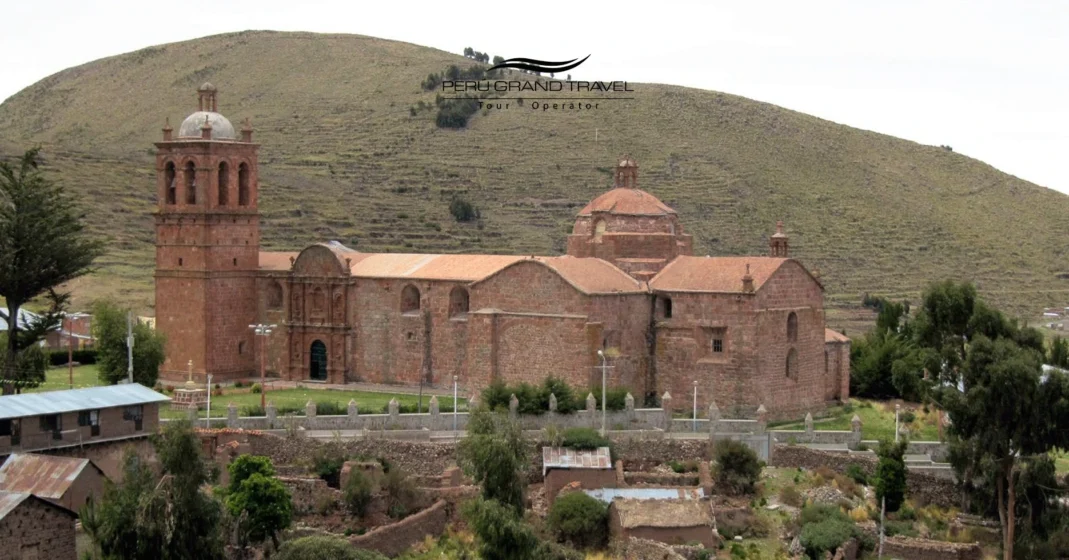
The primary reason to visit Pomata is aesthetic and spiritual. Here, the reddish volcanic stone of the mountains was tamed by indigenous hands to create the Church of Santiago Apóstol, a masterpiece that rivals any cathedral in Lima or Cusco, yet sits in solitary majesty overlooking the lake.
- The View: From here, Lake Titicaca does not look like a lake; it looks like an ocean. The curve of the Earth seems visible. It is a place that demands contemplation.
- The Art: If you appreciate art history, Pomata is a pilgrimage. The stone carvings here are the finest examples of “Mestizo Baroque,” where Christian symbols merge with Andean mythology.
Including Pomata in your itinerary adds a layer of depth that the standard tours often miss. It is for the traveler who wants to understand the colonial history of the South.
For a broader list of cultural stops in the region, do not forget to check our pillar guide on Things to Do in Puno 2026.
Where is Pomata located and how to get there?
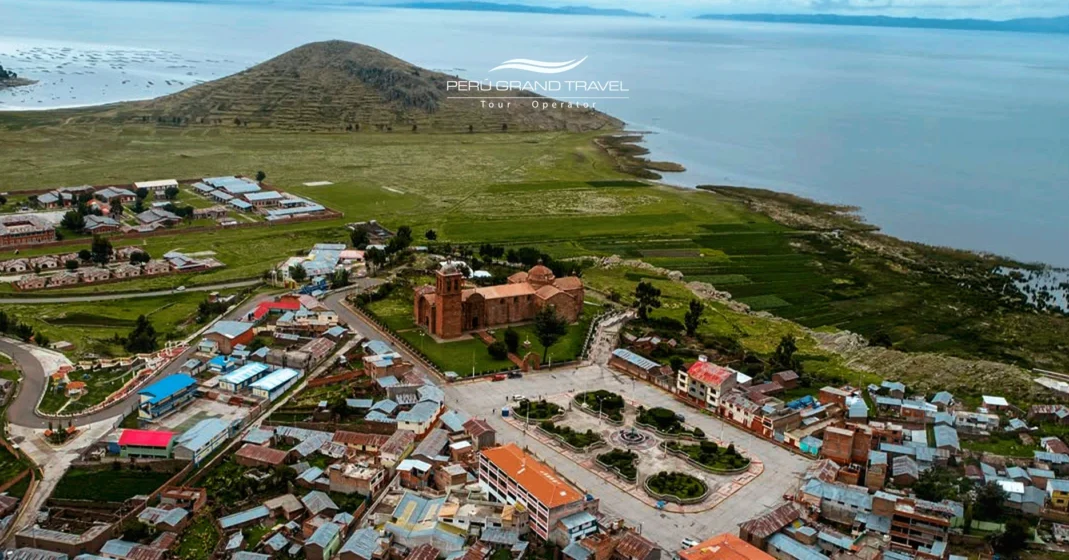
Pomata is located in the department of Puno, specifically in the province of Chucuito. It sits proudly on a rocky promontory jutting out into Lake Titicaca, about 105 kilometers (65 miles) south of the city of Puno.
The Journey
Getting to Pomata is part of the experience. You travel along the paved road that leads to the Desaguadero border crossing (Bolivia). The drive takes approximately 1.5 to 2 hours from Puno city.
- The Landscape: The route hugs the shoreline of the lake. You will pass through other colonial towns like Chucuito and Juli (the “Little Rome of America”). The changing colors of the lake—from turquoise to steel grey—will keep you mesmerized.
How to arrive?
- Private Service: As your host, I highly recommend a private driver. This allows you to stop at the natural viewpoints, take photos of the rural life, and explore Pomata at your own rhythm without the constraints of a public bus schedule.
- On the way to Bolivia: If you are planning to cross into Bolivia via Desaguadero, Pomata is the perfect cultural stop to break up the journey.
IMPORTANT FACT
The Name: The name Pomata comes from the Aymara words “Puma” (the mountain lion) and “Uta” (house). So, literally, you are visiting the “House of the Puma.”
Why is this destination known? | The Jewel of the South
Pomata is known primarily for one architectural giant that dominates the landscape, but its reputation as a center of thought and theology gives it its nickname.
The Church of Santiago Apóstol
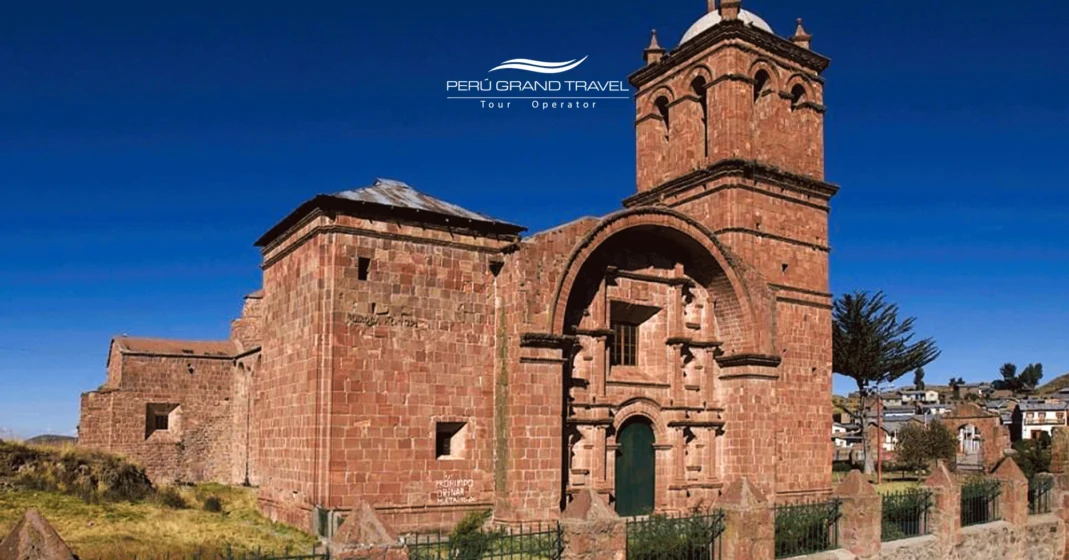
This is the heart of Pomata. Built in 1756, this church is made entirely of reddish stone (piedra rojiza). Unlike the gray andesite of Cusco, this stone glows warmly in the afternoon sun.
- The Carvings: The interior is a stone garden. The columns and arches are carved with tropical fruits (papayas, pineapples) and Andean flowers (kantuta), even though these do not grow at this altitude. It is a stone prayer for fertility.
- The Light: The church features windows made of translucent alabaster (Huamanga stone) instead of glass, filling the nave with a soft, ethereal, honey-colored light.
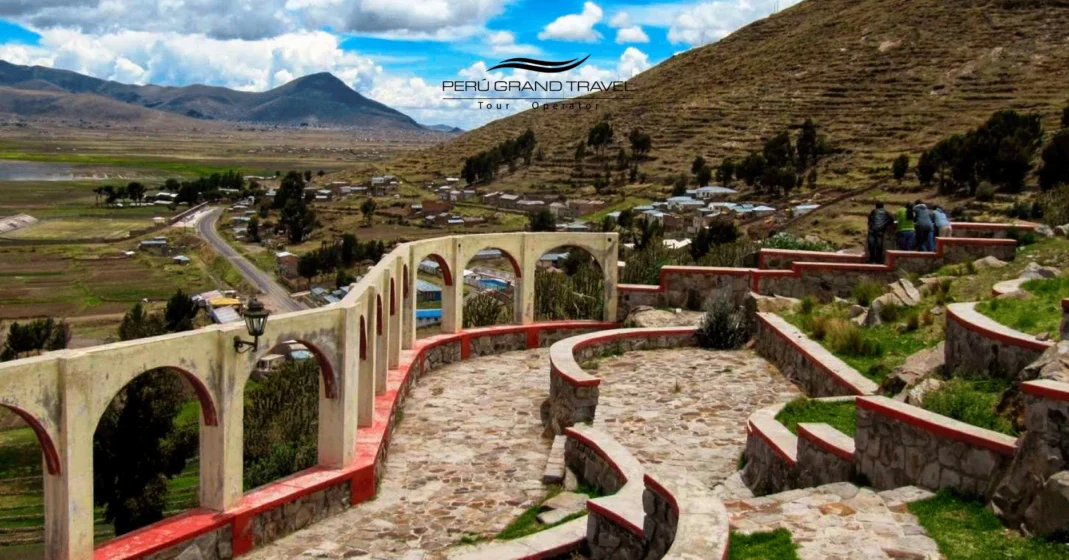
The Philosophical Balcony
It is called the “Philosophical Balcony” because, historically, Dominican friars and thinkers would come here to write and meditate. The view is so expansive that it is said to clarify the mind. When you stand there, looking at the curvature of the lake, the nickname makes perfect sense.
What type of travel experience is visiting Pomata?
Is Pomata for everyone? Perhaps not. It is not a place of high-adrenaline adventure or luxury spas.
Pomata offers a Cultural and Contemplative Experience.
- For the History Buff: It is a masterclass in colonial religious history and architecture.
- For the Spiritual Traveler: The church sits on a Huaca (sacred site). The energy here is palpable. It is a place to sit in a pew, smell the ancient cedar wood, and feel the weight of centuries.
- For the Photographer: The light in Pomata is exceptional. The contrast of the red stone against the deep blue sky and the lake offers a palette that is unique to this specific corner of Peru.
It is a “Slow Travel” destination. It invites you to stop rushing to the next checkpoint and appreciate the craftsmanship of the past.
If you are looking for romantic spots to reflect with your partner, this quietude rivals even the most popular Places to Travel for Valentine’s Day.
Gastronomy and Festivities in Pomata
While small, Pomata has a flavor and a calendar of its own.
What to eat in Pomata?
The food here is honest, hearty, and locally sourced.
- Fried Trout | Trucha Frita: Being on the lake, the trout is as fresh as it gets. Served simply with golden potatoes and rice.
- Chairo: A traditional Andean soup made with chuño (freeze-dried potato), beef, and herbs. It is the perfect warmer for the windy afternoons.
- Cheese: The Puno region is famous for its dairy. Try the fresh cheese (Queso fresco) sold in the local markets.
The Festival of the Virgin of the Rosary
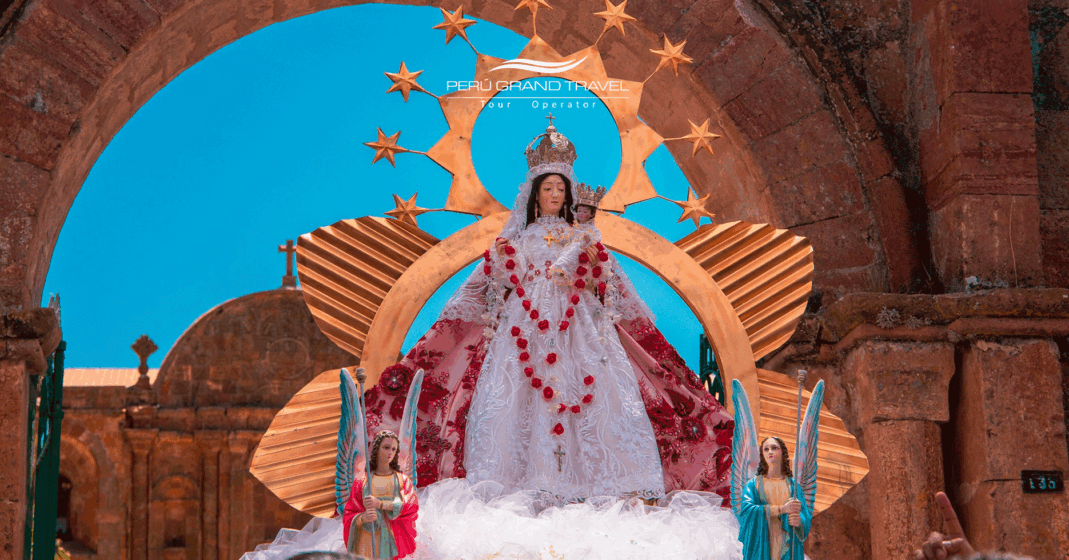
If you visit in October, Pomata transforms. The Feast of the Virgin of the Rosary is the town’s main celebration.
- The Vibe: It is a smaller, more intimate version of the Candelaria. You will see traditional dances, processions, and the community coming together in a way that feels deeply authentic and untouched by mass tourism.
Data about the destination: Planning your visit
To enjoy Pomata, you must respect the environment. Here is the data you need to plan.
Altitude and Acclimatization
Pomata sits at approximately 3,863 meters (12,673 feet) above sea level. This is high.
- Advice: Do not visit on your first day in the region. Spend a day or two in Puno or Cusco first. Walk slowly. The stairs up to the church can leave you breathless, literally and figuratively.
Climate and Weather
- Sunny but Cold: The sun is intense (wear high SPF sunscreen), but the air is cold, especially in the shade and when the wind blows off the lake.
- Best Time to Visit: The dry season (May to October) guarantees those spectacular blue skies. January to March is rainy, but the fields are lush and green.
Clothing Recommendations
- Layers: Bring a warm jacket, a scarf, and a hat. The wind on the “balcony” can be piercing.
- Sun Protection: Sunglasses are mandatory. The reflection of the sun on the lake is strong.
How long should you stay?
Pomata is typically a half-day visit. You need about 1 to 2 hours to explore the church thoroughly and enjoy the views. It is best combined with stops in Chucuito and Juli for a full day “Southern Valley” tour.
ADVICE GRAND
Entrance Fee: There is usually a small fee to enter the church of Pomata, which goes towards its maintenance. Carry small change (Soles) with you.
Comparison with other destinations: Juli and Lampa
To understand where Pomata fits in your itinerary, it helps to compare it with its “sisters” in the region. All offer colonial architecture, but each has a distinct personality.
Pomata vs. Juli
- Juli “The Little Rome”: Located nearby, Juli has four major churches. It was a major Jesuit training center. Juli is about scale and history; it feels like a grander, abandoned project.
- Pomata: It has only one major church, but it is often considered the jewel. Pomata is about the view and the specific beauty of the reddish stone. It feels more solitary and dramatic.
Pomata vs. Lampa
- Lampa “The Pink City”: Located north of Puno (not on the lake shore). Lampa is famous for its Catacombs and the replica of Michelangelo’s Pietà.
- Pomata: It is defined by the Lake. You cannot separate Pomata from Titicaca.
Recommendation: If you love architecture, do the “Southern Corridor” tour: Chucuito, Juli, and Pomata. They complement each other perfectly.
What other experiences connect with Pomata?
Visiting Pomata is often part of a larger journey. How does it fit into the “Cosmopolitan Host” experience?
The Luxury of Silence
In a world of noise, the silence inside the Church of Santiago Apóstol is a luxury. Sitting there, watching the dust motes dance in the alabaster light, is a meditative experience.
Connection to Cusco
Many travelers come to Puno after Cusco. The route from Cusco to Puno is known as the “Route of the Sun.” Pomata is the logical extension of this exploration of Andean Baroque. The artistic style you see here is a cousin to what you see in the Churches in Peru found in the Sacred Valley.
Connection to Festivals
If you are interested in the religious fervor of Pomata, you will likely appreciate the 7 Most Famous Peruvian Festivals. The devotion is the same, just on a different scale.
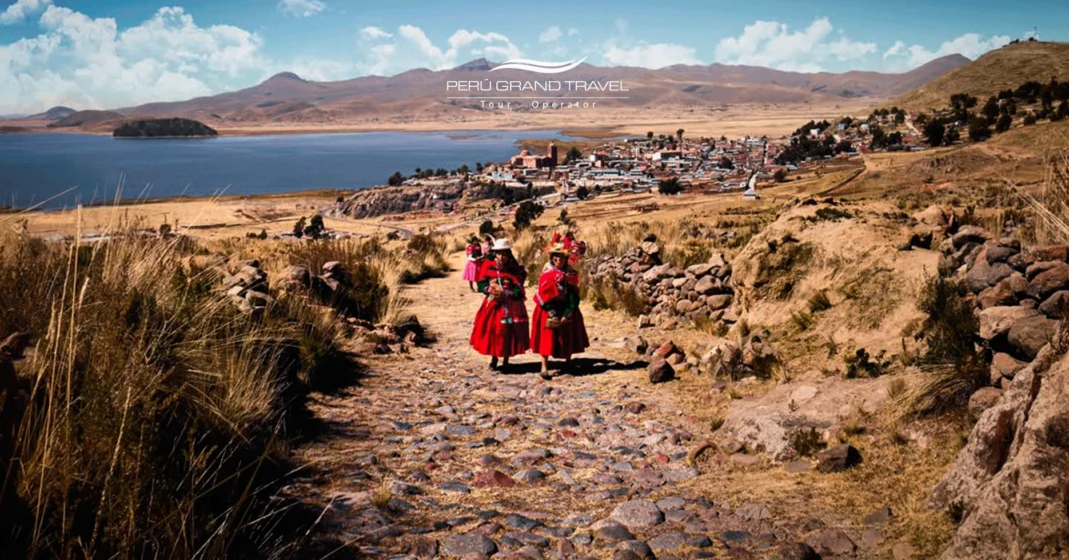
Frequently Asked Questions about Pomata | FAQ
Is Pomata worth visiting?
Absolutely. If you appreciate architecture, photography, or simply stunning views, Pomata is a highlight of the Puno region. It offers a glimpse into the colonial past that is rare and preserved.
Can I go to Pomata on my own?
Yes, there are colectivos (shared vans) that run from Puno to Desaguadero and stop in Pomata. However, for comfort, safety, and the benefit of a guide who can explain the symbolism, a private tour is far superior.
Is the church in Pomata always open?
Not always. It is an active church, not just a museum. Sometimes the caretaker is out. Going with a tour agency ensures that arrangements are made for the doors to be opened for you.
How far is Pomata from the Bolivian border?
It is quite close, about 40 minutes to an hour from the Desaguadero border crossing.
What is the best time of day to visit?
Mid-morning or late afternoon. The late afternoon sun hitting the reddish stone of the church and the blue of the lake creates the best contrast for photography.
Is it safe to visit Pomata?
Yes, it is a quiet, rural town. However, standard travel precautions apply. It is always safer and more enriching to visit with a trusted guide from Peru Grand Travel.
The Secret of the Red Stone
My friend, Pomata, is a reminder that beauty often hides in the quiet places. It is not the loudest destination in Peru, nor the most famous. But it has a soul.
Standing on that balcony, looking at the lake that birthed a civilization, surrounded by walls carved with the flowers of the Andes, you feel a connection that is hard to put into words.
At Peru Grand Travel, we believe in showing you these hidden corners. We want you to see the Peru that isn’t on every postcard.
Are you ready to gaze out from the balcony of the Altiplano?
Contact us today, and let’s add this colonial gem to your Puno itinerary.
For more inspiration on your journey through the south, continue exploring our guide on Things to Do in Puno 2026.
We invite you to explore our Peru packages. Your experience in Peru is just one step away. Contact us now and start living the unique adventure you’ve always dreamed of.
More information:
- Visit our English website: Peru Grand Travel
- Visit our Spanish website: Viajes Machu Picchu Tours
- Visit our Portuguese website: Machu Picchu Pacotes

Experiences

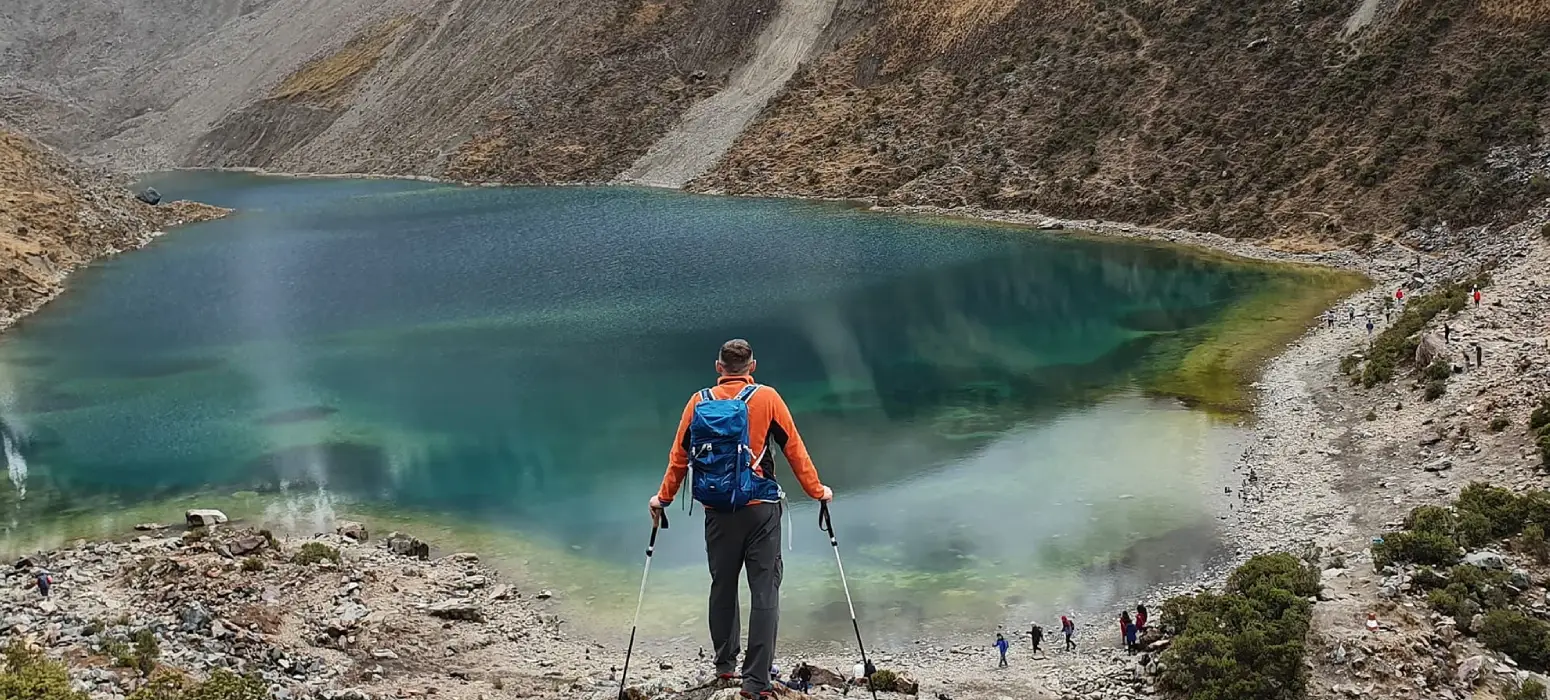
Machu Picchu Challenge 8D/7N
Cusco, Sacred Valley Humantay Lagoon, Rainbow Mountain & Machu Picchu.
View Tour
Colonial Lima and Sacred land of the Incas 7D/6N
Lima, Cusco, Sacred Valley & Machu Picchu.
View Tour


