ES
ES
 PT
PT
Imagine standing in the magnificent Plaza de Armas of Cusco. The crisp, high-altitude air is thick with the scent of burning palo santo resin and roasting meats. Suddenly, the deep, rhythmic beating of a bass drum echoes off the ancient stone walls of the Cathedral. Emerging from the massive wooden doors is a sight that defies time: a colossal, gilded statue of a patron saint, adorned in jewels and vibrant velvet, carried on the shoulders of dozens of fiercely devoted locals.
Table of Contents
I still remember my first time witnessing this sheer explosion of faith and color. Running a hand along the cold, baroque stone of a nearby colonial archway, I watched as Christian iconography flawlessly merged with the ancient rhythms of the Inca Empire. It is not just a religious procession; it is a profound, sensory masterpiece. This is the Corpus Christi celebration in Cusco.
When curating the ultimate itinerary of the best things to do in Cusco, experiencing this monumental event is the absolute pinnacle of cultural immersion. It is undeniably the crown jewel of all Cusco festivals in June.
Today, let me guide you through the hidden history, the culinary delights, and the exclusive logistics of navigating the majestic Corpus Christi in Peru.
What is the fascinating history behind Corpus Christi?
To understand the sheer magnitude of the Corpus Christi celebration in Peru, one must step back into the 16th century.
When the Spanish conquistadors arrived in Cusco, they witnessed a massive, deeply ingrained pagan festival. During the winter solstice, the Incas would parade the mummified remains of their past emperors around the main square to honor the Sun God, Inti.
The Spanish, determined to establish Catholicism, could not simply erase such a deeply rooted tradition. Instead, they brilliantly replaced it through a process of cultural adaptation:
- The Mummies were replaced: Towering, magnificent statues of Catholic saints and the Virgin Mary took the place of the Inca royals.
- The Dates were aligned: The Catholic calendar was synchronized with the Andean harvest festivals.
- The Devotion remained: The local people embraced the new saints, but infused the celebrations with their own indigenous music, dancing, and fierce energy.
Thus, Corpus Christi in Cuzco, Peru, was born. Today, the statues may be Catholic, but the soul of the event is undeniably Incan.
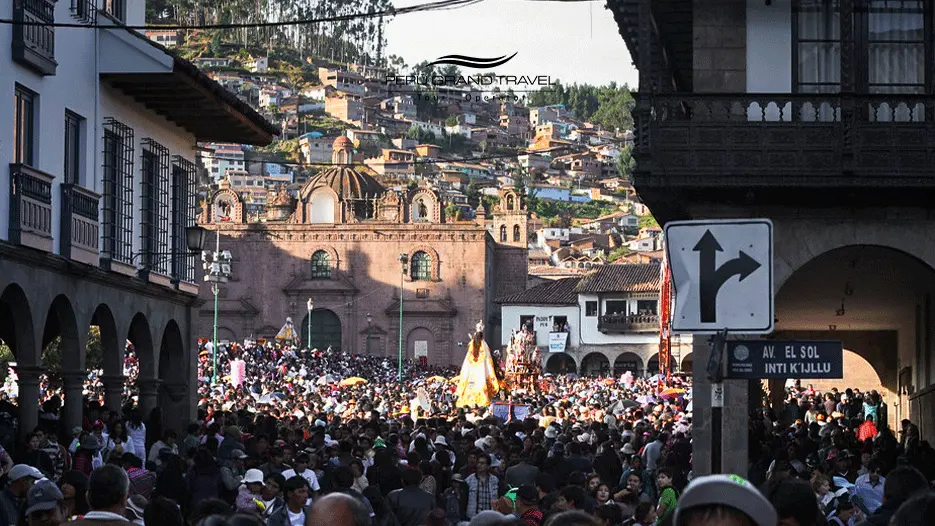
Who are the 15 majestic saints of the Corpus Christi celebration in Peru?
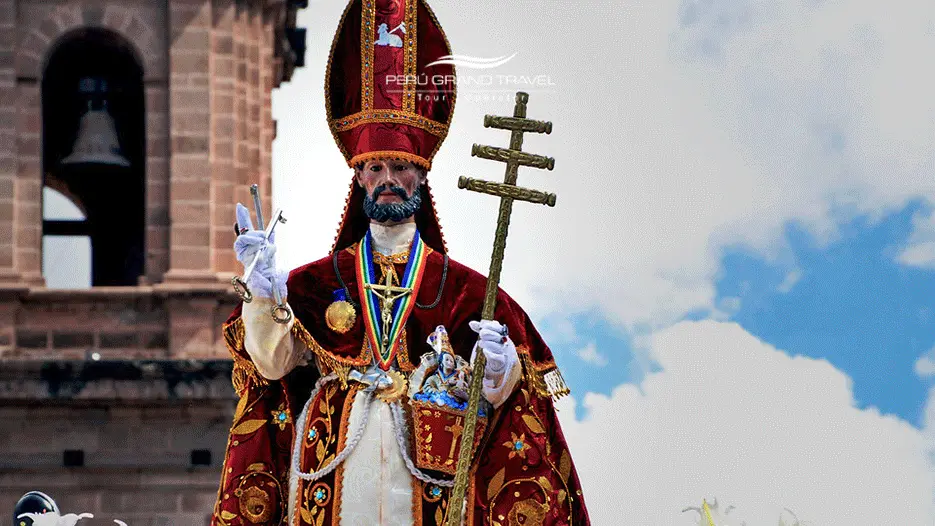
The beating heart of the Corpus Christi spectacle revolves around fifteen statues of saints and virgins, each fiercely protected and carried by members of their respective parishes. These are not ordinary statues; they are life-sized—often larger—and heavily adorned in colonial silver, gold leaf, and intricately embroidered velvet.
Watching the distinct personalities, the unique musical bands, and the joyful, centuries-old rivalries between the parishes is a highlight of the festival. The complete procession follows a strict traditional order. Keep your eyes open for these magnificent figures:
- San Antonio – from the parish of San Cristóbal: He usually leads the procession, accompanied by joyful music.
- San Jerónimo – from the district of San Jerónimo: Known for a legendary, friendly rivalry with San Sebastián to see who arrives at the Cathedral first.
- San Cristóbal – from the parish of San Cristóbal: Famous for his towering height and an incredibly heavy litter that requires immense strength to carry.
- San Sebastián – from the district of San Sebastián: A fan favorite, often paraded barefoot by his devoted followers in a display of profound faith.
- Santa Bárbara – from the district of Poroy: Brought from the furthest distance, her arrival is always highly celebrated.
- Santa Ana – from the parish of Santa Ana: The patroness of the historic artisan neighborhood of the same name.
- Santiago Apóstol – from the parish of Santiago: Depicted riding a magnificent white horse, his litter is one of the most visually striking.
- San Blas – from the parish of San Blas: The patron saint of Cusco’s famous bohemian and artists’ quarter.
- San Pedro – from the parish of San Pedro: Carries the symbolic keys to heaven.
- San José – from the parish of Belén: Adorned with beautiful floral arrangements and colonial silver.
- Virgen de la Natividad – from the parish of Almudena: Highly venerated and known for her exquisite, jewel-encrusted robes.
- Virgen de los Remedios – from the church of Santa Catalina: Surrounded by intense devotion and deeply moving choral music.
- Virgen Purificada – from the parish of San Pedro: Also known as the Virgin of Candelaria, glowing in meticulous colonial silverwork.
- Virgen de Belén – from the parish of Belén: The glorious patroness of Cusco, glittering in pure silver and spectacular jewels.
- Virgen de la Inmaculada Concepción – from the Cathedral Basilica: Affectionately known as “La Linda” (The Beautiful One), she acts as the host, waiting at the Cathedral to welcome all the visiting saints.
How exactly is Corpus Christi experienced in Cusco?
Our English-speaking guests—who deeply appreciate high-end cultural authenticity—frequently ask how this massive festival unfolds and how to avoid the chaos.
The Corpus Christi holiday in Peru is celebrated 60 days after Easter Sunday (always falling on a Thursday, usually in June). The atmosphere is an absolute sensory overload:
- The Visuals: An explosion of traditional costumes of Corpus Christi in Peru, featuring dancers in hand-embroidered masks representing demons, condors, and Spanish colonizers.
- The Paths: The streets are beautifully paved with meticulous carpets of flower petals.
- The Comfort: While the crowds in the main square are massive, your experience doesn’t have to be. By securing a spot on a private, colonial balcony, you can sip an elegant Pisco Sour in tranquility while witnessing the greatest show in the Andes unfold directly below.
FACT CURIOUS
Did you know that some of these statues weigh up to 2 tons and require up to 60 men to carry them? The “cargadores” (carriers) consider it a supreme honor and undergo rigorous physical and spiritual preparation for the Corpus Christi celebration in Peru!
What luxury culinary delights are unique to the Corpus Christi holiday in Peru?
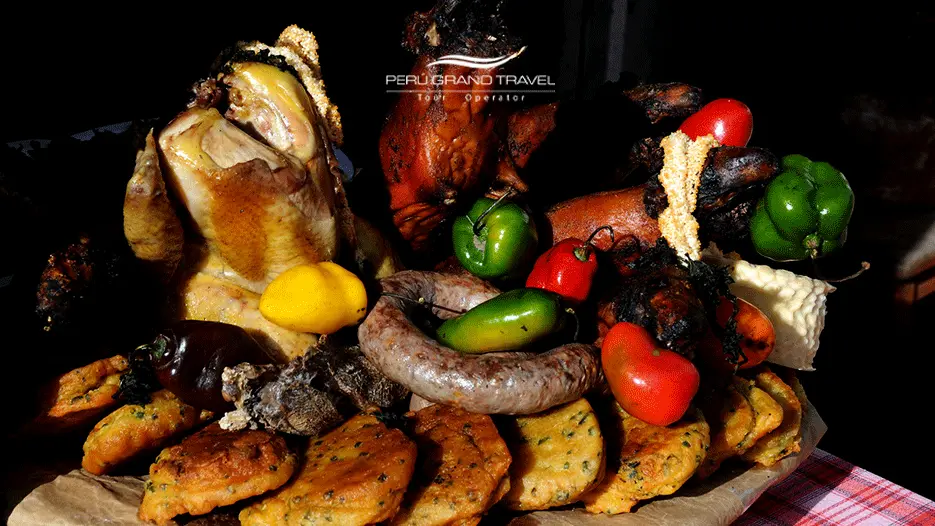
You cannot fully experience the Corpus Christi festival without engaging your palate. As the procession winds down, the city transforms into a massive culinary fair centered around one legendary dish: Chiri Uchu.
Translating from Quechua as “Cold Chili,” this dish represents the bringing together of ingredients from the coast, the mountains, and the jungle. A traditional Chiri Uchu plate is a mountain of flavors, featuring:
- Roasted guinea pig (Cuy)
- Boiled chicken and handmade sausages
- Charqui (alpaca jerky)
- Toasted corn, cheese, and fresh seaweed
- A crown of spicy rocoto pepper
While traditional street vendors sell it by the thousands, discerning palates often prefer to enjoy a highly refined, gourmet interpretation of this classic dish in one of Cusco’s top-tier restaurants, paired with a crisp white wine.
Schedule for the Corpus Christi celebration 2026
Attending the Corpus Christi holiday in Peru requires precise planning. The logistics of navigating a city where 15 colossal statues are moving through the streets can be complex.
To help you visualize your itinerary, here is the detailed schedule for the Corpus Christi 2026 celebration:
- June 3 – La Entrada | The Entry: The anticipation builds. The saints leave their respective temples and parishes—some starting their journey at dawn—and parade through the streets until they all converge at the Cathedral in the Plaza de Armas.
- June 4 – The Central Day: This is the visual climax. Following a solemn morning mass, all 15 saints are paraded around the perimeter of the Plaza de Armas in a spectacular procession of incense, dancing, and music before returning inside the Cathedral.
- June 10 – La Octava | The Octave: After residing together in the Cathedral for a week, the saints are taken out for one final procession around the square before making the long, joyous journey back to their home parishes.
ADVICE TRAVEL
If you wish to view the procession from street level, you must arrive at the Plaza de Armas by 7:00 AM to secure a standing spot, as the crowds grow massive very quickly. However, standing shoulder-to-shoulder for hours can be exhausting.
For a truly authentic experience, the absolute best way to witness the Corpus Christi celebration in Peru is by booking a private balcony (palco) in one of the colonial restaurants or hotels lining the Plaza de Armas. From this elevated vantage point, you can comfortably observe the intricate Corpus Christi clothing in Peru, photograph the spinning dancers from above, and enjoy a warm coffee or Pisco Sour without the stress of the crowds below. We specialize in securing these highly coveted viewing spots for our guests, ensuring your cultural immersion is as comfortable as it is breathtaking.
What souvenirs and photos should you capture during Corpus Christi?
The visual richness of Corpus Christi in Peru provides endless inspiration.
- For your camera: Focus on the contrasting expressions. Capture the breathless devotion of the cargadores straining under the litters, juxtaposed with the hypnotic spinning of the masked dancers.
- For your suitcase: The best souvenirs are the miniature, handcrafted replicas of the saints made by artisans from the San Blas neighborhood. Additionally, look for woven textiles that feature the intricate Corpus Christi clothing in Peru.

What other destinations perfectly combine with Corpus Christi in Peru?
If your itinerary centers around the Corpus Christi festival, you are arriving during the absolute peak season for tourism in Peru.
After witnessing the grand procession, the natural progression is to embark on a luxury train ride through the Sacred Valley to the crown jewel itself, Machu Picchu. If you are seeking a broader perspective, reviewing the top things to do in Perú is your perfect starting point.
To ensure that spectacular events are not missed, review the complete guide to all festivals in Peru 2026.
Practical Guide: Weather, Altitude, and What to Wear
June in Cusco is the height of the Andean winter. While the skies are a brilliant blue, the temperature shifts are dramatic.
| Visitor Consideration | Festival Details |
|---|---|
| City Altitude | 11,152 feet (3,399 meters) above sea level. |
| Typical Weather | Brilliant sunshine by day (65°F / 18°C), freezing temperatures at night (35°F / 2°C). |
| Required Clothing | The “Onion Rule”: Light shirts for midday, elegant alpaca sweaters, and a warm overcoat for the evening. |
| Sun Protection | Non-negotiable: Wide-brimmed hat, polarized sunglasses, high-SPF sunscreen. |
| Festival Vibe | Highly crowded in public squares. We provide private balconies for a relaxed viewing experience. |
Frequently Asked Questions | FAQ
1. Is it true that Corpus Christi is a holiday in Peru?
Yes, it is a national holiday. However, the celebrations in Cusco are by far the largest, most spectacular, and most deeply rooted in indigenous tradition in the entire country.
2. Do I need to be Catholic to appreciate the festival?
Not at all. While the Corpus Christi celebration in Peru is deeply religious for the locals, for international travelers, it is an unparalleled exhibition of history, music, and anthropology.
3. Are the streets safe during the massive Corpus Christi celebration?
Yes, the atmosphere is joyful, respectful, and heavily policed. However, securing private transportation and exclusive viewing areas ensures the experience remains elegant and stress-free.
4. How long does the Corpus Christi festival last in Cusco?
While the main procession occurs on Thursday, the entire event spans eight days. The saints reside in the Cathedral for a week before returning to their parishes in another vibrant parade.
5. Will the festival disrupt my tours to Machu Picchu or the Sacred Valley?
If poorly planned, yes, as the historic center is closed to traffic. However, with expert logistical planning, train departures and valley excursions are routed away from the closed streets, guaranteeing zero interruptions.
Secure Your VIP Access to the Greatest Andean Spectacle
To witness Corpus Christi in Peru is to see the very soul of Cusco laid bare across its cobblestone streets. It is an intricate, golden tapestry woven from both Inca resilience and Spanish grandeur, reminding us why travel remains the ultimate privilege.
⚠️ URGENT NOTICE FOR 2026 TRAVELERS:
Because this spectacular festival aligns with the peak of the Andean dry season and closely precedes Inti Raymi, June is unequivocally the busiest month in Cusco. The most coveted private balconies overlooking the Plaza de Armas—and the finest luxury boutique hotels—are booked almost a full year in advance by discerning global travelers.
Do not leave your cultural immersion to chance, and never settle for navigating exhausting crowds on your own. You deserve the exclusivity of an elite itinerary, the insight of an expert guide, and a journey completely free from logistical friction.
At Perú Grand Travel, we specialize in these highly curated, VIP cultural experiences. We respect your desire for exclusivity and fill your journey with absolute wonder, keeping you far away from the exhausting crowds and logistical friction.
Are you ready to witness the magic of the Andes in flawless luxury? Contact us today and explore our Exclusive Travel Packages, and let’s design the perfect cultural adventure for you before our 2026 calendar closes.

Experiences

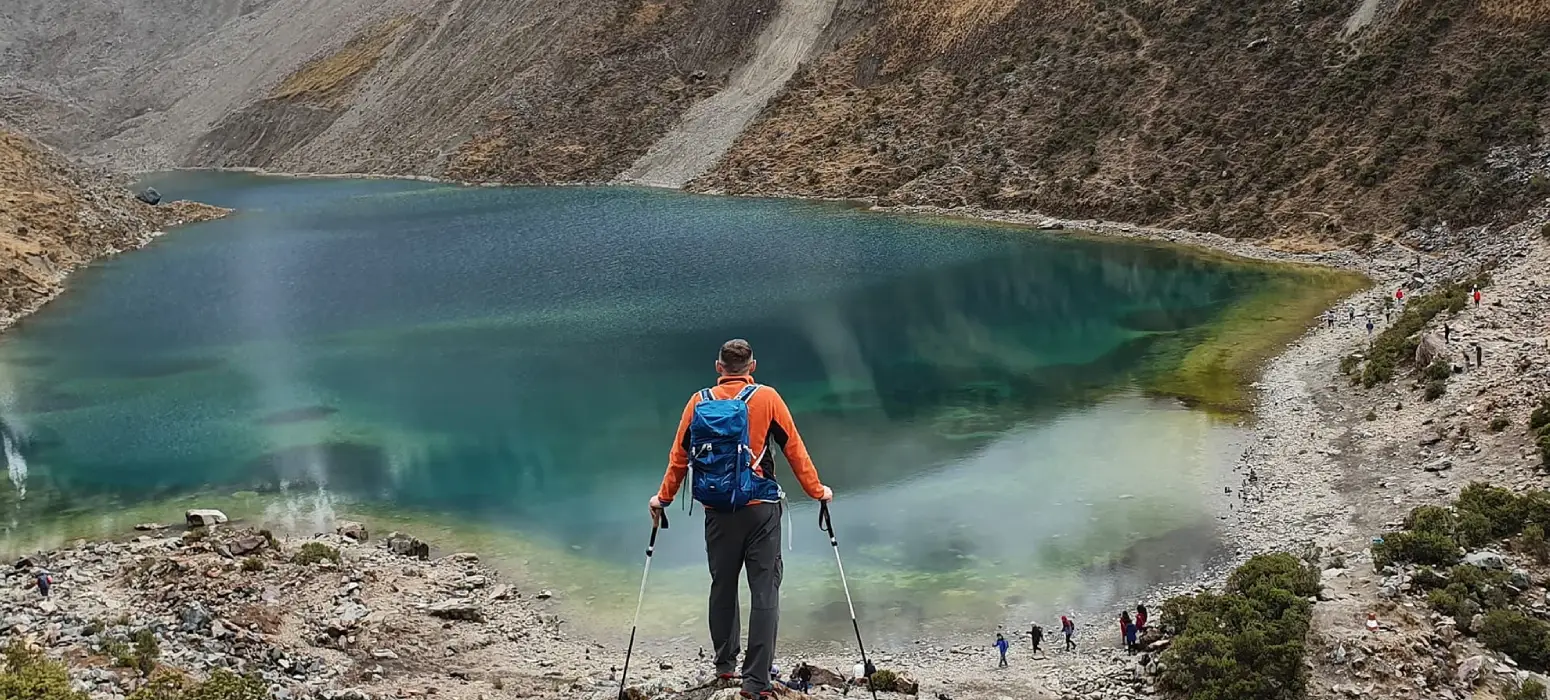
Machu Picchu Challenge 8D/7N
Cusco, Sacred Valley Humantay Lagoon, Rainbow Mountain & Machu Picchu.
View Tour
Colonial Lima and Sacred land of the Incas 7D/6N
Lima, Cusco, Sacred Valley & Machu Picchu.
View Tour