

Welcome, my dear traveler. If we were sharing a glass of Malbec in a quiet lounge in Lima right now, and you asked me where to find the beating heart of the Andes, I wouldn’t send you to a ruin. I would send you to a party. But not just any party. I am talking about Puno in February. I am talking about the Virgin of Candelaria.
Table of Contents
To the untrained eye, it might look like chaos: 40,000 dancers, 5,000 musicians, and days of unceasing thunder from brass bands. But to the sophisticated observer—and I know you are one—it is a masterpiece of syncretism. It is where the Catholic faith shakes hands with the Andean worldview (Cosmovisión), creating a spectacle so profound that UNESCO declared it Intangible Cultural Heritage of Humanity.
As your host, allow me to guide you through the thin air of the Altiplano. Let us unravel the mystery of who the Virgin of Candelaria is, why she commands such devotion, and how you can experience this event with the comfort and exclusivity you deserve.

What is the significance of the Candelaria in the Catholic Church and the Andes?
To understand the Feast of the Virgin of Candelaria, we must first look at the calendar. February 2nd marks the presentation of the baby Jesus at the temple and the purification of the Virgin Mary, 40 days after Christmas. In the Catholic tradition, candles (candelas) were blessed to symbolize Christ as the light of the world.
However, in the Andes, nothing is ever strictly one-dimensional.
- February is also the height of the rainy season. It is the time when the earth is fertile, getting ready for the harvest.
- The Ancestral Layer: For centuries, the indigenous people performed rituals to the Pachamama (Mother Earth) during this period. When the Spanish arrived, they didn’t erase these traditions; they layered them.
The Virgin of Candelaria became the face of Pachamama. The candles became prayers for a good harvest. When you see a dancer spinning in a heavy, embroidered costume, sweating in the freezing Puno morning, they are honoring the Virgin Mary, yes. But they are also dancing for the earth that sustains them. This duality is what makes the Virgin of Candelaria so captivating.
Did you know? The Virgin of Candelaria is often associated with the Coya or the Inca Queen, and the lake itself. Puno sits on the shores of Lake Titicaca, the mythical birthplace of the Inca Empire. The festival is a constant dialogue between the water, the earth, and the heavens.
Who is the Virgin of Candelaria, and why is she the Patron Saint of Puno?
The image of the Virgin of Candelaria is small, delicate, and has a serene complexion, contrasting sharply with the harsh, rugged landscape of the Altiplano. But do not let her size fool you; her power is legendary.
The Legend of the Miracle
The story goes back to the 18th century. Legend has it that the city of Puno was under siege by the rebel army of Túpac Catari (or in some versions, Túpac Amaru II). The locals, outnumbered and terrified, took the statue of the Virgin of Candelaria out in a procession. They lit hundreds of candles and marched with instruments.
The besieging army, seeing the glow of the candles and hearing the thunderous noise in the night, believed a massive reinforcement army had arrived to save the city. They retreated in fear. Since that night, she has been the “Mamita Candelaria,” the protector of the city.
Today, the Virgin of Candelaria is not just a statue; she is a mother figure. The devotion you will see in the eyes of the pilgrims—tough miners, market ladies, and young students alike—is raw and moving. It is a reminder that in Peru, faith is not a quiet contemplation; it is a loud, colorful, collective action.
Why is the Festivity of Virgen de la Candelaria a UNESCO Masterpiece?
In 2014, UNESCO officially declared the Festivity of Virgen de la Candelaria as an Intangible Cultural Heritage of Humanity. But what does that actually mean for you, the traveler?
It means that the “luxury” of this experience isn’t found in a five-star hotel (though we will certainly ensure you stay in one), but in the authenticity of the heritage.
- The Scale: Over 40,000 dancers and 9,000 musicians fill the streets.
- The Craftsmanship: Every mask is a piece of fine art, often taking months to complete by master “Mascareros.”
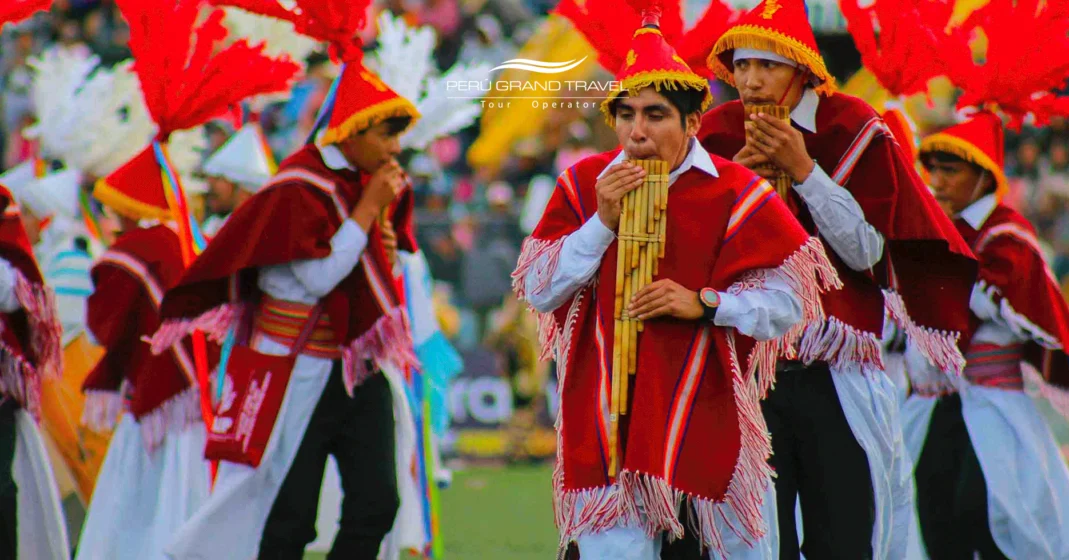
- The Music: The “Siku” (panpipe) music is an ancestral echo that predates the arrival of the West.

This celebration is a vital part of the calendar of festivals in Peru, and it serves as a bridge to other major events. If you are curious about how this fits into the broader tapestry of our traditions, I highly recommend exploring our comprehensive guide to festivals in Peru 2026. It is the compass you need to navigate the soul of the Andes.
What happens during the Festivity of Virgen de la Candelaria?
Prepare your senses, because the Festivity of Virgen de la Candelaria is an endurance sport for the soul. The festival is split into two main acts, each with its own flavor.
The Day of the Virgin (February 2nd)
This is the solemn, liturgical day. A massive mass is held in the main square, followed by the procession. If you appreciate tradition and intimacy, this is the day to be there. You will see the Virgin of Candelaria being carried through the streets, while petals rain down from the balconies. The atmosphere is thick with incense and piety.
The Octava (The Eighth Day)
This is the explosion. Seven days after the main feast, the “Great Parade” takes place. This is where the Virgin of Candelaria watches over her children as they dance. And when I say dance, I mean miles of dancers.
- The Diablada: The Dance of the Devils.
- The Morenada: The Dance of the Black Slaves.
- The Caporales: The Dance of the Foremen.
- The Sikuris: The Panpipe players.
| Feature | The Indigenous/Regional Phase | The “Mestizo” / Octava Phase |
| Main Music | Panpipes (Sikus) and flutes | Brass bands and drums |
| Costumes | Natural fibers, traditional weaving | Sequins, light-reflecting glass, velvet |
| Energy | Earthy, ancestral, grounded | High-octane, theatrical, colorful |
| Key Dance | Sicuris, Llameradas | Diablada, Morenada, Caporales |
Why is the Diablada the symbol of the Virgin of Candelaria?
If there is one image that defines the Virgin of Candelaria, it is the mask of the Devil. Large, bulging eyes, twisted horns, dragons, and serpents. It seems contradictory, doesn’t it? Dancing devils for a Virgin?
The Diablada represents the eternal struggle between Good (Archangel Michael) and Evil (Lucifer and the seven deadly sins). It was originally used by Jesuit missionaries to teach Christianity to the indigenous people. However, the miners of the region adopted it. They worked deep underground, in the domain of the “Tio” (the lord of the underworld).
Dancing the Diablada is a way to ask for protection in the mines and forgiveness for sins. The costumes are masterpieces of embroidery, costing thousands of dollars and weighing up to 20 kilos. When a dancer jumps and spins for the Virgin of Candelaria at 3,800 meters above sea level, under the weight of that costume, it is an act of supreme sacrifice and devotion.
Important Data: A dancer might save money for the entire year just to pay for their costume and the band. It is a matter of prestige and faith. Being a “Caporale” or a “China Supay” (Devil Woman) in the Festivity of Virgen de la Candelaria gives you status in the community.
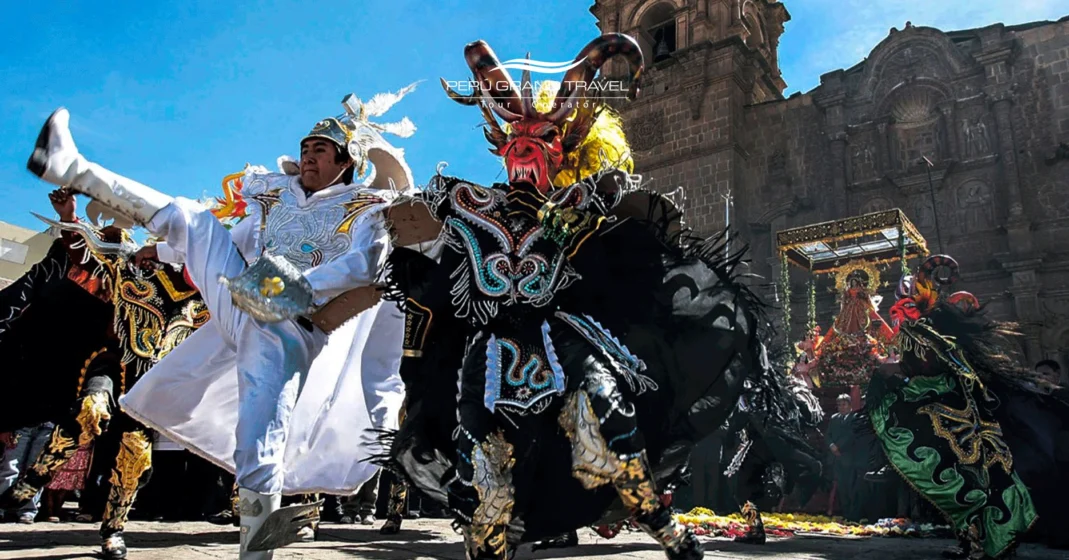
- Visual: A dynamic shot of a Diablada dancer mid-jump, showing the vibrant colors and the detailed mask with the crowd in the background.
- Alt Text: Diablada dancer performing during the Festivity of Virgen de la Candelaria in Puno.
What are the statues in Candelaria and what do they represent?
While the Virgin of Candelaria is the star, the streets are filled with living statues. The dancers transform into archetypes that tell the history of Peru.
- The Archangel: Represents divine power.
- The Caporal: Represents the mixed-race foremen who oversaw the slaves in the colonial era. They dance with bells on their boots to mark the rhythm of authority.
- The Morenos: Represent the African slaves brought to work in the silver mines. Their masks have protruding tongues (symbolizing exhaustion), and they carry rattles that sound like chains.
- The Cholitas: Women in shimmering, short polleras (skirts) spinning like tops. They represent the strength and beauty of the Andean woman.
Each character pays homage to the Virgin of Candelaria in their own language of movement. It is a theater of memory played out on the asphalt.
Is it worth visiting Puno during the Virgin of Candelaria vs. other times?
This is the question I get asked most often by my clients in New York. “Is it too crowded? Should I go when it’s quieter?”
Let’s be honest. Puno during the Virgin of Candelaria is intense. The city bursts at the seams. Hotels are booked months in advance, and the noise is constant. If you are looking for a silent retreat, come in May or August.
However, if you want to feel the raw energy of the Andes, you must come in February.
- The Energy: You cannot replicate the vibration of 100 brass bands playing simultaneously.
- The Visuals: The costumes are fresh, the streets are decorated, and the joy is contagious.
Visiting the Virgin of Candelaria is seeing Puno in its “Gala Dress.” Any other time, you see the city; in February, you see its soul.
| Feature | February (Candelaria) | Rest of the Year |
| Crowds | Very High | Moderate |
| Atmosphere | Festive, Loud, Chaotic | Calm, Serene, Reflective |
| Accommodation | Premium prices, low availability | Standard prices, good availability |
| Weather | Rainy Season (Green landscapes) | Dry Season (Cold nights, sunny days) |
| Best For | Culture Vultures, Photographers | Nature Lovers, Relaxation Seekers |
What else can you do in Puno besides the festival?
While the Virgin of Candelaria will take up much of your attention, Puno has other treasures that pair perfectly with the festivities.
Lake Titicaca: The Blue Respite
After a day of drums and dancing, escape to the lake.
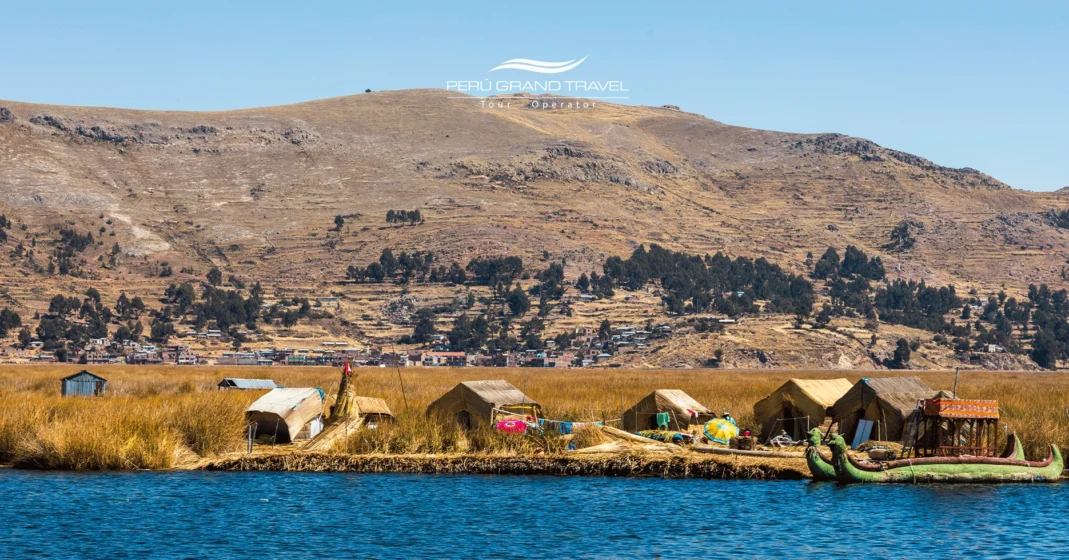
- Uros Floating Islands: Visit the more remote islands to avoid the rush. Seeing how people live entirely on reeds is humbling.
- Taquile Island: Famous for its textile art (UNESCO heritage). The hike offers views that look like the Mediterranean.
- Luxury Catamaran: We can arrange a private sunset cruise. Imagine floating on the cradle of the Incas with a glass of champagne, watching the sun dip behind the mountains.
Sillustani: The Tower of the Dead
Located about 45 minutes from Puno, these pre-Inca burial towers overlooking Lake Umayo are stunning. Visiting them provides a stark, quiet contrast to the noise of the Virgin of Candelaria. It is a place to contemplate the cycle of life and death.
Advice Grand: Combine and Conquer: Use the mornings for excursions (Lake Titicaca or Sillustani) when the parades are just warming up, and spend the afternoons and evenings immersing yourself in the festival. This balances nature and culture perfectly.
How does the altitude of Puno affect the experience?
Puno sits at 3,827 meters (12,556 feet). This is where my “Expert” advice becomes your best friend. Even for the most seasoned traveler, the altitude is a factor that must be respected with “Gobernante” discipline.
- Hydration is non-negotiable: Drink twice as much water as you think you need.
- The Coca Secret: Embrace the local tradition of mate de coca. It is not just folklore; it is a sophisticated biochemical aid for oxygen absorption.
- Luxury Acclimatization: At Perú Grand Travel, we recommend spending a few nights in the Sacred Valley or Arequipa before heading to Puno. This gradual ascent ensures that when the feast of the Virgin of Candelaria begins, you are feeling as vibrant as the dancers.
Advice Grand: I once had a guest from London who thought he could skip the acclimatization. By day two, he was breathless. We moved him to a suite with supplemental oxygen and a private view of the lake. He ended up watching the parade with a glass of champagne in hand, proving that luxury is often about being prepared for the unexpected.
Where is the best place to stay during the Virgin of Candelaria?
During the Festivity of Virgen de la Candelaria, Puno transforms. Every hotel room is a precious commodity. For our guests, we prioritize properties that offer a sanctuary from the vibrant chaos of the streets.
- GHL Hotel Lago Titicaca: Located on Esteves Island, it offers the most sophisticated views of the lake. It is the perfect place to retreat after a day of dancing.
- Casa Andina Premium Puno: A beautiful property that blends colonial charm with modern efficiency.
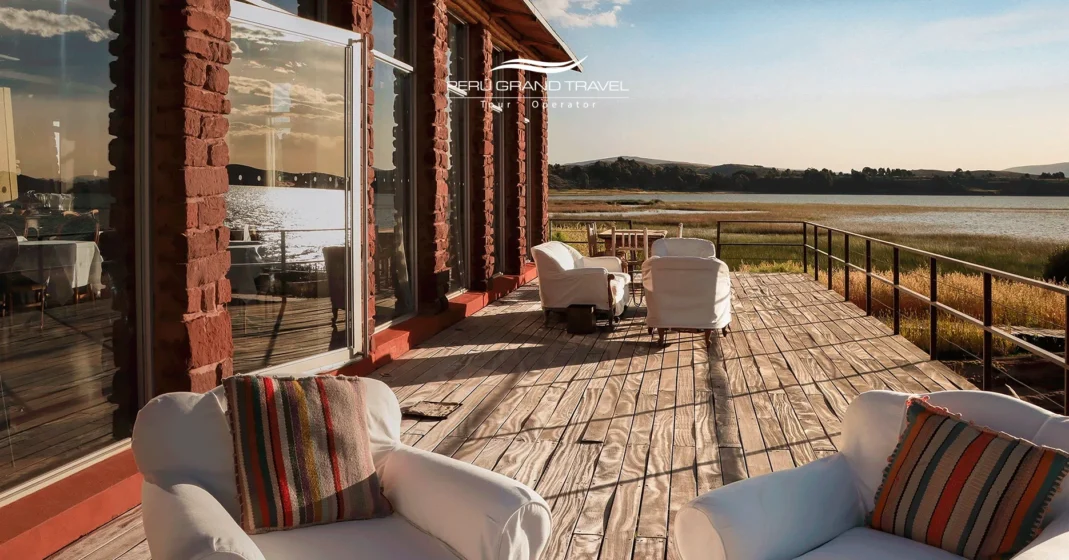
- Titilaka Lodge: For those seeking the ultimate in “Warm Luxury,” this lodge is a bit further from the city but offers a curated, all-inclusive experience that is world-class.
What should you wear to the feast of the Virgin of Candelaria?
The weather in Puno during February is famously unpredictable. You can experience four seasons in a single hour.
- The Base: Think smart-casual layers. A high-quality alpaca sweater is your best investment.
- The Protection: The Andean sun is fierce. A wide-brimmed hat and high-SPF sunscreen are essential.
- The Evening: When the sun goes down, the temperature drops instantly. A stylish, windproof jacket will keep you comfortable during the nighttime “Serenatas.”
Frequently Asked Questions (FAQ)
What is the Virgin of Candelaria, the patron saint of?
The Virgin of Candelaria is the patron saint of the city of Puno and is widely revered across the Altiplano (including Bolivia) as a protector of miners and the fertility of the earth.
What is the meaning of Candelaria in the Catholic Church?
It refers to the “Candlemas,” celebrating the purification of the Virgin Mary and the presentation of Jesus at the temple. The “candles” symbolize the light of Christ.
What does Virgin de la Candelaria symbolize in the Andes?
She symbolizes a powerful syncretism. To the Catholic faithful, she is the Mother of God. To the Andean world, she is closely linked to the Pachamama (Mother Earth) and the Mamacocha (Mother Water/Lake), representing fertility and protection.
Why is the day of the Virgin of Candelaria important?
It marks the end of the Christmas cycle and the beginning of the agricultural harvest season in the Andes. It is a pivotal moment for community bonding, cultural affirmation, and spiritual renewal through the Virgin of Candelaria.
What is the origin of the Virgen de la Candelaria?
The devotion originated in Tenerife, Spain, but in Puno, it took on its own identity in the 16th century. The specific legend of the miracle in Puno dates back to the rebellion era of the 18th century, cementing her status as the city’s guardian.
Which candle is for protection from evil?
During the Virgin of Candelaria feast, all blessed candles are considered protective. However, devotees often keep the candles blessed on February 2nd in their homes to ward off storms, illness, and bad spirits throughout the year.
A Final Invitation
My friend, the Andes are calling. The Virgin of Candelaria awaits with her mantle of stars and the thunder of ten thousand drums. Don’t just read about the magic; come and live it.
At Perú Grand Travel, we are ready to be your hosts for this once-in-a-lifetime celebration. Let us handle the details while you handle the awe.
Are you ready to dance with the devils and pray with the angels? Contact us today to secure your itinerary for February 2026.
We invite you to explore our offers at festivals! Your experience in Peru is just one step away! Contact us now and start living the unique experience you’ve always dreamed of.
More information:
- Visit our English website: Peru Grand Travel
- Visit our Spanish website: Viajes Machu Picchu Tours
- Visit our Portuguese website: Machu Picchu Pacotes

Experiences

Machu Picchu Challenge 8D/7N
Cusco, Sacred Valley Humantay Lagoon, Rainbow Mountain & Machu Picchu.
View Tour
Colonial Lima and Sacred land of the Incas 7D/6N
Lima, Cusco, Sacred Valley & Machu Picchu.
View Tour


