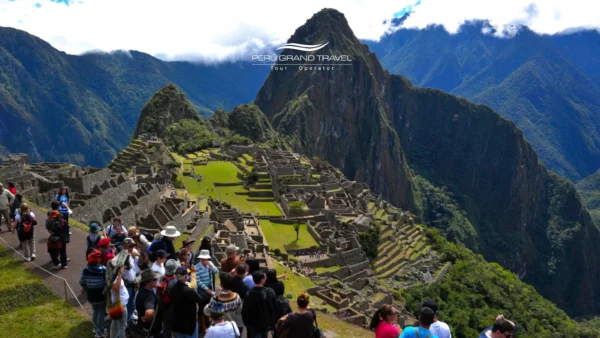
Welcome, my dear traveler. If we were standing together on the terraced slopes of the Sacred Valley right now, watching the first rays of the sun illuminate the ancient stones, I would tell you that you are not merely looking at ruins. You are looking at a language. To visit the temples in Peru is to enter a dialogue with the cosmos that has been ongoing for five thousand years.
Table of Contents
From the misty cloud forests of the Andes to the arid deserts of the coast, these sacred sites are not just archaeological curiosities; they are the physical manifestations of a worldview where the earth (Pachamama), the sun (Inti), and humanity are inextricably linked.
As your host, I have walked the underground galleries of Chavín and felt the energy of the Coricancha. I can tell you that these places possess a silence that speaks louder than words. They are testaments to civilizations that understood engineering as a form of prayer and architecture as a way to map the stars.

In this comprehensive guide, I invite you to explore the most significant temples in Peru. We will decode their mysteries, understand their purpose, and discover why, even today, they remain the spiritual anchors of our culture.
What Is Considered a Temple in Peru?
In the Andean world, a temple is not just a building for worship; it is a “Huaca,” a sacred point of convergence between the earthly world and the divine.
When you explore temples in Peru, forget the European concept of a church with a roof and pews. Here, the landscape itself is often part of the temple. A rock carved to mimic the mountain behind it, a water channel directed to catch the moonlight—these are the elements of Andean sacred architecture.
Were Peruvian temples religious, astronomical, or political?
They were everything at once.
- Spiritual Function: They were homes for the deities (idols) and places for offerings to ensure rain and harvest.
- Astronomical Observatories: Many temples, like the Coricancha, were precise astronomical instruments used to track solstices and equinoxes, crucial for agriculture.
- Political Centers: Controlling the temple meant controlling the calendar and the food supply. The high priests were often the true rulers.
How did Inca and pre-Inca civilizations build temples?
The engineering is staggering. They used “sacred geometry” and materials that resonated with the environment.
- Living Rock: They often carved directly into the bedrock (in situ), blurring the line between nature and architecture.
- Aseismic Design: The famous trapezoidal doors and inclined walls were not just aesthetic; they were designed to dance with earthquakes, not resist them.

How Many Temples Are There in Peru?
While there is no single official count, archaeologists estimate there are thousands of ceremonial sites (Huacas) scattered across Peru, with discoveries happening every year.
It is impossible to give an exact number because the definition of “temple” is fluid in the Andes. Is a mountain peak (Apu) a temple? To the locals, yes. Is a small roadside shrine a temple? Absolutely.
Why is there no exact number
- Buried History: Many temples, especially on the coast (like those of the Lima culture), are still buried under sand or modern city expansion.
- Living Landscape: For the Incas, a spring or a rock formation could be as sacred as a built structure.
- Ongoing Excavations: Just recently, new temples have been found in the Lambayeque region and the high jungle.
Estimated number of temples in Peru by region
Here is a breakdown of where the highest concentrations of known ceremonial centers are found:
| Region | Key Civilizations | Estimated Major Temples | Notable Examples |
| Cusco | Inca, Wari | 300+ | Coricancha, Sacsayhuamán |
| Ancash | Chavín, Recuay | 150+ | Chavín de Huántar, Sechín |
| La Libertad | Moche, Chimú | 100+ | Huaca del Sol, Chan Chan |
| Lima | Lima, Ychsma | 50+ (urban) | Pachacamac, Huaca Pucllana |
| Lambayeque | Lambayeque, Sicán | 80+ | Túcume, Sipán |
DID YOU KNOW?
Hidden in Plain Sight: More than 60% of ceremonial sites in Peru are still partially unexplored or overgrown by vegetation, especially in the cloud forest regions. The adventure of discovery is far from over.
The Titans of Antiquity: An In-Depth Guide to Inca & Pre-Inca Temples
To understand Peru, one must walk the grounds of its ancient. These are not merely ruins; they are the architectural signatures of civilizations that tamed the Andes, the desert, and the cloud forest long before the first European arrived.
While the Incas are the most famous, they are merely the final chapter of a story that spans 5,000 years. The sheer variety of temples in Peru is staggering. Here is a curated, deep-dive selection of the archaeological giants you must prioritize.
Machu Picchu: The Sanctuary in the Clouds
It is the icon, but do not miss the details. Machu Picchu was not just a royal estate; it was a profound spiritual center. Within the citadel, specific temples served distinct purposes:
- The Temple of the Sun: The only semi-circular building in the complex, built with exquisite precision on top of a massive natural rock. Its window is perfectly aligned to capture the first rays of the winter solstice sun. Only the Emperor and high priests could enter here.
- The Temple of the Condor: A stunning example of organic architecture. The Incas used a natural rock formation on the ground to shape the head and neck of a condor, adding stone wings above. It represents the Hanaq Pacha (the spirit world above).
- The Temple of the Moon (Huayna Picchu): Located on the steep sister mountain, Huayna Picchu, this cavern temple is a mystical, hidden gem. It houses ceremonial niches carved deep into the cold rock, likely used for fertility rituals. It is quieter, darker, and deeply atmospheric.
Caral-Supe: The Cradle of Civilization
Before the Incas, before the Romans, and contemporary with the Egyptians, there was Caral. Located in the arid Supe Valley north of Lima, this is the oldest city in the Americas (5,000 years old).
- The Experience: Standing before the Greater Pyramid, you realize you are looking at the dawn of human organization in this hemisphere. Unlike other empires, no weapons or walls were found here—only flutes made of condor and pelican bones. It was a civilization built on trade and religion, not war.

Kuelap: The Fortress of the Cloud Warriors
High in the northern Andes, shrouded in mist and orchids, the Chachapoyas people built this massive walled city. Often called the “Machu Picchu of the North,” Kuelap is wilder and more raw.
- The Architecture: The site features over 400 circular stone houses, distinct from the rectangular Inca style. The massive ceremonial walls, reaching up to 20 meters high, protect temples decorated with rhomboid friezes representing the eyes of the jaguar. Taking the modern cable car up to the ruins offers a view of the Andes that is simply cinematic.

Sacsayhuamán: The Head of the Puma
Overlooking Cusco, this site is a marvel of megalithic engineering. While often called a fortress, its zig-zag walls (representing lightning/Illapa) suggest a profound ceremonial purpose.
- The Stones: The limestone blocks here are the largest in the Inca empire—some weighing over 100 tons. They fit together so perfectly that not even a blade of grass can slide between them. It is the stage for the modern Inti Raymi festival, proving it remains a living temple today.
Ollantaytambo: The Living Temple
This is one of the few places where the town itself is still inhabited, maintaining the original Inca street grid.
- The Temple of the Sun: Climb the steep terraces to reach the unfinished Temple of the Sun at the top. Here, six massive monoliths of pink rhyolite stand facing the morning light. The fact that it was unfinished when the Spanish arrived gives us a frozen-in-time look at how these master builders worked.

The Coricancha (Qorikancha): The spiritual axis of the entire Inca Empire.
If you visit only one temple, let it be this one. Coricancha translates to “Golden Enclosure” in Quechua, and it was literally that. In Cusco stands as the supreme Temple of the Sun
Coricancha – The Golden Temple of the Sun
- Spiritual Significance: It was the dwelling place of Inti, the Sun God. It was the center point from which the Ceque system (imaginary lines connecting holy sites) radiated across the empire.
- The Gold: Chronicles tell us the walls were covered in sheets of solid gold, and the gardens were filled with life-sized gold and silver corn, llamas, and shepherds.
- The Conquest: Today, the Dominican Convent sits on top of it. The contrast between the smooth, imperial Inca stonework and the colonial Spanish architecture is the most powerful visual metaphor for Peruvian history.
How Coricancha influenced Inca urban planning
The temple was the “navel” of the world (Qosqo). The entire city was designed in the shape of a Puma, with Sacsayhuamán as the head and Coricancha at the heart (or genitals, depending on the interpretation of fertility).

Which Is the Most Important Peruvian Temple Located in the Ancash Region?
Chavín de Huántar is the undisputed “Mother Temple” of the Andes, a complex labyrinth that served as the most important pilgrimage site in Peru for over a thousand years.
Long before the Incas, there was Chavín. Located in the Ancash highlands, this temple was a center of sensory manipulation and served as the home of high priests.
Chavín de Huántar – The Mother Temple of Andean Civilization
- The Chavín culture (1500–300 BC) had a profound influence on almost every civilization that followed.
- The Underground: The temple is famous for its network of underground galleries (ventilated by acoustic ducts that make the wind roar like a jaguar).
- El Lanzón: Deep inside the labyrinth stands the “Lanzón Monolithic,” a terrifying deity carved in granite with fangs and claws. It is still in its original position, connecting the heavens and the underworld.
Why Chavín shaped future Peruvian temples
Chavín established the template for Andean religion: the jaguar cult, the use of hallucinogenic cactus (San Pedro) for rituals, and the duality of male/female.
DID YOU KNOW?
Ancient Legacy: Chavín de Huántar predates the Inca Empire by more than 2,000 years. It was already an “ancient ruin” when the first Inca ruler was born.

IMPORTANT FACT
The Center of Power: Coricancha was once considered the spiritual center of the Inca Empire. Only the elite could enter, and they had to do so barefoot and carrying a load on their backs as a sign of humility.
The Adobe Giants of the Coast
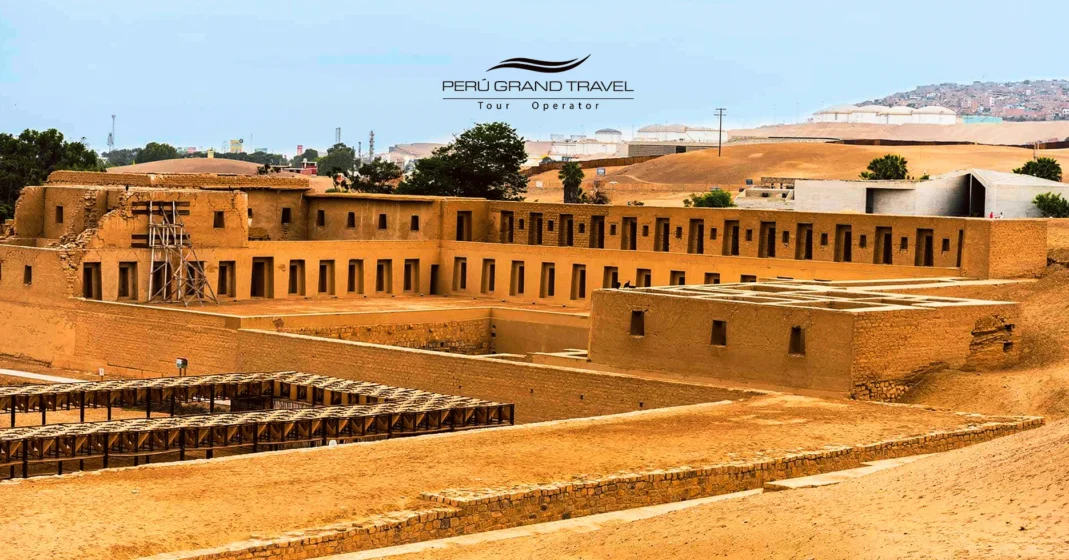
The coast of Peru offers a completely different aesthetic: massive pyramids made of mud bricks (adobe) that have survived centuries due to the arid climate.
- Huaca Pucllana (Lima): Imagine dining next to a 1,500-year-old pyramid in the middle of the modern Miraflores district. Built by the Lima culture using a “bookshelf” technique of vertical bricks to survive earthquakes, it was a ceremonial center for worshiping the sea.
- Huacas del Sol y la Luna (Trujillo): The Moche culture built these colorful giants. The Huaca de la Luna (Temple of the Moon) is the highlight. Unlike the bare stone of the Andes, these walls are covered in original polychrome murals depicting their fearsome “Decapitator God” (Ai Apaec). It is vibrant, terrifyingly beautiful, and historically vital.

From Temple to Church: The Colonial Transformation
When the Spanish arrived, the definition of “temple” shifted from open-air Huacas to the gilded altars of Christianity. Yet, the spiritual intensity remained the same.
It is impossible to tell the story of temples in Peru without discussing the Great Transition. The Spanish did not just destroy; they superimposed. They built their holiest sites directly atop the indigenous ones to harness the “sacred geography” of the land. This created a unique religious syncretism where Jesus and the Sun God often shared the same altar.
Key sites where faith evolved:
Church of Santo Domingo | Cusco
This is perhaps the most powerful visual definition of the conquest in the Americas. The Spanish Dominican cloister wasn’t just built near the Inca temple; it was built on top of it, using the sacred stones as a foundation.
- The Contrast: As you walk through the cloisters, you see the Baroque bell tower rising directly from the curved, perfectly polished gray walls of the Qorikancha (The Golden Enclosure).
- The Details: Inside, you can trace the history of Peru in the architecture. Look for the distinct trapezoidal niches of the Incas next to the colonial arches. It is a place where the gold of the Sun God once met the silver of the Viceroyalty, creating a tension that still vibrates today.
Cusco Cathedral & La Merced
These are the grandest examples of Andean Baroque, a style that is robust, dramatic, and uniquely Peruvian.

- The Cathedral: Built on the foundations of the Palace of Viracocha Inca, it is a fortress of faith. Inside, do not miss the famous painting of the Last Supper by Marcos Zapata. Look closely at the table: the main dish is not a lamb, but a roasted Guinea Pig (Cuy), and Judas is depicted with the face of Francisco Pizarro. It is a subtle, brilliant act of cultural resistance by the indigenous artist.
- La Merced: Just a block away, its stone cloister is a haven of peace, famous for its jeweled monstrance made of gold and pearls.
Church of San Pedro | Andahuaylillas
Often called the “Sistine Chapel of the Andes,” this church is a lesson in not judging a book by its cover.
- The Surprise: The exterior is a simple, modest adobe structure facing a quiet plaza. But step inside, and your breath is taken away. Every inch of the ceiling and walls is covered in polychrome frescoes, gold leaf, and mirrors.
- The Purpose: These murals weren’t just decoration; they were a tool to teach the native population about the paths to heaven and hell. The baptistery arch features the inscription “I baptize you” in five languages: Latin, Spanish, Quechua, Aymara, and Puquina—a linguistic treasure.
Church of San Francisco | Lima
A masterpiece of the capital’s colonial past, this bright yellow basilica is famous for two things that seem worlds apart: intellect and mortality.
- The Library: Its antique library, filled with thousands of moldering texts and spiral staircases, looks like something out of a Harry Potter novel.
- The Catacombs: Beneath the church lies a vast network of tunnels that served as the city’s cemetery until 1808. Today, you can walk through these eerie, cool passages where the bones of some 25,000 citizens are artistically arranged in geometric patterns. It is a humbling reminder of the city’s deep history.

Las Nazarenas Church Lima
This is the spiritual heart of modern Lima. It houses the image of the Lord of Miracles (Señor de los Milagros).
- The Miracle: The image of Christ was painted on a simple adobe wall by an Angolan slave in the 17th century. When a massive earthquake leveled the entire city, only this wall remained standing.
- The Devotion: Today, it is the most revered image in Peru. Every October (the “Purple Month”), millions of devotees dress in purple and follow the procession, transforming the streets of Lima into a sea of faith and incense.
ADVICE GRAND
Do you want to explore these Catholic masterpieces?
The history of Peru’s cathedrals and convents is so vast and artistically rich that it deserves its own chapter. For a detailed guide on architecture, art, and visiting tips for these sites, please read our dedicated article: Churches in Peru: A Complete Guide to Historic Sacred Sites. This guide focuses on the ancient archaeological temples, but the story is incomplete without visiting the churches.
How Do Ancient Temples in Peru Connect to Modern Spiritual Travel?
Visiting temples in Peru today is not just about looking at old stones; it is about reconnecting with a living wisdom that views the earth as sacred.
Experiential tourism and sacred routes
- Ancestral Rituals: We can arrange for you to participate in a “Pago a la Tierra” (payment to the Earth) with an Andean priest (Altomisayoq). It is a moment of gratitude and grounding.
- Spiritual Treks: Walking the Inca Trail is, historically, a pilgrimage to the temple of Machu Picchu. Doing it with intention transforms it from a hike into a meditation.
Why visiting temples in Peru is more than sightseeing
In a world of distraction, these temples offer focus. The precision of the stones, the alignment with the stars, and the silence of the mountains invite you to slow down and listen.
ADVICE GRAND
Go Deeper: To truly understand a temple in Peru, visit it with a local guide who understands both history and living traditions. They can explain not just how it was built, but why it still matters to the people living next to it.
Can You Visit Temples in Peru Responsibly?
Respect is the currency of the sophisticated traveler. These sites are fragile and, for many, still sacred.
Cultural respect and preservation
- Do not touch: The oils from our hands degrade the stone and adobe.
- Stay on the path: Deviating can damage unexcavated areas.
- Silence: Treat these sites with the same reverence you would a cathedral.
Sustainable tourism practices
Choose operators (like Peru Grand Travel) that support local communities and fund preservation efforts. Your ticket price often goes directly to conservation.
Best seasons to visit temples
- Coast | Pachacamac, Trujillo: Year-round, but summer (Dec-April) is hot.
- Andes | Cusco, Chavín: Dry season (May-October) offers the best light for photography and blue skies.
Planning Your Route: Key Regions for Temple Hunting
Peru is vast, and its sacred geography covers every ecosystem. To help you structure your journey, here are the key regions where the concentration of temples—both ancient and colonial—is highest.
Cusco & The Sacred Valley | The Imperial Core
- The Vibe: This is where the Inca energy is strongest. The mountains (Apus) feel alive here.
- The Temple Route: Start with the Qorikancha and Sacsayhuamán in the city to understand the scale of the empire. Move to the Sacred Valley to see the agricultural temples of Pisac and the monolithic power of Ollantaytambo. End with the ultimate pilgrimage to Machu Picchu.
- Why go? To see the perfection of stone masonry that modern technology still cannot replicate.
Lima & The Coast | Mystery and Power
- The Vibe: Pre-Inca Mystery meets Colonial Power. Lima is often underestimated, but it is built on layers of sacred history.
- The Temple Route: Visit Pachacamac (the Oracle) just south of the city—a site so sacred that even the Incas allowed it to coexist with their religion. In the city center, explore the Cathedral and San Francisco to understand the wealth of the Viceroyalty.
- Why go? To understand that Peru’s history didn’t start with the Incas; the coastal civilizations were building temples thousands of years earlier.
Northern Peru | The Road Less Traveled
- The Vibe: Adventure and Discovery. This is for the traveler who wants to see the “Other Peru,” away from the crowds of Cusco.
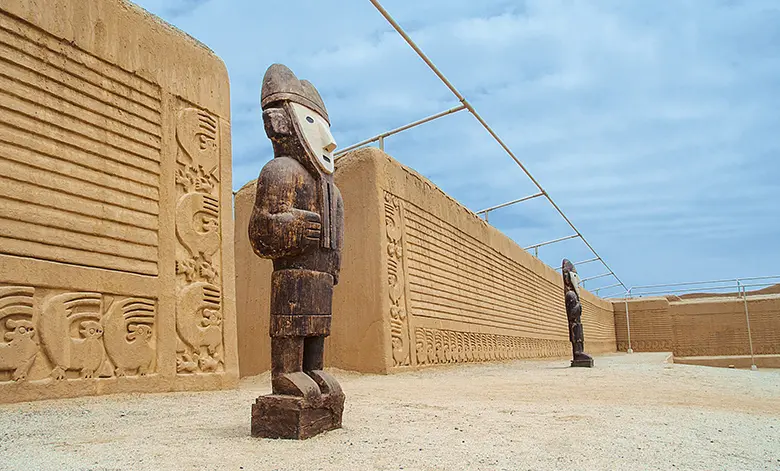
- The Temple Route: Fly to Trujillo for the Moche Huacas del Sol y la Luna and the mud-brick city of Chan Chan. Then, head to the highlands of Chachapoyas to conquer Kuelap and feel the mist of the cloud forest.
- Bonus: The Chavín de Huántar temple in Ancash is a must for those interested in the origins of Andean religion and hallucinogenic rituals.
- Why go? To experience sites that rival Machu Picchu in grandeur but offer silence and solitude.
Frequently Asked Questions About Temples in Peru
How many temples are there in Peru?
There are thousands. While major sites like Coricancha and Pachacamac are famous, there are countless Huacas (sacred sites) scattered across every valley and coast, many still waiting to be fully understood.
What is the most famous temple in Peru?
The Coricancha (Temple of the Sun) in Cusco is the most historically significant. However, Machu Picchu itself is often considered a “sanctuary city” filled with multiple temples (Sun, Three Windows, Condor).
Is the Sun Temple still standing?
Partial walls of the Coricancha remain, forming the base of the Santo Domingo Church. The Inca masonry is perfectly preserved, though the gold that covered it was removed during the conquest.
Can you visit the Temple of the Moon?
Yes. The Temple of the Moon near Cusco is open and accessible, often part of hiking or horseback riding tours. It is less crowded and very atmospheric.
Which temples are near Lima?
Pachacamac is the most important, located just 45 minutes south of Lima. Within the city, Huaca Pucllana and Huaca Huallamarca are impressive adobe pyramids sitting right in the middle of modern neighborhoods.
Are temples older than Machu Picchu?
Yes, much older. Caral (Supe) is 5,000 years old (older than the Egyptian pyramids). Chavín de Huántar is 3,000 years old. Machu Picchu is relatively young, built around 1450 AD.
Is Chavín older than the Incas?
Yes, by over 2,000 years. Chavín was the “Mother Culture” that influenced the art, religion, and architecture of subsequent civilizations, including the Incas.
Why are temples aligned with the sun?
The sun (Inti) was the giver of life and agriculture. Temples were astronomical observatories used to track the solstices (planting and harvesting times). Light hitting a specific stone at sunrise was a divine signal for the empire.
Conclusion – The Sacred Legacy of Temples in Peru
My friend, exploring a temple in Peru, is not about the past. It is about understanding how ancient wisdom still shapes the soul of the Andes today.
When you touch the warm stone of the Coricancha or feel the wind in the galleries of Chavín, you are connecting with a humanity that looked at the stars and saw a map.
At Peru Grand Travel, we don’t just show you ruins; we introduce you to the legacy. We are ready to be your hosts on this journey of discovery.
Are you ready to walk on sacred ground?
Contact us today to design your cultural and spiritual itinerary through the Land of the Incas.
We invite you to explore our Peru packages. Your experience in Peru is just one step away. Contact us now and start living the unique adventure you’ve always dreamed of.
More information:
- Visit our English website: Peru Grand Travel
- Visit our Spanish website: Viajes Machu Picchu Tours
- Visit our Portuguese website: Machu Picchu Pacotes

Experiences

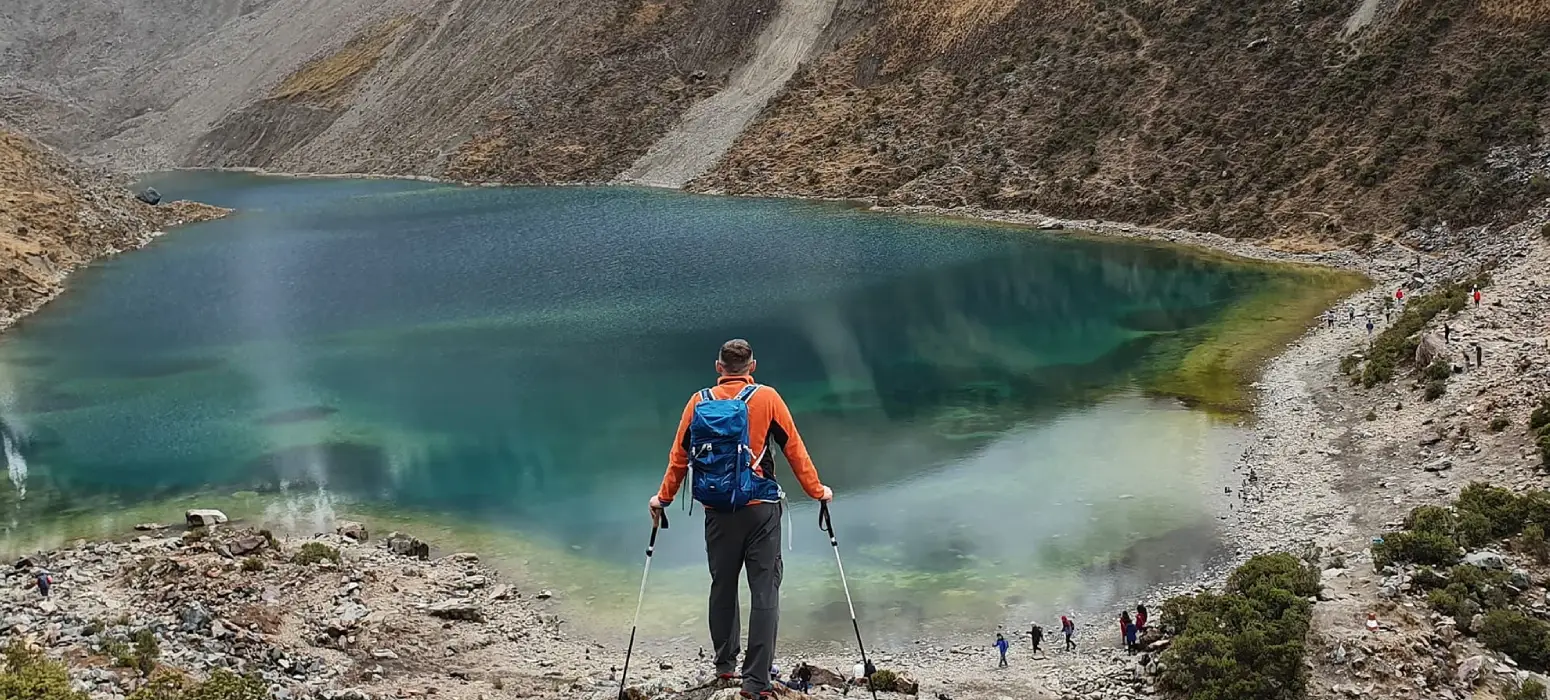
Machu Picchu Challenge 8D/7N
Cusco, Sacred Valley Humantay Lagoon, Rainbow Mountain & Machu Picchu.
View Tour
Colonial Lima and Sacred land of the Incas 7D/6N
Lima, Cusco, Sacred Valley & Machu Picchu.
View Tour