

A city can change its rhythm without warning. In Peru, one afternoon bell is enough for the street to turn into a corridor of incense: tourism fades into the background, faith takes the foreground, and the traveler learns one simple rule—watch without intruding.
Table of Contents
What people call “Holy Week” isn’t understood by looking at a calendar. It’s understood through silence, through lines that move without hurry, through hands holding candles as if they were holding memory. These Holy Week traditions are not a show made for visitors; they’re a social pact between neighborhood, church, and family, repeated with discipline. The traveler arrives like a late guest to an old conversation.
What is Holy Week in Peru—and why is it so impactful?
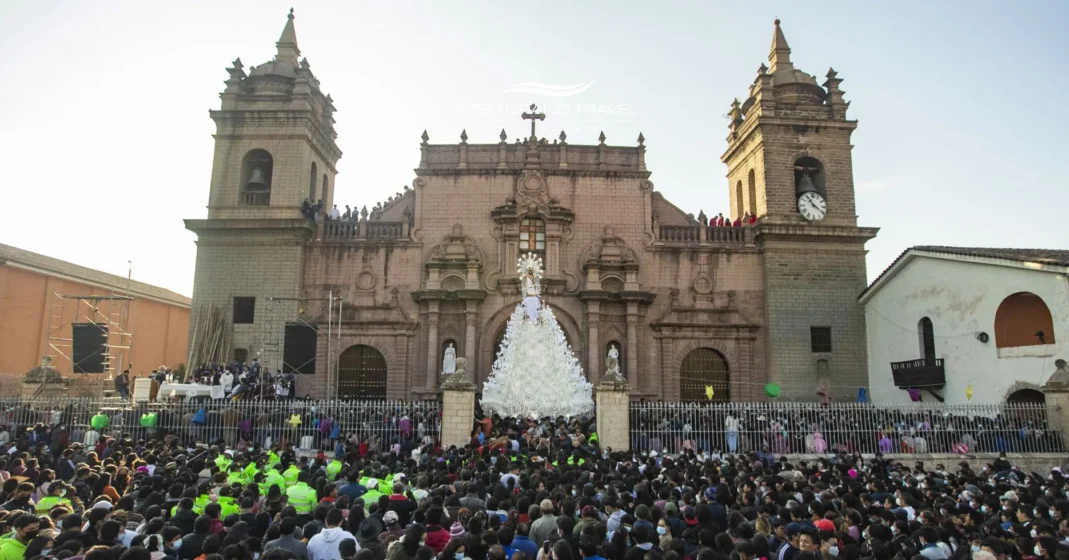
Holy Week in Peru is a series of Christian rites that, over time, became part of each city’s identity. The Church sets the order; people make it real. No procession “just happens”: it’s planned, passed down through generations, and protected like heritage. Coordinators (mayordomos) organize, carriers lift the platforms, musicians set the pace, vendors stand on corners, and neighbors sweep the street before the route begins.
In that atmosphere you see the manifestations of faith during Holy Week: promises people keep, grief carried in silence, gratitude without speeches. For travelers, the impact is tangible—crowds gathered close, the smell of wax and incense, drums repeating and shaping the rhythm. Faith, there, can be felt.
When Holy Week happens
Holy Week doesn’t have a fixed date. It depends on when Easter falls each year. And that changes everything.
In Peru, as Holy Week approaches, the country reorganizes: hotel demand rises, routes get crowded, and churches extend their schedules. If you plan it like a “normal” holiday, you often realize too late that everyone else planned ahead.
The order of the days stays the same. Palm Sunday, Holy Thursday, Good Friday, and Easter Sunday, but each city experiences it differently. Cusco has a rhythm and intensity that aren’t the same as Ayacucho’s, and Lima feels different again: more urban, more spread out, and less centered in a single place.
Catholic roots and Andean cultural influence
Peru received Catholicism during the conquest, but in the Andes that religion blended with older traditions. This mix is called syncretism: one tradition doesn’t erase the other—they live side by side. You notice it more in real details than in explanations: flowers chosen with purpose, routes that follow long-used paths, and local devotions you can’t understand just by reading a religious book.
During Andean Holy Week, symbols appear that echo the pre-Hispanic world, even if no one says it openly. The mountains feel like a presence, the rhythm of farming and harvests sits in the background, and the community moves like a single body. It isn’t “folklore for tourists”—it’s a living culture expressed through Christian forms.
What makes Holy Week in Peru different from other countries?
In many countries, Holy Week is mainly observed as a religious tradition. In Peru, it’s also a social experience—something that brings an entire neighborhood together. A procession doesn’t just pass through the street; it reshapes it. Roads close, schedules change, people walk carefully and make space. Even those who don’t consider themselves very religious take part, because it feels like belonging. That’s where the Holy Week customs make sense: it isn’t always faith; sometimes it’s community.
One detail shows it’s “living culture”: preparation. Days in advance, some neighborhoods look like workshops. Altars are built, flowers are arranged, songs are rehearsed. The city organizes for the ritual with the same natural ease it organizes for a market.
Music, incense, flowers, and public devotion
Aesthetics aren’t optional. Peruvian Holy Week uses scent and sound to bring people together. Incense doesn’t just smell good—it signals space. Music doesn’t just accompany—it sets the pace. Flowers don’t just decorate—they show importance and rank. Travelers sense a kind of order, even if no one calls it “design.”
Public devotion also creates a modern tension: cameras, phones, drones—everything pushing against an experience that asks for slowness. That’s where the quality of the trip is decided: the visitor who understands the code leaves with a real story.
Respectful participation as a traveler
Taking part doesn’t require faith; it requires respect. In churches, travelers should read the scene the way they would in a library: low voice, minimal movement, no need to stand out. In processions, the rule is simple: don’t break the line, don’t push, don’t block the way.
Is it a good idea to travel to Peru during Holy Week? Pros, cons, and what to expect
Holy Week attracts both domestic and international travelers. In cities like Cusco, you feel the pressure everywhere—restaurants, main squares, and entrances to churches. The beauty of the rituals comes with the obvious reality: lines, traffic, and fatigue. The experience can be powerful, but it can also feel overwhelming.
Prices usually spike. Not always because of opportunism, but because of basic demand: more people means more pressure on hotels, transport, and guides. If you arrive on a tight budget without reservations, you risk expensive last-minute choices.
What sells out first: tickets, trains, or hotels?
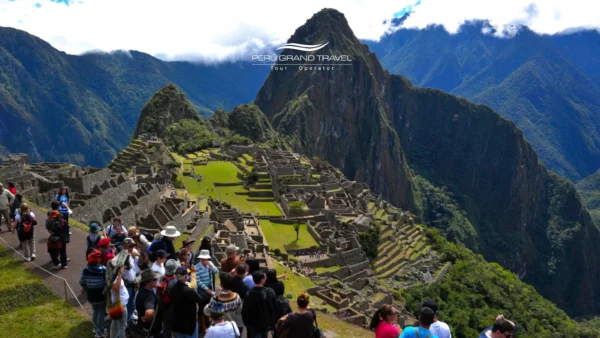
What becomes scarce first isn’t food or city tours. It’s anything with a fixed limit: trains to the Machu Picchu area, timed entrance tickets, and well-located rooms. Holy Week demands planning because hesitation is expensive.
A practical rule in Peru: secure what’s must-do before what’s nice-to-do. Book Machu Picchu and trains first, then hotels, and only after that add extra experiences. Reversing the order usually goes wrong.
Who will enjoy Holy Week in Peru?
Holy Week will appeal to travelers who want cultural meaning, not just postcard photos—people who can walk, wait, and listen, and who accept that the city doesn’t adjust to tourists; it adjusts to the ritual.
It may not suit those who need total control of their schedule, dislike crowds, or want to “do everything” in two days. Holy Week asks for a slower trip. If you rush, you get frustrated; if you adapt, you understand.
Best places to experience Holy Week in Peru
Cusco: iconic, atmospheric, and easy to combine with Machu Picchu
Cusco offers a Holy Week rich in symbolism. The city already lives through rituals—archaeology, festivals, markets—so the religious calendar fits in naturally. Its tourist logistics also make it easy to combine urban tradition with the route to the Sacred Valley and Machu Picchu.
Cusco works well for travelers who want something intense but still manageable. Its advantage isn’t that it’s “better,” but that it’s more accessible for those visiting Peru for the first time.
Ayacucho: Peru’s most intense Holy Week celebration
Ayacucho is often seen as the reference point because it concentrates celebrations and devotion with an intensity that’s hard to match. The city transforms. Its nights aren’t an “extra”—they’re central to the calendar. For an observer, Ayacucho shows that Holy Week can function as a full system of public life.
The challenge is logistics: getting there, moving around, and finding the right place to stay. In return, you get an immersion that’s less shaped by mass tourism.
Lima: the Seven Churches tradition
Lima offers a more spread-out Holy Week. The tradition of visiting seven churches on Holy Thursday happens alongside traffic, distant neighborhoods, and a working-city pace. The ritual becomes an urban route. For travelers, Lima shows how a modern capital can keep its traditions without slowing down.
It’s an elegant option for those already in the city due to a flight connection, or because they’re interested in Lima’s food scene and history.
Holy Week in Cusco: the Lord of the Earthquakes and why it matters
What happens on Holy Monday
In Cusco, the Lord of the Earthquakes (also called Taytacha Temblores) becomes the focus on Holy Monday. This isn’t a tourist detail—it’s a historic devotion with real emotional weight. The city organizes itself around the procession. The atmosphere shifts, the historic center fills up, and waiting becomes part of the ritual.
An attentive traveler quickly realizes this isn’t just an “event.” It functions like a cultural institution. People don’t simply attend—they accompany. Faith shows itself through discipline and patience, in a way that often contrasts with a visitor’s faster pace.
Best spots to watch
Cusco’s historic center has natural viewing spots: the edges of the main square, side streets, and areas where the procession can move without bottlenecks. A good observer chooses a place and stays there. Constantly changing position only creates tension.
A simple rule: watch without blocking. If the only way to “see well” is to push, then you’re seeing it the wrong way. Holy Week doesn’t reward aggressiveness—it’s socially frowned upon.
Common mistakes travelers make that day
The most common mistake is thinking a procession works like a parade. It doesn’t. It doesn’t move nonstop—there are pauses, intense moments, and stretches of silence. Another typical mistake is arriving late and trying to enter the historic center like it’s a concert, expecting a good spot with no effort.
It’s also a mistake to watch only “the main moment” and leave. The real experience is everything that builds around it: the calm waiting, low-voiced conversations, the vendor who already knows when the image will pass, the woman saving space for someone who hasn’t arrived yet. That’s where you understand Holy Week celebrations for what they are: a social fabric, not a quick event to watch and move on.

Can you visit Machu Picchu during Holy Week?
Yes, if you plan it like this.
What to book first for Machu Picchu during Holy Week
Visiting Machu Picchu during Holy Week requires organized planning. First, buy timed entrance tickets. Next, book the train (or the transport alternative you’ll use). Then choose your hotel, either in Cusco or in Aguas Calientes, depending on how you want to structure the trip. And a guide isn’t “extra”: in peak season, a good guide reduces stress and gives you real context on what you’re seeing.
If you book on impulse, you’ll almost always pay more or end up with inconvenient time slots. At Machu Picchu there’s no flexibility: the mountain won’t adjust its rhythm, and the quotas won’t either.
How to avoid bottlenecks at peak hours
Bottlenecks happen where everyone does the same thing at the same time: train stations, buses, entrances. The solution isn’t to “rush”—it’s to stagger your timing. Leave earlier, choose less popular time slots, and stay somewhere that reduces transfers. Smart planning protects your energy, not your speed.
It also helps to accept a simple truth: during Holy Week there will be crowds. The goal isn’t to eliminate them—it’s to avoid them at the critical points.
Travel logistics from Cusco to Machu Picchu
A common plan looks like this: use Cusco as your base, leave early for Ollantaytambo, take the train to Aguas Calientes, spend one night there, and go up to Machu Picchu at the time you’ve already booked. This itinerary works well when every piece is confirmed—tickets, trains, and accommodation.
The key isn’t making more stops, but avoiding uncertainty and setbacks. During Holy Week, last-minute improvisation usually costs more and wastes time; good planning makes the trip enjoyable.
Holy Week in Ayacucho: why it’s considered the biggest in Peru
Ayacucho lives Holy Week with an intensity you can feel everywhere. The city doesn’t hide its religious character: churches on every side, streets full of history, and nights packed with rituals. The week unfolds like a continuous program—one event after another—until Easter arrives.
For travelers, Ayacucho leaves a clear impression: many celebrations in Peru weren’t designed for tourists. And that’s exactly why they feel so authentic.
Iconic moments and how to experience them respectfully in Ayacucho
Ayacucho’s most iconic moments require the same respect you’d show in Cusco—but with even more delicacy. Because the community feels closer, any lack of tact stands out. Visitors should dress modestly, avoid jokes, and keep their presence quiet and low-profile.
Ayacucho doesn’t “reward” tourists who chase extreme angles or dramatic shots. It rewards those who know how to stay back, watch, and learn.
How to get to Ayacucho and where to stay
To get there, you have a choice: travel faster or travel more comfortably. For accommodation, you face another decision: stay close to the main activities or sleep better in a quieter area. During Holy Week, poor sleep shows up quickly—there’s a lot of walking, night events, and waiting.
One simple rule helps: choose a great location if you want to experience everything up close; choose more quiet if you prefer to watch calmly and rest better.
Holy Week day by day
Palm Sunday: blessings and processions
Palm Sunday opens the week with a particular mix: solemnity and movement. There are blessings, palm leaves, and symbolic entrances. In Peruvian cities, the ritual also works as an announcement—“the week has begun.” People adjust shopping, visits, and work around it.
Travelers notice the first shift in mood: main squares turn into a stage, yet they keep their everyday life underneath.
Holy Thursday: visits, vigils, and local customs
Holy Thursday brings routes and vigils. In Lima, the tradition of visiting churches stands out; elsewhere, the night fills with quiet movement from place to place. These Holy Week customs don’t need a theological explanation to be understood—they speak of commitment and repetition.
Travelers should expect shifting schedules. Dinners, closures, traffic patterns—the city rearranges itself.
Good Friday: the Stations of the Cross
Good Friday concentrates solemnity. The Stations of the Cross are staged or walked. Streets turn the volume down. Tourist energy fades into the background. This is when the manifestations of faith during Holy Week appear most strongly: silence, mourning, and reflection.
For visitors, this day demands self-control: modest clothing, a quiet tone, and thoughtful photos. Solemnity isn’t decoration—it’s the point.
Easter Sunday
Easter Sunday changes the emotional temperature. Easter is celebrated with relief, with a sense of life returning to the center. In many places, it feels like a social closing: the community completes the cycle and slowly returns to normal.
This is where Easter festivities in Peru and Easter festivities fit naturally as a broader idea—not just a single day, but a conclusion that gives shape to the entire week.
Food traditions: what people eat during Holy Week in Peru
Typical Holy Week dishes
Holy Week food varies by region, but it follows one shared principle: the menu also obeys the calendar. There are fasting-day dishes, soups, and preparations that appear only during these days. It’s not about “trying things just to try them”—it’s about understanding that food is a marker of belonging.
In markets and homes, the food speaks clearly: discipline, memory, and a measured kind of abundance. An attentive traveler tastes—and listens.
Where to try Holy Week dishes
Markets teach more than polished menus. There you see the ingredients—and the reason behind them: season, price, tradition. Restaurants offer comfort and context if the staff can explain a dish without turning it into a performance.
Local homes are the most authentic access, but also the most delicate. It isn’t something you “request” as a service. It happens through connection—by invitation, through trust.
Dietary needs: how to ask and avoid surprises
Travelers with dietary restrictions should communicate them clearly and without drama. In Peru, kitchens adapt much better when they’re told in advance. Problems usually happen when someone assumes “everything will be easy” during high-demand days.
A honest sentence, a simple request, and respect for local cooking usually work better than long explanations.

Cultural etiquette guide: what to wear, how to behave, and photography rules
Basic clothing for churches and processions
Modest clothing works as a universal language. Covered shoulders in churches, discreet colors, comfortable shoes—not out of moralism, but out of respect for the setting. An elegant visitor doesn’t compete with the ritual.
In Andean cities, the weather also calls for layers. Good style and practical warmth end up being the same choice.
When to film vs. when to put your phone away
Filming isn’t wrong; pushing it is. A short clip from a steady spot, without blocking anyone, is usually fine. What feels intrusive is the visitor who turns everything into a set and everyone into extras.
There are moments when putting your phone away makes the trip better. In rituals, human memory catches what a lens flattens.
Respect for locals, children, and religious spaces
Children and elderly people aren’t cultural decoration. Don’t take close-up photos without permission. Don’t step into spaces meant for prayer. Don’t use irony. Holy Week isn’t a themed fair—it’s everyday life with strong religious intensity.
Travelers who understand this avoid conflict and often gain something better: a casual explanation, a smile, a small gesture of welcome.
Safety and comfort in crowds: how to enjoy it without stress
Tips to prevent theft and move through crowds
Crowds bring classic risks: pickpocketing, distractions, and pushing. The solution is simple: wear your backpack in front in dense areas, keep valuables secured, and stay alert. Paranoia gets in the way; prevention works.
Moving through crowds takes patience. If you try to “beat” the crowd, the crowd wins.
Night events: transport, meeting points, prevention
During Holy Week, nights aren’t always leisure—sometimes they’re part of the liturgy. Travelers should plan their return: use official taxis, set clear meeting points, and keep offline maps. Nighttime improvisation can lead to fatigue and vulnerability.
A well-managed trip shows in small decisions: knowing where you are, knowing how you’ll get back, and knowing when it’s time to leave.
Altitude and fatigue
Cusco punishes the rushed. Altitude lowers your energy, disrupts sleep, and changes your appetite. During Holy Week, that effect is amplified by walking and crowds. Acclimatization isn’t a tourist tip—it’s an operational requirement.
Visitors who arrive and try to “do everything” on day one often end up watching from the sidelines. The city isn’t in a hurry—and neither should you be.
Step-by-step list: how to book for Holy Week
One single list—because Holy Week rewards good order:
- Secure Machu Picchu first: timed entrance tickets first, then trains or transport based on your route.
- Book accommodation wisely: prioritize location over luxury if you want to see processions without long transfers.
- Set the pace of your itinerary: plan one acclimatization day in Cusco before intense walking.
- Plan night logistics: transport back, return plan, small cash, extra battery/power bank.
- Pack for weather and respect: layers, a light rain jacket, sturdy shoes, and modest clothing for churches.
What sets apart an experienced Holy Week guide
An experienced guide decides early what kind of Holy Week the traveler will have: immersion or observation. That choice puts everything in order. The worst strategy is trying to do both every hour—go into the center, leave, switch plans, rush, get frustrated.
The trip improves when you accept a simple idea: you don’t “consume” a tradition. You accompany it.
Less-obvious timing tricks
Guides who truly know the city avoid the historic center at the exact peak moment of maximum crowd density—not out of fear, but for efficiency. They arrive early, stay on the edges, use parallel streets, and plan breaks. In Cusco, energy is managed like a budget.
They also schedule meals outside peak hours. An early lunch can save you an hour in line—and an entire afternoon.
The respectful way to enjoy it more
A good guide protects two things: the traveler’s experience and the dignity of the local ritual. They keep a respectful distance, give context without interrupting, and avoid “perfect shots” that require intruding. They teach you how to read the city—when to speak, when to stay quiet, when to step away.
That’s the difference between visiting and understanding. And that’s when Holy Week stops being an event and becomes a lesson.
FAQ: Holy Week in Peru
What are the most important Holy Week traditions in Peru?
The most visible traditions are processions, visits to churches, reenactments of the Stations of the Cross, and Easter celebrations. They vary by city: Cusco stands out for the Lord of the Earthquakes (Señor de los Temblores), Ayacucho for its intense program of events, and Lima for the Seven Churches tradition.
Which city is better for Holy Week: Cusco or Ayacucho?
Cusco is the better choice if you want to combine religious traditions with strong tourist logistics and Machu Picchu. Ayacucho is the better choice if you’re looking for deep immersion in the celebrations and an atmosphere less shaped by mass tourism.
Can I visit Machu Picchu during Holy Week while avoiding crowds?
You can reduce the impact with planning: book tickets and trains in advance, choose less popular time slots, and avoid bottlenecks by leaving early. Crowds won’t disappear—you manage them.
What should I wear to processions and churches in Peru?
Modest and comfortable clothing: layers for the weather, sturdy shoes, covered shoulders in churches, and discreet colors. The goal is respect and practicality—not attention.
How far in advance should I book a Holy Week trip to Peru?
The sensible approach is to book in advance anything with a fixed limit: Machu Picchu entrance tickets, trains, and well-located hotels. The closer you get to the date, the higher the prices—and the fewer options remain.
Holy Week in Peru leaves an uncomfortable lesson for modern tourism: not everything is made for the visitor. That’s its strength. In Cusco, Ayacucho, or Lima, Holy Week celebrations reveal a country that sustains its memory through public rituals. A traveler who arrives with humility doesn’t just see a tradition—they learn a different way of living time.

Experiences

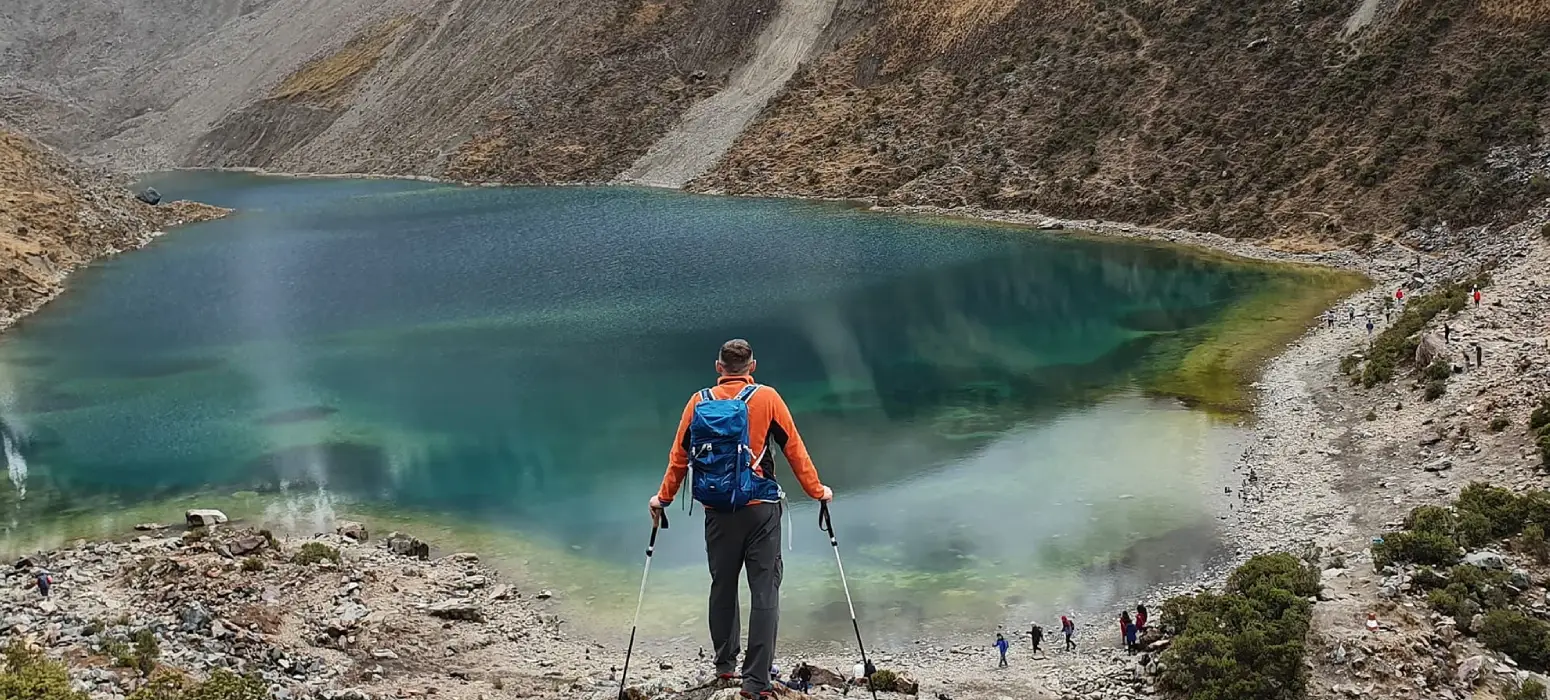
Machu Picchu Challenge 8D/7N
Cusco, Sacred Valley Humantay Lagoon, Rainbow Mountain & Machu Picchu.
View Tour
Colonial Lima and Sacred land of the Incas 7D/6N
Lima, Cusco, Sacred Valley & Machu Picchu.
View Tour


There is 1 comment
I love how the post highlights the importance of respecting local traditions during Holy Week in Peru. It reminds me of the value of mindfulness and community, which is also reflected in sunday blessings, where people come together to appreciate the simple things. This shared sense of unity and faith is truly powerful.