Welcome, my dear traveler. If we were standing together in the Plaza de Armas of Cusco right now, listening to the deep, resonant toll of the Maria Angola bell echoing against the Andes, I would tell you that you are not just looking at a building. You are looking at a conversation carved in stone. To visit the churches in Peru is to read the biography of a nation.
Table of Contents
It is here, within these thick walls of adobe and stone, that two worlds collided—the Andean and the European—and eventually fused to create something entirely new. These are not merely religious structures; they are museums of living history, galleries of indigenous resistance and artistic genius, and the beating heart of our communities.
As your host, I have walked the marble floors of European cathedrals and admired the wooden temples of Asia. Yet, there is a unique intensity to the sacred spaces of my home. Perhaps it is the scent of Palo Santo mixing with frankincense, or the way a Catholic saint is dressed in the robes of an Inca princess.

In this definitive guide, I invite you to step beyond the heavy cedar doors. We will explore the architectural marvels, the hidden histories, and the spiritual depth of the most significant churches in Peru. From the “Sistine Chapel of the Andes” to the volcanic white stone temples of Arequipa, let us discover why faith in Peru is a work of art.
Why churches in Peru are more than religious buildings
Churches in Peru serve as the ultimate repositories of our cultural identity, acting as museums, community centers, and tangible proof of our complex history.
When you enter a church in Peru, you are not just entering a house of prayer. You are stepping into the epicenter of social life. In the Andes, the church steps are where the market spills over, where the elders gossip, and where the festivals begin.
Churches as cultural, artistic, and social centers
Unlike in many parts of the world where churches are quiet relics, here they are vibrant hubs. Inside, you will find the Cusco School of Art—paintings that depict biblical scenes but with Andean elements: a Last Supper featuring cuy (guinea pig) instead of lamb, or the Virgin Mary shaped like a mountain (Apu). These buildings hold the artistic DNA of the country.

Faith, identity, and community in Peru
The faith you witness here is unique. It is a syncretism—a blend. The indigenous people did not simply replace their gods; they hid them within the new icons. When you see a statue of Santiago (Saint James), many locals also see Illapa, the god of thunder. Understanding this duality is the key to unlocking the true magic of churches in Peru.
DID YOU KNOW?
The Earthquake Test: In Cusco, many churches were built on top of Inca temples using the original stone foundations. In 1650 and 1950, massive earthquakes shook the city. The Spanish colonial walls crumbled, but the Inca foundations beneath them remained perfectly intact. It is a silent reminder from the past of who truly understood the earth here.
The history of churches in Peru – from Inca temples to colonial masterpieces
The history of churches in Peru is a dramatic tale of conquest, resistance, and the eventual blending of two powerful civilizations.
To understand the architecture, we must understand the timeline. It is a story of power dynamics that evolved into a shared identity.
Pre-Hispanic sacred spaces and spiritual continuity
Before the first cross was planted, Peru was already a land of temples. The Incas and pre-Inca cultures had Huacas (sacred places). When the Spanish arrived, they employed a strategy of “superposition.” They literally built their churches on top of the existing holy sites to harness the spiritual power of the location. The most famous example is the Qorikancha in Cusco, where the Dominican Convent sits atop the Inca Temple of the Sun.

Spanish colonization and religious architecture
In the 16th and 17th centuries, the Catholic orders—Franciscans, Dominicans, Jesuits—arrived with blueprints from Spain. They brought the styles of the Renaissance and the Baroque. However, they lacked the manpower to build them alone. They relied on indigenous hands.
Evangelization, power, and art
This is where the magic happened. The indigenous master masons and artists learned the European techniques but applied their own worldview. They carved tropical fruits into the stone facades, painted Andean flowers on the altars, and created a style that is distinctly Peruvian. The church became a tool for evangelization, yes, but also a canvas for indigenous expression.
Famous Historic Churches in Peru: A City-by-City Directory
Peru’s sacred geography is vast. While we have explored the architectural styles, here is a comprehensive guide to the most significant churches in Perú. This isn’t just a list; it is a roadmap to the spiritual and artistic heart of each city.
| City | Church |
| Lima | San Francisco Church & Convent |
| Lima | Santo Domingo Church & Convent |
| Lima | San Pedro Church & Convent |
| Lima | Las Nazarenas Church |
| Lima | Santa Rosa de Lima Sanctuary |
| Lima | The Cathedral of Lima |
| Lima | La Merced |
| Lima | San Agustin |
| Lima | Descalzos Convent |
| Lima | Presbítero Maestro Cemetery |
| Cusco | Cathedral Basilica of the Assumption |
| Cusco | Santo Domingo Church (Qorikancha) |
| Cusco | Company of Jesus (La Compañía) |
| Cusco | San Blas Temple |
| Cusco | San Cristobal |
| Cusco | La Merced |
| Cusco | El Triunfo |
| Arequipa | Santa Catalina Monastery |
| Arequipa | Church of the Company (La Compañía) |
| Arequipa | The Cathedral of Arequipa |
| Arequipa | La Recoleta |
| Arequipa | San Francisco |
| Arequipa | San Agustin |
| Trujillo | Cathedral of Trujillo |
| Trujillo | El Carmen Church |
| Puno | Basilica San Carlos Borromeo |
| Piura | San Juan Bautista de Catacaos |
| Chiclayo | Chiclayo Cathedral |
Famous Historic Churches in Lima: The City of Kings
The Vibe: The capital offers the highest concentration of Viceregal religious art. Lima’s churches are grand, mysterious, and house the remains of saints.
San Francisco Church & Convent | The Icon
If you visit only one church in Lima, make it this one.
- The Architecture: A stunning example of Baroque painted in vibrant yellow. Its library is world-famous, housing 25,000 antique texts and looking like something out of a fantasy novel.
- The Catacombs: Beneath the church lies a vast network of tunnels that served as the city’s cemetery until 1808. Walking past the artistically arranged bones of some 25,000 citizens is an eerie, unforgettable experience.
Santo Domingo Church & Convent
- The Significance: This is the resting place of Peru’s three greatest saints: Santa Rosa de Lima, San Martín de Porres, and San Juan Masías. You can visit their crypts and relics.
- The View: It boasts one of the most beautiful cloisters in the city, adorned with Sevillian tiles (azulejos), and the bell tower offers the best panoramic view of Lima and the Rímac River.
San Pedro Church & Convent
- The Treasure: Built by the Jesuits, this is the most opulent church in Lima. The exterior is modest, but the interior is a blaze of gold leaf. Its massive retablos (altarpieces) are masterpieces of woodcarving that shimmer in the candlelight. It was the preferred church of the aristocracy.

Las Nazarenas Church
- The Devotion: This is the spiritual heart of Lima. It houses the image of the Lord of Miracles (Señor de los Milagros), painted by an Angolan slave in the 17th century. It survived a massive earthquake that destroyed everything around it, sparking the largest Catholic procession in the Americas every October.
Santa Rosa de Lima Sanctuary
- The Legend: Built on the site where Santa Rosa was born and lived. You can see her hermitage and the famous Wishing Well, where thousands of faithful drop letters with their prayers every year. It is a place of deep, living faith.
Other Notable Churches in Lima:
- The Cathedral of Lima: The final resting place of Francisco Pizarro.
- La Merced: Famous for its Churrigueresque (ultra-baroque) granite façade.
- San Agustin: Known for its intricate stone carving and the stunning ceiling of its sacristy.
- Descalzos Convent: A peaceful retreat in the Rímac district, full of colonial paintings.
- Presbítero Maestro Cemetery: A city of marble mausoleums; take a night tour for a hauntingly beautiful history lesson.
Famous Churches in Cusco: The Imperial Fusion
The Vibe: In Cusco, the churches are physically built upon the stones of the Inca Empire. They are robust, mixing Andean strength with Spanish religion.
Cathedral Basilica of the Assumption
- The Foundation: It sits directly on top of the Kiswarkancha, the palace of the Inca Viracocha. It took nearly 100 years to build using stone from the Sacsayhuaman fortress.
- The Art: Inside, you will find the famous painting of the Last Supper with a Guinea Pig (Cuy) and the “Lord of Earthquakes,” a black Christ statue that is the patron of the city.

Santo Domingo Church | Qorikancha
- The Clash: This is the most powerful visual representation of the conquest. The Spanish Dominican cloister sits atop the perfectly polished, gray stone walls of the Inca Temple of the Sun.
- The Gold: While the sheets of gold that once covered the Inca walls are gone, the precision of the masonry remains the true treasure, far outshining the colonial architecture above it.
Company of Jesus | La Compañía
- The Rivalry: Built by the Jesuits to rival the Cathedral in grandeur (and many argue they succeeded). Its façade is carved like stone lace. Inside, the main altar is the largest in Peru, made of cedar wood and covered entirely in gold leaf.
San Blas Temple
- The Masterpiece: Located in the artists’ quarter. It is a simple Adobe church famous for one thing: The Pulpit. Carved from a single cedar tree trunk, it is considered the finest example of woodcarving in the Americas. Look for the skull at the base—legend says it is the artist himself.
Other Notable Churches in Cusco:
- San Cristobal: Best view of the city, located near the Inca ruins of Qolqampata.
- La Merced: Its stone cloister is a hidden oasis of calm.
- Santa Catalina Monastery: Built on the Acllahuasi (House of the Chosen Women).
- El Triunfo: The first Christian church ever built in Cusco.
Famous Churches in Arequipa: The White City
The Vibe: Arequipa shines. Its architecture is defined by Sillar (white volcanic stone), giving the temples a luminous, pearly glow under the eternal blue sky.
Santa Catalina Monastery
- The Citadel: This is not just a church; it is a city within a city. For 400 years, it was closed to the world. Walking through its streets painted in vivid burnt orange and cobalt blue, visiting the nuns’ cells, and seeing the rustic kitchens is a journey back to 16th-century Spain. It is the top attraction in Arequipa.

Church of the Company | La Compañía
- The Mestizo Style: The supreme example of “Andean Baroque.” Do not just walk in; stop at the façade. Look closely to find indigenous symbols carved by native stonemasons: tropical papayas, monkeys, and Kantuta flowers hidden among the Christian angels.
The Cathedral of Arequipa
- The Survivor: It spans the entire length of the Plaza de Armas. Unlike most churches, which are deep, this one is wide. It has survived countless earthquakes and fires. It houses a massive organ from Belgium, the largest in South America.
Other Notable Churches in Arequipa:
- La Recoleta: A Franciscan convent with an incredible library of ancient maps and an Amazonian museum.
- San Francisco: Known for its sturdy, earthquake-proof architecture.
- San Agustin: A beautiful example of Sillar carving.
Historic Churches in Trujillo & The North
The Vibe: The Colonial North is colorful (yellow, blue, red), airy, and elegant.
- Cathedral of Trujillo: Dominating the main square with its bright yellow exterior. Inside, the altars are free-standing (Rococo style), giving it a lighter feel than the heavy Baroque of the south.
- El Carmen Church: Considered the most beautiful in Trujillo. Its white and red exterior is striking, and inside it houses delicate art that resembles porcelain.
Famous Churches in Other Towns
The Vibe: Hidden treasures in the deep Andes or the hot coast.
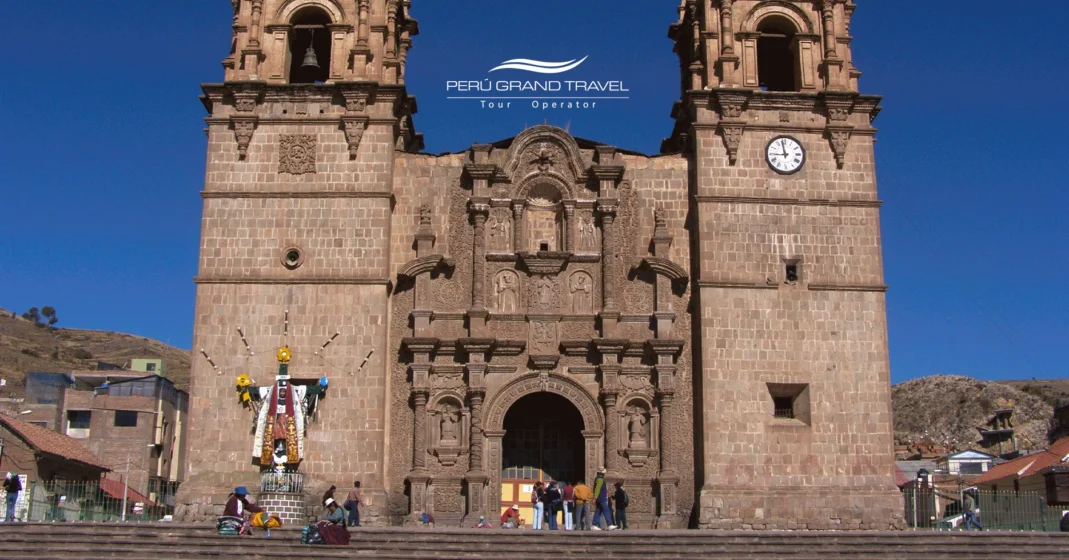
- Basilica San Carlos Borromeo (Puno): Often called the Cathedral. It is a fusion of Spanish Baroque and Andean toughness, built to withstand the freezing altitude of Lake Titicaca. The altar is a blaze of silver.
- San Juan Bautista de Catacaos (Piura): Known as the “Sistine Chapel of the North” for its extensive murals. It is the heart of a town famous for its filigree jewelry.
- Chiclayo Cathedral: A neoclassical beauty designed by Gustave Eiffel (yes, the Eiffel Tower engineer). It stands out for its columns and modern 19th-century style.
Architectural styles of churches in Peru
The architecture of churches in Peru is a journey through time, ranging from the sober lines of the Renaissance to the exuberant, intricate details of the Andean Baroque.
As a cosmopolitan traveler, you will recognize European influences, but look closer. The interpretation is entirely local.
Baroque churches in Peru
The Baroque style, with its drama, gold leaf, and emotional intensity, resonated deeply in Peru. It flourished in the 17th and 18th centuries. The Church of the Compañía de Jesús in Cusco is a prime example, with a façade so intricate it looks like embroidery carved in stone.

Renaissance and Neoclassical influences
Earlier churches, particularly in Ayacucho and parts of Lima, show the cleaner lines of the Renaissance. Later, in the 19th century, Neoclassicism brought a return to order and symmetry, visible in the altars of the Lima Cathedral.
Andean Baroque: a uniquely Peruvian expression
This is what you must look for. Known as Barroco Mestizo, this style emerges in the southern highlands (Arequipa, Puno). It is characterized by the “horror vacui” (fear of empty space)—every inch is covered in decoration.
- Key Feature: Look for the “Planiform” carving—it looks flat, almost like a textile design transferred to stone.
- Symbolism: You will find sirens playing charangos, pumas, suns, and moons hidden among the Christian saints.

Mudéjar and indigenous symbolism
In Lima and on the coast, you will see the Mudéjar influence (Moorish style from Spain), particularly in the intricate wooden latticework balconies and geometric ceilings. It is a reminder of the Arab influence that came to Peru via Spain.
Churches in Peru by region – where faith meets geography
The landscape dictates the architecture. From the adobe of the coast to the volcanic stone of the south, the churches in Peru reflect the land they stand on.
Churches in Cusco and the Sacred Valley
- Colonial Legacy: Cusco is the capital of the Andean Baroque. The city center alone has enough churches to keep an art historian busy for weeks.
- Indigenous Influence: In the Sacred Valley, towns like Chinchero have churches built directly on top of Inca palace walls. The interior frescoes often feature floral and geometric patterns that mirror the local textiles.
- Living Tradition: These are not silent places. You will often stumble upon a procession or a wedding where the statues are carried on litters weighing tons.
Churches in Lima
- The Capital’s Spiritual Heart: The Plaza Mayor is anchored by the Cathedral. Lima’s churches are grand, imposing, and filled with the wealth of the Viceroyalty.
- Convents and Monasteries: Lima is famous for its massive complexes like Santo Domingo and San Pedro. They were cities within the city, with cloisters, gardens, and schools.
Churches in Southern Peru | Arequipa, Puno, Ayacucho
- Volcanic Stone (Sillar): In Arequipa, the churches are white. They are built from sillar, a pearly white volcanic stone. The Church of the Company in Arequipa has a facade carved with native flora and fauna—papayas, monkeys, and kantuta flowers.
- Ayacucho: Known as the “City of Churches,” it has 33 churches—one for each year of Christ’s life. They are famous for their alabaster altars.
- High-Andean Spirituality: In Puno, near Lake Titicaca, the churches like San Juan de Letrán in Juli differ. They are often dark adobe with incredibly ornate, gold-leaf altars that glow in the candlelight, designed to awe the indigenous population.

Churches in Northern Peru
- Coastal Heritage: Often overlooked, the north (Trujillo, Cajamarca) offers a different style. The Cathedral of Trujillo is colorful (often yellow or blue) and airy.
- Cajamarca: The Cathedral of Santa Catalina in Cajamarca is unique because it has no towers—construction stopped because the Spanish crown taxed finished churches, so they simply never “finished” it.
| Region | Main Material | Key Style | Notable Example |
| Cusco | Andesite / Red Granite | Andean Baroque | The Cathedral |
| Lima | Brick / Adobe / Wood | Spanish Baroque | San Francisco |
| Arequipa | White Volcanic Sillar | Mestizo Baroque | La Compañía |
| Ayacucho | Stone / Alabaster | Renaissance/Baroque | Santo Domingo |
Andahuaylillas and the Sistine Chapel of the Andes
San Pedro Apóstol de Andahuaylillas is not the largest church in Peru, but it is arguably the most surprising artistic treasure in the Southern Hemisphere.
If you are traveling through the South Valley of Cusco, you might drive past this simple adobe church in a quiet plaza. Do not make that mistake.
Why Andahuaylllas is unique
Step inside, and your breath will be taken away. Every inch of the interior—walls, ceiling, pillars—is covered in murals, gold leaf, and paintings. It is an immersive experience of color and light.
- The Ceiling: The polychrome ceiling, painted in the Mudéjar style (Islamic influence), is a kaleidoscope of geometric shapes.
Art, symbolism, and global recognition
The murals were used to teach the indigenous people about Christianity. You will see the path to heaven and the path to hell depicted with vivid, sometimes terrifying, imagery.
- The Baptistery Arch: Look for the inscription “I baptize you in the name of the Father…” written in five languages: Latin, Spanish, Quechua, Aymara, and Puquina (a lost language). It is a Rosetta Stone of the Andes.

IMPORTANT FACT
World Monuments Fund: This church is so significant that it has been the subject of a massive restoration project by the World Monuments Fund to preserve its fragile murals for future generations.
Religious festivals and living traditions around churches in Peru
In Peru, the church is the stage, but the plaza is the theater.
Our religious calendar is not merely a list of dates; it is a cycle of explosive displays of color, dance, and profound devotion that transforms the quiet stone temples into vibrating centers of life. To witness a festival here is to see the true heart of the Andes.
Semana Santa | Holy Week: Mourning and Resurrection
While celebrated nationwide, two cities offer experiences that will stay with you forever.
- Ayacucho (The Epicenter): This is the most intense religious celebration in the Americas. For ten days, the city shuts down.
- The Atmosphere: The streets are carpeted with flowers. The processions are solemn, lit only by thousands of white candles held by the faithful.
- The Climax: On Easter morning, just before dawn, the massive litter of the Resurrected Christ—lit by thousands of candles and requiring hundreds of men to carry—exits the cathedral. As the sun rises and hits the gold, the crowd erupts in cheers, fireworks, and ringing bells. It is pure emotion.
- Cusco (The Lord of Earthquakes): On Holy Monday, the city turns out for the Taitacha Temblores.
- The Ritual: This black statue of Christ is believed to protect the city from tremors. As he is paraded through the streets, crimson ñucchu flowers (a native Andean flower) are thrown from the colonial balconies, showering the statue in red petals that symbolize the blood of Christ and the blood of the Earth (Pachamama). The scent of incense fills the air, and the sound of mournful singing echoes off the Inca walls.
Corpus Christi: The Meeting of the Saints
Held in Cusco (May or June), this is a “competition” of saints that rivals any parade in the world.
- The Procession: Fifteen massive statues of Saints and Virgins descend from their respective neighborhood churches (San Blas, San Cristobal, Santa Ana, etc.) to “visit” the Cathedral. They stay as guests for a week.
- The Weight: Some of these litters weigh over a ton. Watching the bearers sweat and sway under the weight is a testament to their devotion.
- The Flavor: You cannot experience Corpus Christi without eating Chiriuchu (Cold Aji). It is a cold, festive platter featuring guinea pig, chicken, seaweed, fish eggs, toasted corn, and cheese—a culinary representation of the festival’s complexity.
Patron Saint Celebrations: Dance as Prayer
Every town in Peru has a patron saint, and every saint demands a party. These are not somber affairs; they are joyous explosions of syncretism.
- Virgin of Candelaria (Puno): Recognized by UNESCO as Intangible Cultural Heritage. In February, the shores of Lake Titicaca come alive with 40,000 dancers and 5,000 musicians. The “Diablada” (Dance of the Devils) features terrifyingly beautiful masks and costumes embroidered with gold and silver threads, honoring the Virgin while paying tribute to the earth.
- Virgin of Carmen (Paucartambo): In July, this tiny town near Cusco becomes the center of the world. Masked dancers climb onto rooftops to “tease” the crowd, while the Virgin is carried to the ancient bridge. The festival ends with a sunrise pilgrimage to Tres Cruces to watch the sun emerge from the Amazon rainforest. It is mystical, wild, and deeply moving.

INSIDER TIP
If you plan to visit during these dates, book hotels months in advance. But more importantly, bring patience and an open heart. The crowds are part of the energy. You are not watching a show; you are part of a living tradition.
Visiting churches in Peru – cultural etiquette and travel tips
To visit these sacred sites is a privilege. Here is how to do it with the grace of a sophisticated traveler.
Dress code and respectful behavior
- Attire: While Peru is relaxed, churches are sacred. Avoid hats inside. Shoulders should be covered, and shorts are generally frowned upon in active places of worship.
- Silence: Many of these are active parishes. If a mass is occurring, stand at the back quietly or wait until it finishes.
Photography rules
This is crucial. In most major historic churches (like the Cusco Cathedral or Andahuaylillas), photography is strictly prohibited.
- Why? To preserve the pigments in the centuries-old paintings and to maintain the sanctity of the space.
- The Advice: Put the camera down. Use your eyes. Buy a postcard or a professional book at the gift shop. It allows you to be present in the moment.

Best times to visit
- Tourist Hours: Most major churches charge an entrance fee (Boleto Religioso in Cusco) and have set visiting hours (usually 10 AM to 5 PM).
- Mass Times: If you want to see the church “alive,” attend a Sunday morning mass (usually 6 AM to 9 AM). You won’t be able to wander around looking at art, but you will feel the spirit of the place.
Guided visits vs. Independent exploration
While you can walk in alone, you will miss 80% of the story. A specialized guide can decode the symbols for you—explaining why that Virgin Mary has a triangular skirt (representing a mountain) or why there is a mirror on the altar.
Experiencing churches in Peru beyond sightseeing
Don’t just look at the church; connect with it. Experiential tourism allows you to find the human element within the stone.
Community-led visits
In some rural areas, keys to the church are held by a community elder. Finding them, asking them to open the heavy doors, and hearing their local legends about the saints is a travel memory money can’t buy.
Art, music, and sacred spaces
Some churches, like San Pedro in Lima or the Jesuit church in Cusco, host classical music concerts or choir performances. Listening to Baroque music played on a colonial organ in a candlelit nave is a transcendent experience.

Faith, silence, and reflection as travel experiences
Even if you are not religious, use these spaces for reflection. The cool, thick walls offer a respite from the sensory overload of the markets. Sit in a pew. Smell the cedar wood and the wax candles. Let the silence reset your mind.
Why churches in Peru are key to experiential and sustainable tourism
Preserving these structures is not just about religion; it is about sustaining the communities that live around them.
Cultural preservation
By visiting these churches and paying the entrance fees, you are directly funding the restoration of art that would otherwise be lost to time and humidity. You are a patron of the arts.
Responsible tourism
Visiting lesser-known churches (like those in the South Valley or the rural chapels of the Colca Canyon) spreads the economic benefit of tourism beyond the main plazas. It encourages communities to value and protect their heritage.
How Peru Grand Travel designs meaningful cultural journeys around sacred sites
At Peru Grand Travel, we believe that “Peru is not just a destination, it is a privilege.”
We don’t just drop you at the door of a cathedral. We curate the experience.
- Private Access: We can arrange for private viewings in certain chapels or meetings with restoration experts.
- Curated Cultural Routes: We design the “Andean Baroque Route” to ensure you see the progression of the style, accompanied by guides who are scholars in art history.
- Slow Travel: We give you time. Time to sit in the courtyard of the San Francisco monastery. Time to watch the light change on the sillar stone of Arequipa.
We are your hosts, and we invite you to enter these sacred spaces not as a tourist but as a guest.
Frequently Asked Questions about churches in Peru
How many churches are there in Peru?
There are thousands of Catholic churches in Peru, ranging from massive urban cathedrals to tiny village chapels. In the historic center of Cusco alone, there are over a dozen major colonial churches.
What is the most famous church in Peru?
The Cathedral of Cusco is likely the most famous due to its art collection and location, closely followed by the Lima Cathedral and the Church of San Francisco in Lima (famous for its catacombs).
Are churches in Peru still active?
Yes, the vast majority are active places of worship. Sunday mass is a major event, and festivals keep the churches at the center of public life.
Can you visit churches during religious festivals?
Yes, but expect crowds. It is a time of celebration, not quiet sightseeing. You may not be able to walk around freely, but you will witness the church in its full glory.
What is Andean Baroque architecture?
It is a style that blends European Baroque forms (columns, arches, intricate decoration) with indigenous symbols (flora, fauna, sun, moon) and techniques. It is most prominent in the southern highlands (Arequipa, Puno).
Are churches in Peru UNESCO sites?
Many are part of UNESCO World Heritage Sites. The historic centers of Lima, Cusco, and Arequipa are all UNESCO protected, which includes their magnificent churches.
A Final Thought
My friend, the stones of Peru have voices. From the granite walls of the Inca temples to the gilded altars of the colonial cathedrals, they tell a story of resilience, beauty, and faith.
Whether you are lighting a candle in a quiet chapel in the Colca Canyon or standing in awe under the painted ceiling of Andahuaylillas, you are participating in that story.
Are you ready to unlock the secrets of the sacred Andes?
Contact Peru Grand Travel today, and let us design a cultural journey that touches your soul.
We invite you to explore our Peru packages. Your experience in Peru is just one step away. Contact us now and start living the unique adventure you’ve always dreamed of.
More information:
- Visit our English website: Peru Grand Travel
- Visit our Spanish website: Viajes Machu Picchu Tours
- Visit our Portuguese website: Machu Picchu Pacotes

Experiences

Machu Picchu Challenge 8D/7N
Cusco, Sacred Valley Humantay Lagoon, Rainbow Mountain & Machu Picchu.
View Tour
Colonial Lima and Sacred land of the Incas 7D/6N
Lima, Cusco, Sacred Valley & Machu Picchu.
View Tour