Vinicunca Rainbow Mountain is now one of the most popular places to visit in Peru. Few places in Peru have experienced such a dramatic rise in popularity as this colourful, striped mountain. While most travellers still arrive in Cusco with their sights firmly set on Machu Picchu, it does not take long before they start hearing about another destination high in the Andes that seems to appear everywhere. The Windows of Travel Agencies display photographs of colourful mountain slopes. Social media feeds are filled with vibrant coloured mountains that almost look too surreal to be real. Before long, many visitors find themselves adding a Rainbow Mountain Peru tour to their Peru itinerary.
Table of Contents

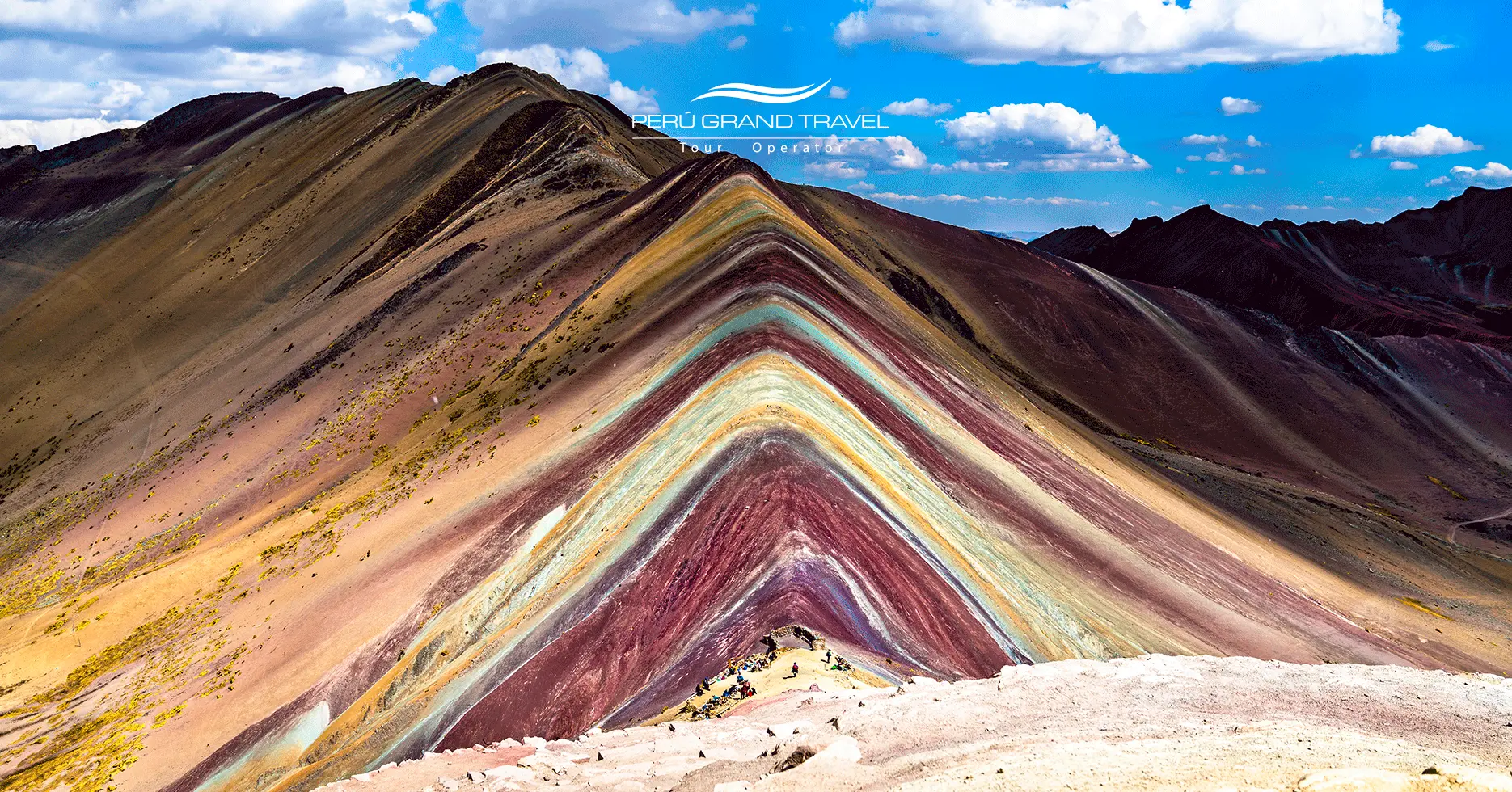
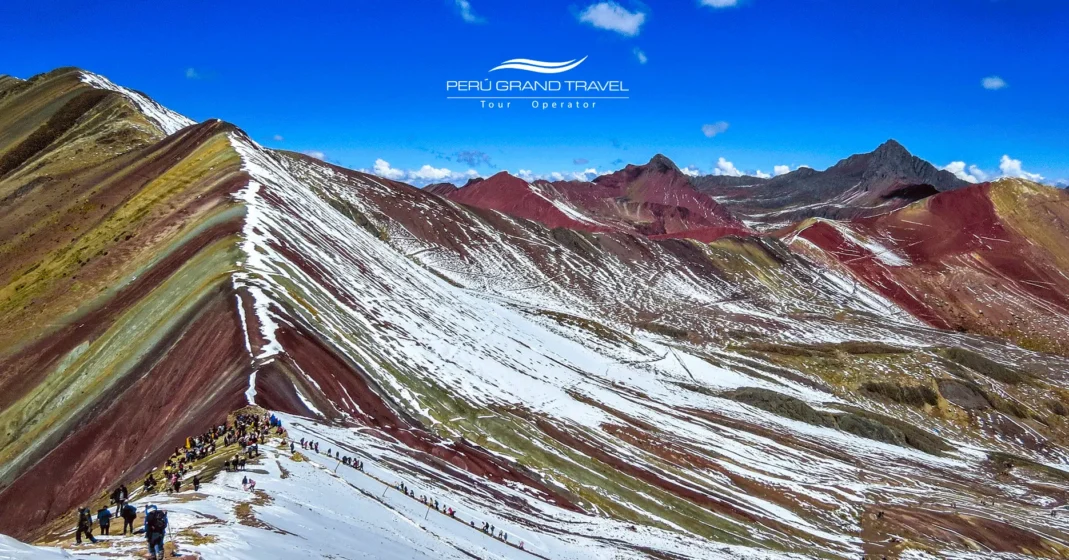
Locals call it Vinicunca; we call it Rainbow Mountain. This stunning natural peak sits high in the Andes south of Cusco. The mountain is famous for its vivid bands of colour that streak across the landscape in shades of red, orange, yellow and green. The first time you see it, it almost looks unreal. Photographs hardly seem to do it justice, particularly when the colours stand out against the surrounding peaks and wide-open valleys.
What many visitors to Rainbow Mountain Peru do not realize is that these colours were hidden for centuries beneath a thick covering of snow and ice. It was only as the glaciers gradually retreated that the mountain began to reveal the colourful mineral layers underneath. Before long, images of Vinicunca started appearing across social media and travel brochures around the world. Today, Vinicunca Rainbow Mountain has become one of the most popular day trips from Cusco, drawing travellers who want to see one of Peru’s most unusual landscapes firsthand.
Why Vinicunca Rainbow Mountain Became So Famous
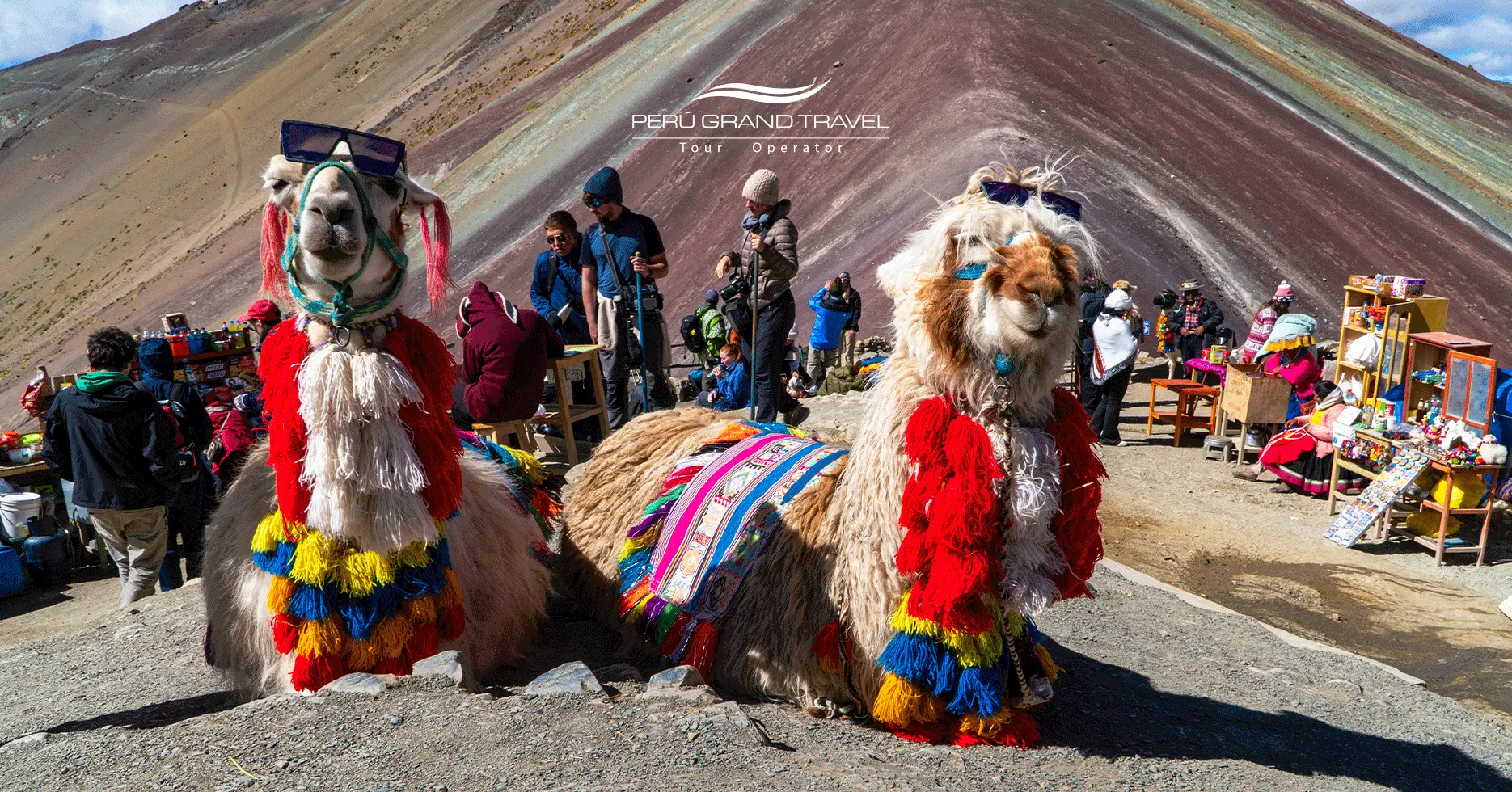
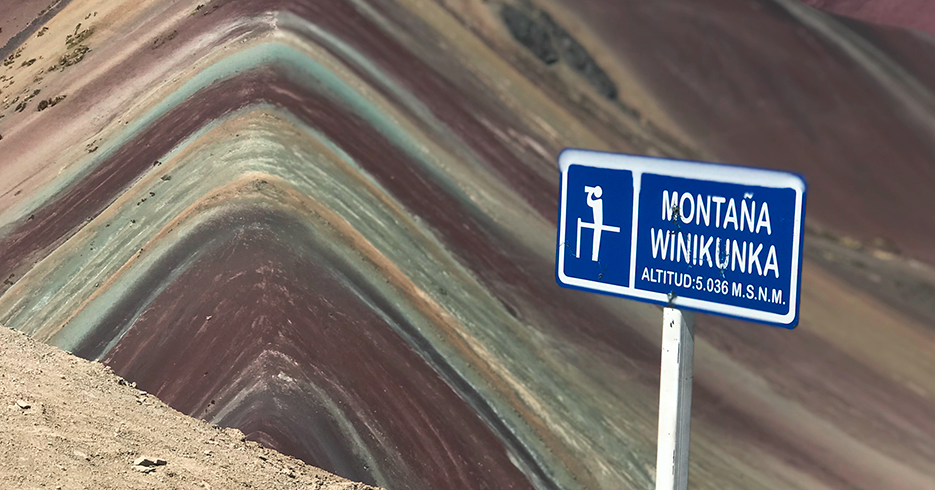
While photographs have helped make Rainbow Mountain Cusco famous worldwide, seeing it in person is a whole different experience. The colours are real, although how vivid they appear often depends on the weather and the light on the day. These striking layers were formed by a combination of minerals that have accumulated over millions of years. The result is a mountain unlike almost any other in the world.
Of course, photographs have played a major role in making Vinicunca famous. The mountain became something of a sensation online, with travellers sharing images that quickly spread across social media. Before long, visitors from around the world were arriving in Cusco specifically to see it for themselves.
Yet despite its popularity, standing in front of the mountain often feels different from what people expect. The colours are certainly impressive, but so too is the wider landscape. Massive valleys stretch towards the horizon, snow-capped peaks dominate the skyline, and herds of alpacas and llamas graze quietly across the high-altitude plains.
The Adventure of Getting to Rainbow Mountain Peru
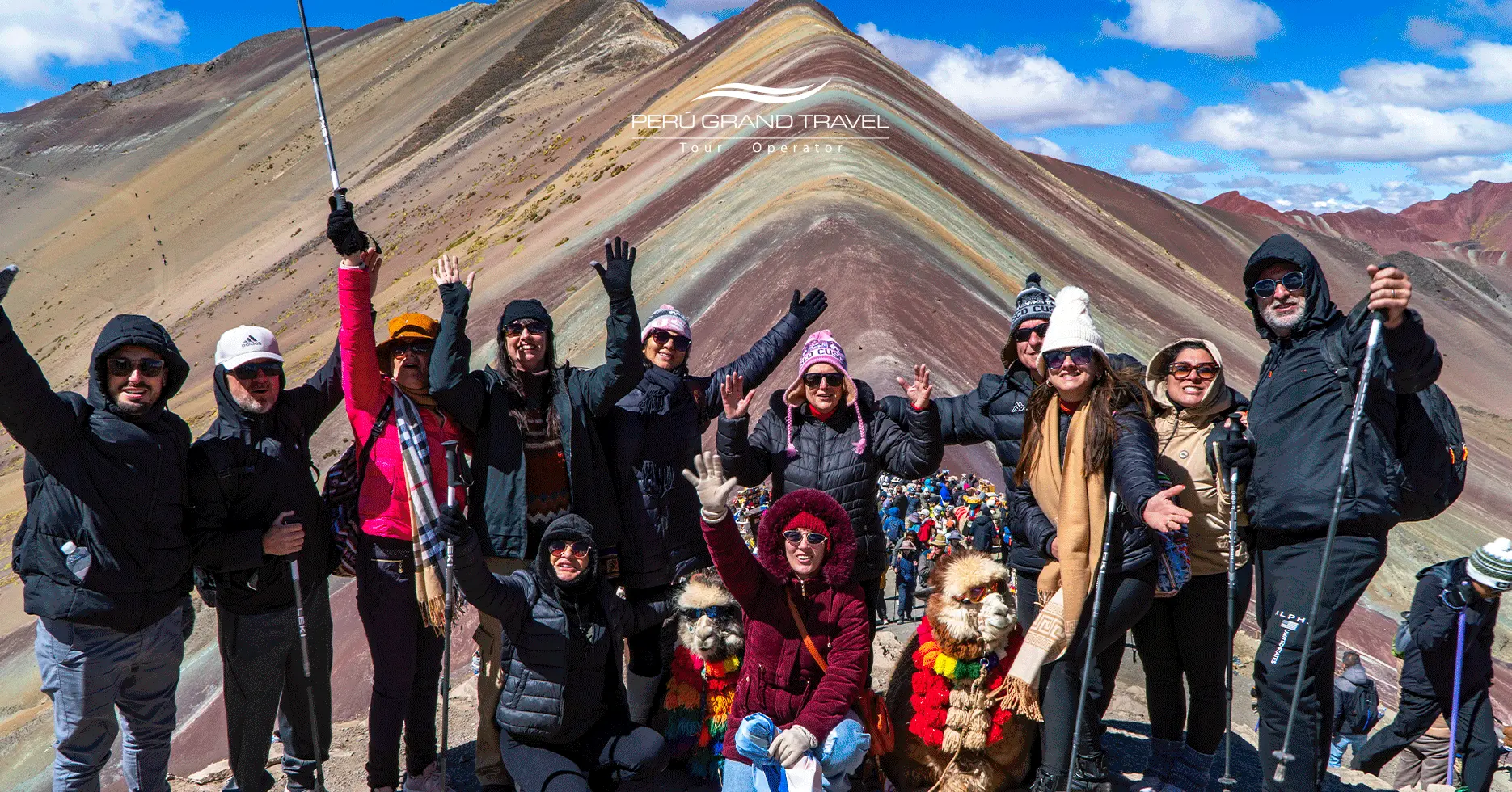
The main part of the adventure is simply getting there. Most travellers visit the Vinicunca Rainbow Mountain as a Rainbow Mountain Day trip. Tours generally begin very early in the morning, often when it’s still dark. The drive will take you south through rural communities and traditional farmlands where life is the same as it has been for generations. As you get further from Cusco, the paved roads give way to narrow mountain tracks and the scenery becomes increasingly dramatic. Towering snow peaks rise on either side of the route, while grazing alpacas appear almost everywhere around you.
The journey to Rainbow Mountain Peru, itself will show you a side of the Andes that many visitors never actually get to experience. Far away from the crowds of Cusco and the Sacred Valley, the mountains and Andean plains feel vast, open, and spectacularly remote.
The Vinicunca Rainbow Mountain Hike
One of the questions people ask most frequently is whether the Rainbow Mountain Trek is difficult. The answer depends less on the distance of the hike and more on the high altitude.
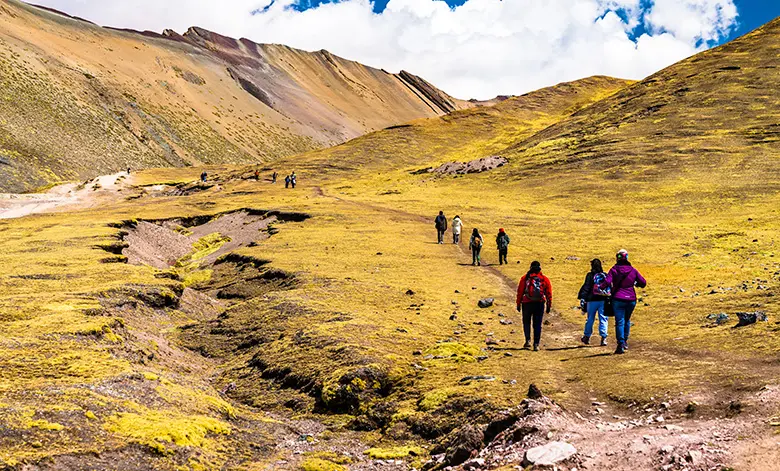
The Vinicunca Rainbow Mountain hike takes place at elevations exceeding 5,000 metres above sea level. Reasonably fit visitors often find themselves walking more slowly than expected. The air is noticeably less oxygen-filled, and steep sections of the trail can feel actually difficult to hike.
Luckily, the hike itself is relatively short compared to many of the other trekking routes in Peru. Most trekkers to Vinicunca Rainbow Mountain complete the walk in just a few hours, stopping regularly to admire the scenery and catch their breath.
As you climb higher, the scenery becomes increasingly dramatic. Rolling red valleys give way to colourful mountain slopes, while glaciers and snow-covered peaks remain visible in the distance. Then, all of a sudden, the mountain appears before you.
After hours of anticipation, you finally reach the viewpoint overlooking Vinicunca Rainbow Mountain, and it is usually at this moment that the cameras come out to catch that all-important photo!
This Peak Is So Much More Than Just a Colourful Mountain
While the colours of Rainbow Mountain Cusco generally receive most of the attention, there is much more to this region than a single viewpoint that overlooks Vinicunca. The mountain is found within a spectacular section of the Andes where traditional communities continue to farm alpacas and llamas much as their ancestors did all those centuries ago. Many local families still wear traditional clothing, and Quechua is still the most spoken language in many local communities v
The mountains around Vinicunca are not just a stunning part of the local scenery. Throughout the Andes, many communities believe that the highest peaks are Apus, sacred mountain spirits that watch over the people who live below them. This connection between people and the landscape remains an important part of Andean culture today and helps explain the deep respect that local communities continue to have for the surrounding mountains.
Visiting Rainbow Mountain Peru, therefore offers more than a photographic opportunity. It also provides insight into a living culture where ancestral traditions are still a mainstay of everyday life.

Vinicunca Rainbow Mountain and Ausangate
One of the most impressive features visible from the region is the Ausangate Mountain, the highest peak in the Cusco region. Rising above the surrounding landscape, Ausangate dominates the horizon and provides a dramatic backdrop to the colourful terrain around Vinicunca.
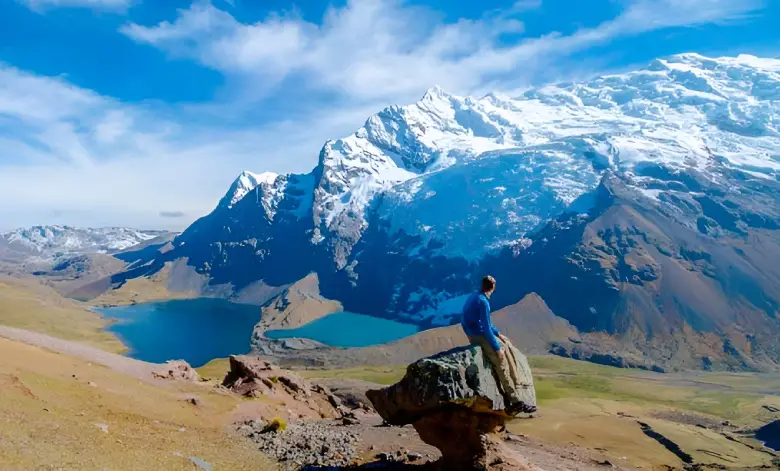
For many local communities, Ausangate is among the most sacred mountains in Peru. It also forms part of the famous Ausangate Trek, one of the country’s most spectacular multi-day hiking routes. Many travellers are surprised to discover just how close Vinicunca Rainbow Mountain lies to Ausangate. Together, they create some of the most extraordinary scenery anywhere in the Peruvian Andes.
Rainbow Mountain Altitude: What You Need to Know
A Rainbow Mountain tour will take you to a whopping 5,200 metres (17,060 feet) above sea level. This is considerably higher than Cusco itself and high enough for visitors to suffer from the high altitude. Even people who have already spent a few days exploring Cusco can sometimes find the hike trickier than expected.
Altitude sickness, known locally as soroche, can affect anyone regardless of age or fitness level. Some people only experience shortness of breath, while others may develop headaches, dizziness, nausea, or fatigue. The reality is that everyone reacts differently to high altitude, which is why it is impossible to predict exactly how you will feel on arrival at extremely high elevation.
For that reason, we always recommend spending at least a couple of days in Cusco or the Sacred Valley before attempting the Vinicunca Rainbow Mountain hike. Giving your body time to adjust to the altitude can make a huge difference and will generally make the experience much more enjoyable. Staying hydrated, avoiding excessive alcohol, and eating lightly before the hike can also help.
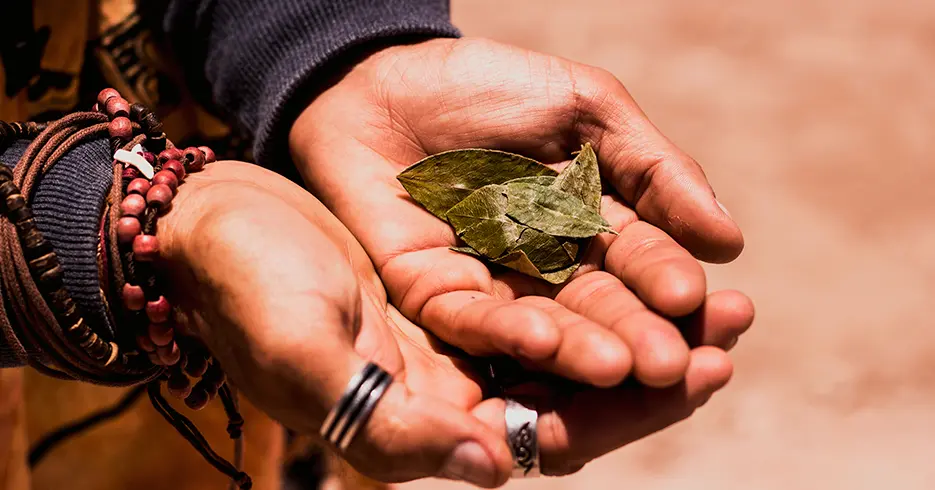
Many visitors choose to drink coca tea while acclimatizing. This traditional Andean remedy has been used for generations and remains a common sight in hotels and restaurants throughout the Cusco region. If you have any existing medical conditions, particularly heart or respiratory problems, it is always worth speaking with your doctor before travelling to Peru.
Although the Rainbow Mountain altitude is often what concerns visitors the most, the vast majority complete the hike without any serious issues. Taking things slowly, listening to your body, and allowing enough time to acclimatize are usually the most important factors in making your Rainbow Mountain tour a comfortable and memorable experience.
The Best Time to Visit Rainbow Mountain
The dry season, which generally runs from May through September, is considered the best time to visit Rainbow Mountain Peru. During these months, visitors are more likely to enjoy clear skies and better visibility. The colours of the mountain often appear particularly vivid under bright sunlight.
The rainy season can bring cloud cover, muddy trails, and even occasional snow, although the mountain remains accessible for much of the year.
Regardless of when you visit, weather conditions can change quickly at high altitude. Layers, waterproof clothing, and sun protection are always recommended.
Is Vinicunca Rainbow Mountain Worth Visiting?
Some travellers wonder whether Vinicunca Rainbow Mountain lives up to the photographs.
For most visitors, the answer is yes. The colours are impressive, but what tends to surprise people most is the scale of the surrounding landscape. Endless valleys, grazing alpacas, distant glaciers, and towering peaks combine to create an experience that feels distinctly different from other attractions in Peru. At the same time, the journey provides access to a remote section of the Andes where traditional ways of life remain visible.
For those of you who are looking for something more remote and off the beaten path, a Rainbow Mountain tour from Cusco offers a fascinating combination of natural beauty, cultural interaction, and spectacular scenery in the Andes of Peru.
Whether you are travelling independently or as part of a longer tour with Peru Grand Travel, Vinicunca remains one of the most memorable experiences in the Cusco region.

Why Vinicunca Rainbow Mountain Deserves a Place on Your Peru Itinerary
Peru is filled with iconic destinations. Machu Picchu, the Sacred Valley, Lake Titicaca, and the Amazon all deserve their reputation. Yet Vinicunca Rainbow Mountain offers something entirely different. It is a place that few people knew existed just a generation ago. A mountain hidden beneath snow for centuries has become one of the country’s most recognizable landscapes. At the same time, the surrounding communities continue to preserve traditions, customs, and ways of life that remain deeply connected to the Andes.
For those travellers looking to enjoy both extraordinary scenery and authentic highland culture, it is easy to understand why Rainbow Mountain has become one of Peru’s most sought-after destinations.
FAQs About Vinicunca Rainbow Mountain
How difficult is the Vinicunca Rainbow Mountain hike?
Most people focus on the distance, but the altitude is usually the biggest challenge. The trail itself is not particularly technical, and there are no sections that require climbing. The difficult part is that you are walking at over 5,000 metres above sea level. Even people who consider themselves reasonably fit often find themselves stopping to catch their breath. Taking a couple of days to acclimatize in Cusco beforehand makes a huge difference.
Is Rainbow Mountain Peru worth visiting?
That really depends on what you enjoy. If your idea of a perfect day involves history and archaeology, you may prefer spending another day exploring the Sacred Valley. However, if you enjoy dramatic mountain scenery, remote landscapes, and getting out into the Andes, it is easy to see why Vinicunca Rainbow Mountain has become so popular. The mountain itself is impressive, but the surrounding scenery is often what surprises people most.
What is the altitude of Rainbow Mountain Peru?
Rainbow Mountain sits at approximately 5,200 metres above sea level, making it one of the highest excursions that most visitors undertake during their time in Cusco. It is considerably higher than Machu Picchu and even higher than the city of Cusco itself, which is why acclimatization is so important before attempting the hike.
Can you visit Rainbow Mountain on a day trip from Cusco?
Yes, and that is how most people visit. Tours leave Cusco very early in the morning and return later the same day. It makes for a long day, but unless you are planning to continue towards Ausangate, there is generally no need to spend the night in the area. For many visitors, a Rainbow Mountain tour from Cusco fits easily into a wider Peru itinerary.
What is the best time to visit Vinicunca Rainbow Mountain?
The dry season, which runs roughly from May to September, is generally considered the best time to visit Vinicunca Rainbow Mountain. Clear skies tend to bring out the colours more vividly, and there is less chance of rain turning the trail muddy. That said, the Andes rarely follow a strict schedule. Even during the dry season, weather can change quickly, so it is always worth bringing layers and being prepared for cold temperatures, particularly in the early morning.
Why is Rainbow Mountain Peru so colourful?
The colours come from different mineral deposits that formed over millions of years. While the geology is fascinating, most visitors are more interested in the end result than the science behind it. What matters is that the mountain really does display the bands of red, yellow, orange, and green that have made it famous. On a clear day, it is one of the most unusual landscapes you are likely to see anywhere in Peru.
Is Rainbow Mountain higher than Machu Picchu?
By quite a lot. Machu Picchu sits at around 2,430 metres above sea level, while Rainbow Mountain reaches approximately 5,200 metres. That difference explains why altitude is rarely a major issue at Machu Picchu but can be a challenge on a Vinicunca Rainbow Mountain hike. It is also why spending a few days acclimatising in Cusco beforehand is strongly recommended.
Can you ride a horse to Rainbow Mountain?
Yes. Local residents offer horses for hire along much of the route, which can be helpful for visitors who are struggling with the altitude or simply do not feel confident completing the entire hike on foot. The horses do not usually take you all the way to the viewpoint itself, and there is still a short uphill walk at the end, but they can make the journey considerably easier.

Experiences

Machu Picchu Challenge 8D/7N
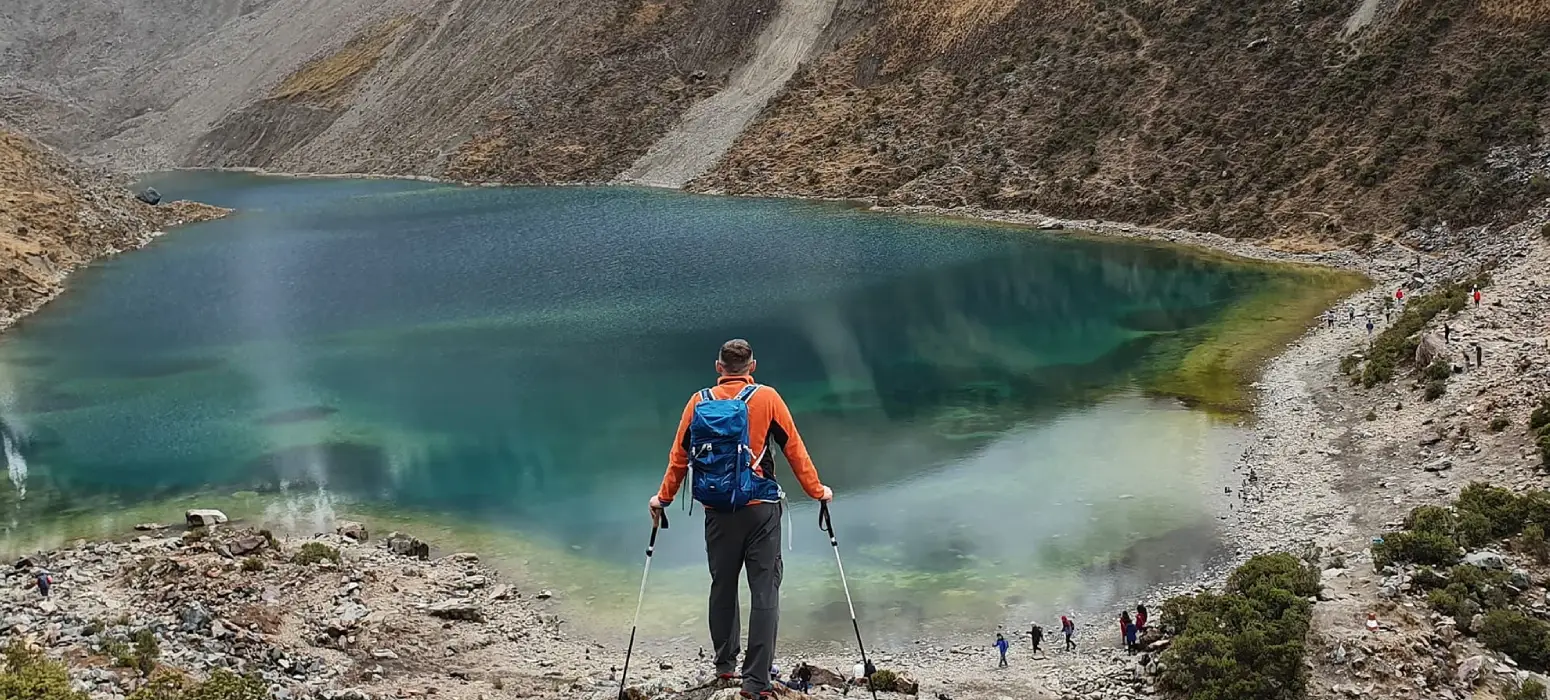
Cusco, Sacred Valley Humantay Lagoon, Rainbow Mountain & Machu Picchu.
View Tour
Colonial Lima and Sacred land of the Incas 7D/6N
Lima, Cusco, Sacred Valley & Machu Picchu.
View Tour