

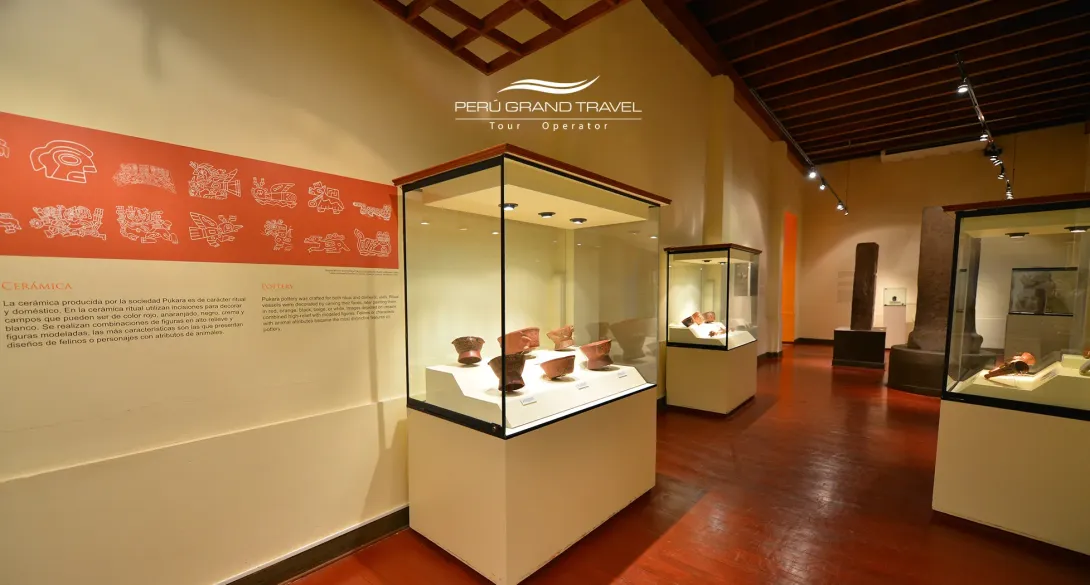
Museums in Puno do not promise spectacle. They offer something better. Within a few blocks, ancient cultures, colonial life, republican memory, and the everyday pulse of the Altiplano intersect.
Puno cannot be understood just by looking at the lake. It begins to make sense when you step into its small rooms, its precise display cases—places where the city stops being a “stopover” and becomes history.
Museums in Puno do not promise spectacle. They offer something better. Within a few blocks, ancient cultures, colonial life, republican memory, and the everyday pulse of the Altiplano intersect.
Those who arrive in a rush usually skip them. Those who enter, leave differently. After a museum visit, Lake Titicaca is no longer just water—it is route, border, trade, family, ritual.
This guide brings together the must-visit museums in Puno and one key day trip to complete the picture. No filler. Only what you need to visit better.
Best museums in Puno
- Museo Municipal Carlos Dreyer: the essential overview of cultures and historical periods, clearly presented in the city center.
- Yavarí Museum Ship: a 19th-century iron steamship turned into a story about Lake Titicaca.
- Coca and Customs Museum: coca, traditional clothing, and dances; everyday culture in a compact format.
- Naval Museum of Puno: navigation on Lake Titicaca, models, and artifacts; ideal between tours.
- Pukara Lithic Museum: stone sculptures, stelae, and an early Altiplano civilization on the route toward Cusco.
Museo Municipal Carlos Dreyer: Puno’s essential collection
You walk in expecting “a small museum” and walk out with a clear idea: Puno is not just a stopover. It’s a crossroads of time, and the Carlos Dreyer Museum shows that without exaggeration.
Inside, you’ll find pre-Inca and Inca pieces, colonial objects, traces of the republican era, and local art. Not everything shines like in a major capital’s museum, but almost everything does what matters most: it explains.
The real value is what it leaves in your mind: order. Later, when you see dances, textiles, or the islands of Lake Titicaca, you’re no longer looking just “because it’s pretty.” You’re looking with context.
Where is the Museo Municipal Carlos Dreyer located?
This museum has a very clear advantage: it’s right in the city center, exactly where most people already pass.
It’s just a few meters from the main square and close to the cathedral, so there’s no need for transport or extra planning. In that area, everything is done on foot.
And in Puno, walking is part of the trip—the city sits at high altitude, and you feel it. Puno is about 3,850 meters above sea level, and that fact changes your pace more than any advice ever will.
How long does a visit to the Museo Municipal Carlos Dreyer take?
It’s an ideal museum for those who want to understand the Altiplano without long explanations.
It’s especially helpful before visiting Uros or Taquile, because it allows visitors to look with more awareness and attention to detail.
- If you’re short on time, the visit can take 45 to 60 minutes.
- If you explore calmly and with curiosity, it’s better to allow around 90 minutes to make the most of it.
Yavarí Museum Ship: the most unusual museum in Puno
At first, it seems like just a boat. But the Yavarí quickly changes that impression: it isn’t “a pretty ship,” it’s a lesson in engineering, history, and life on the lake.
This museum ship tells the story of the Yavarí and the Lake Titicaca fleet in the 19th and early 20th centuries. It explains routes, cargo, transport, and how modernity reached a place where movement was never simple.
Some museums display objects.
The Yavarí presents an idea: how an isolated world became connected.
Where is the Yavarí Museum Ship and how to get there?
The Yavarí Museum Ship is located in Puno, on Lake Titicaca, in the pier area. Official information places it at Muelle PeruRail, Lake Titicaca (Puno).
How to get there (easy)
- From the Plaza de Armas: the simplest option is to take a taxi to Muelle PeruRail and ask for “Yavarí Museum Ship.” It’s a short ride within the city.
- On foot: it’s possible to walk from the city center toward the port/malecón area and locate the pier (the walk depends on your pace and the altitude).
- Alternative reference: some guides mention it as anchored near Isla Esteves, at the pier of Hotel Sonesta Posada del Inca, on Av. Sesquicentenario N° 610.
Opening hours and the exact access point may vary, so it’s advisable to confirm on the same day.
Visiting recommendations
It is recommended to confirm on the same day. In destinations where operations are dynamic, a “fixed schedule” can change.
The museum’s official information includes opening hours and contact details (phone and email). Checking it or sending a message before visiting helps avoid wasted time.
It’s also worth paying attention during the visit: the guided tour often makes a real difference. Without a guide, the ship is just an object. With a guide, it becomes a story.
Coca and Customs Museum: everyday culture, clothing, and traditions
This museum does something useful. It explains the coca leaf from its traditional use and its role in daily life. It also presents regional clothing and dances.
It is not a large museum. It is direct and focused.
It’s not a place to be amazed. It’s a place to better understand what you will later see in the streets, at festivals, and in local markets.
Ideal for cultural context before island tours
This museum works well as a quick preparation before heading to the lake.
Islands such as Uros, Amantaní, or Taquile are more meaningful when there is some understanding of the culture—not just photos.
It’s a good option if there is limited time between tours.
It also works well for families: the visit is short and doesn’t feel overwhelming.
Recommended time for visiting the Coca Museum
It is a small museum and can be visited quickly. Many people go through it in 45 minutes or less, depending on their interest and pace.
Naval Museum of Puno: maritime history of Lake Titicaca
The Naval Museum leaves a clear idea: Lake Titicaca is not just scenery—it has also been a transportation route. Long before modern roads, the lake moved people, cargo, and stories.
Here, navigation on the lake is explained, from traditional boats to steamships. There are objects, models, and materials linked to the naval memory of Titicaca.
It’s not a museum to show off.
It’s for those who enjoy understanding how life functioned around the lake.
Location and visiting hours
It is well located and easy to include in a plan: Av. El Sol 725, Puno.
It usually opens in morning and afternoon hours, Monday through Friday, which makes it a good “between tours” stop.
If you return from the lake with free time, this museum helps make better use of it and end the day with context.
Day-trip museum: Pukara Lithic Museum
Pukara stays in memory because of its silence. The stone does not try to impress—it endures.
The Lithic Museum displays stelae, monoliths, carved pieces, ceramics, and other remains. It offers a look at the earliest Altiplano history, a past that began long before the most familiar tourist narratives.
The idea it leaves is clear: the southern Andes were never a “secondary” region.
They were a cultural core with their own identity.
How to include it: bus stops and route planning
The Pukara Lithic Museum fits very well into the overland route between Cusco and Puno. Many road services stop at cultural points along the way, and Pukara is often one of the most complete stops.
If the trip starts in Puno, it’s also possible to get there by traveling via Juliaca and then continuing to the town of Pukara.
The logic is simple: road travel, a short stop, a brief walk, and the museum.
Combine it with: Pukara ruins and a stop in the town
The visit works best when combined with a short walk through the town and, if time allows, with the Pukara ruins. It’s not about “doing more,” but about preventing the museum from feeling isolated—it makes more sense when connected to the place.
Pukara sits at high altitude, around 3,910 meters. For that reason, it’s best to take it slowly: drink water, walk at an easy pace, and take real breaks.
1-day itinerary for museums in Puno
Morning: Plaza de Armas and Museo Municipal Carlos Dreyer
It is recommended to start in the city center, since Puno is best understood on foot. The most practical route is Plaza de Armas, the Cathedral, and then the Carlos Dreyer Museum, when the mind is still fresh.
In the morning, the body usually responds better. The altitude also feels lighter when the pace is calm, without racing against the clock.
Midday: Coca and Customs or Naval Museum
At midday, it’s best to choose based on interest: everyday culture or technical history.
The Coca and Customs Museum works better for understanding traditions and symbols; the Naval Museum is more suitable for learning how life and transport functioned on the lake.
If traveling with family, it’s better not to schedule both in the same time block. A good day is measured by rhythm, not by quantity.
Afternoon: Yavarí
The Yavarí is best left for the afternoon, with extra time available. The pier, the lake, and visiting schedules often require flexibility.
The most practical step is to confirm the schedule and contact details on the same day.
And arrive with the right mindset: you’re not going to see “a boat,” you’re going to see history floating.
Practical tips before visiting museums in Puno
Opening hours and holidays: why confirming the same day is recommended
In Puno, many plans fall apart because of small details: opening hours, holidays, or last-minute changes. That’s why the safest option is to confirm on the same day.
For the Yavarí Museum Ship, the official information includes direct contact details. For other museums, a quick phone call is more reliable than assuming, “I think it’s open.”
Tickets, cash vs card, and documents
It’s advisable to carry some cash. Not out of distrust, but because some entrance fees or contributions are processed more quickly that way.
For example, some sources indicate that entry to the Naval Museum may be free. Even so, the most practical approach is not to assume—just confirm and move on.
Altitude and pace: Puno is high altitude, plan more slowly
Puno doesn’t “punish,” but it does set the pace. It forces you to walk more slowly, breathe more deeply, and choose calmly.
The altitude—around 3,850 meters in the city center—affects performance. If the goal is to enjoy the museums, the simplest approach works best: fewer rushes, more pauses.
Frequently asked questions about museums in Puno
What are the best museums in Puno to visit in one day?
The best museums in Puno to visit in one day are the Carlos Dreyer Municipal Museum, the Yavarí Museum Ship, and the Coca and Customs Museum. The first offers a clear overview of Altiplano history and archaeology; the second helps explain Lake Titicaca as a route and historical connection; and the third provides context about traditions, clothing, and local culture. If there is extra time, the Naval Museum of Puno can complement the visit with information about navigation on the lake.
Is the Yavarí Museum Ship open every day?
The Yavarí Museum Ship is not always open every day. Its schedule may vary depending on the season, weather conditions, and internal coordination.
For this reason, it is recommended to confirm on the same day before visiting, by checking the official information or contacting the museum directly to verify opening hours and availability.
Which museum in Puno is best for archaeology and history?
The most recommended museum in Puno for archaeology and history is the Carlos Dreyer Municipal Museum.
Its collection includes pre-Inca and Inca pieces, as well as colonial and republican-era objects, allowing visitors to understand the historical evolution of the Altiplano in a single visit. It is the most complete starting point for those seeking context before exploring Lake Titicaca and its islands.
Is the Coca and Customs Museum worth visiting?
Yes, it is worth visiting the Coca and Customs Museum, especially for those who want to better understand everyday life and traditions in the Altiplano.
It is a small museum with a short visit time, but it provides context about the traditional use of the coca leaf, as well as regional clothing and dances. It works well as a complement before visiting the islands of Lake Titicaca, helping visitors better interpret what they will see later.
What museum can I visit between Cusco and Puno?
The most recommended museum to visit between Cusco and Puno is the Pukara Lithic Museum.
It is located on the overland route between the two cities and is often included among the cultural stops along the way. Its collection features stone stelae and monoliths, as well as ceramics and pieces associated with the Pukara culture, one of the early civilizations of the Altiplano. It’s a short but valuable stop that adds historical context to the journey.
Are you ready to find your sanctuary?
Contact us today, and let’s plan your escape to the Sacred Valley.
We invite you to explore our Peru packages Your experience in Peru is just one step away. Contact us now and start living the unique adventure you’ve always dreamed of.
More information:
- Visit our English website: Peru Grand Travel
- Visit our Spanish website: Viajes Machu Picchu Tours
- Visit our Portuguese website: Machu Picchu Pacotes