

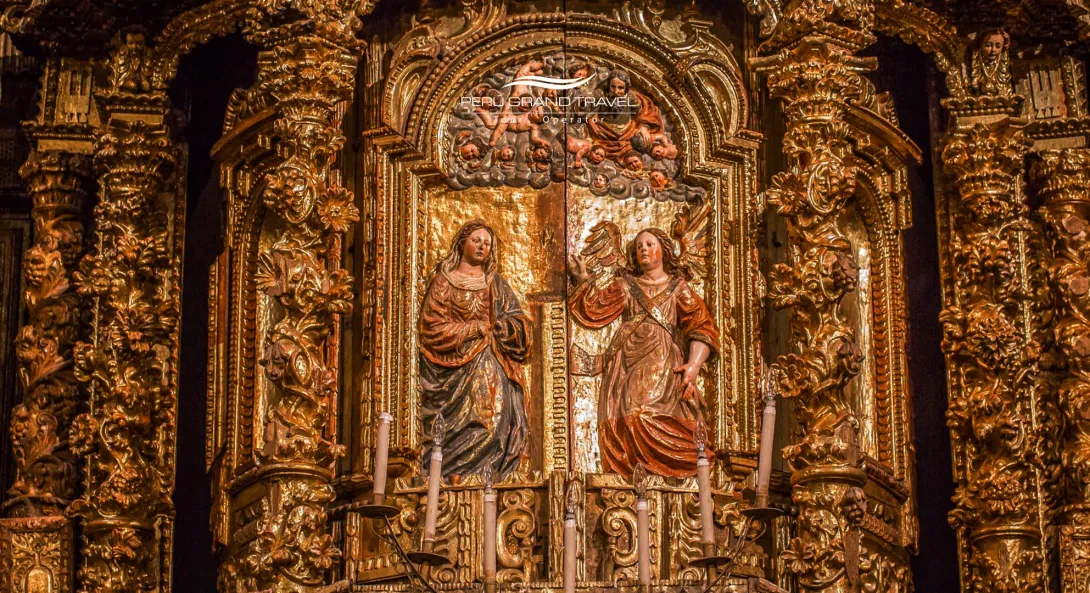
Experience the Andean Baroque Tour in Cusco. Visit Andahuaylillas, Huaro, and Canincunca. A complete guide to the Andean Baroque Route's hidden gems and sacred art.
Welcome, my dear traveler. If we were standing together in the main square of Andahuaylillas, breathing the crisp air of the South Valley, I would tell you that you are about to enter a secret world. From the outside, the adobe walls look simple, almost humble. But inside, there is an explosion of gold, color, and faith that rivals the cathedrals of Europe. This is the Andean Baroque Tour (Ruta del Barroco Andino).
While most visitors rush to the Inca ruins, the sophisticated traveler knows that the true soul of Cusco lies in its colonial heritage. Here, indigenous masters took European art and made it their own, creating a style known as “Andean Baroque.” It is a visual language of resistance, beauty, and syncretism.
As your host, I invite you to explore these hidden temples with me. We will explore the “Sistine Chapel of the Andes,” discover why angels carry arquebuses, and understand the deep spirituality that still vibrates in these walls. Let’s unlock the doors to the past.
What is the Andean Baroque Tour? | Andean Baroque Route
The Andean Baroque Tour is an exclusive cultural circuit that takes you away from the crowds of the city and into the serene South Valley. It connects four masterpieces of colonial religious art:
- The Church of the Company of Jesus (in Cusco city).
- The Church of San Pedro Apóstol in Andahuaylillas.
- The Church of San Juan Bautista in Huaro.
- The Chapel of the Virgin Purified in Canincunca.
The Experience: It is intimate. You are not just seeing churches; you are witnessing how the Andean people interpreted Christianity through their own worldview (cosmovisión). The murals are not just decoration; they are stories painted in pigments made from cactus and earth.
For a broader understanding of religious architecture in the country, I invite you to read our pillar guide on Churches in Peru 2026.
DID YOU KNOW?
Social Impact: The ticket for the Cusco Baroque Tour directly supports the “Sempa” association, which funds dining halls for low-income children in the region. Your visit feeds both your soul and the community.
1. Temple of the Company of Jesus of Cusco | The Starting Point
Before leaving the city, the Andean Baroque Tour begins right in the Plaza de Armas. The Church of the Company of Jesus is the boldest statement of the Jesuits in the Andes.
- The Facade: Look closely at the stone carving. It is like lace made of granite. It is considered the finest example of stone baroque in the Americas.
- The Interior: The main altar is a towering cascade of cedar wood covered in gold leaf. It is designed to overwhelm the senses with its brilliance.
Visiting this temple sets the standard for what you will see in the rural villages, but on a grander, urban scale.
Did you know?
The Templo de la Compañía de Jesús was built on the remains of the Amarucancha, the palace of the Inca Huayna Cápac. This layering of Spanish gold over Inca stone is a recurring theme you will discover throughout your Andean Baroque Tour.
2. Chapel of the Purified Virgin of Canincunca | The Chapel by the Lake
This is the hidden gem. Often overlooked by rushed tours, but essential for the complete experience of the Andean Baroque Tour. It sits on a hill overlooking the Urcos Lagoon.
- The Atmosphere: It’s smaller, more intimate. This chapel was built on an ancient administrative site of the Wari culture, and as you stand in its doorway looking out at the Urcos Lagoon, you can feel that sacred energy still lingering in the air.
- The Art: The walls are decorated with textile-inspired patterns (floral motifs and geometric shapes) that mimic the famous Andean fabrics. It feels warm and steeped in tradition.
This detail is one of the purest expressions of “Mestizo Baroque” that you’ll see on any Andean Baroque Tour, demonstrating that churches in Peru were not only centers of faith, but also canvases where local artists expressed their own identity and love for their land.
3. San Juan Bautista de Huaro Temple | The Vision of Hell
Just a few minutes further south lies Huaro. If Andahuaylillas is about majesty, Huaro is about message.
- The Artist: The murals here were painted by Tadeo Escalante, a master of the Cusco School.
- The Theme: The “Last Judgment.” The walls are covered in scenes of death, hell, and redemption that are visceral and dynamic. It was designed to scare and inspire.
- The Syncretism: Look for the details—the devils often have Spanish features, and the flora is distinctly Andean. It is a subtle political statement painted on holy walls.
The Andean Baroque Tour takes you here to show you the power of art as a tool for storytelling.
ADVICE GRAND
When you visit Huaro on your Andean Baroque Tour, take a moment to look at the silver ornaments. The silver was often brought from the mines of Potosí, symbolizing the immense wealth that fueled the construction of these churches in Peru.
4. Temple of San Pedro Apóstol of Andahuaylillas | The Sistine Chapel
This is the highlight. Located about 45 minutes from Cusco, this church is the reason many embark on the Andean Baroque Tour.
- The Surprise: The contrast is shocking. A modest adobe exterior hides an interior where every single inch is covered in polychrome frescoes, gold leaf, and mirrors.
- The Murals: They depict the path to heaven and hell with vivid, sometimes terrifying detail, used to teach the indigenous population.
- The Baptistery: Look for the archway with the inscription “I baptize you” written in five languages: Latin, Spanish, Quechua, Aymara, and Puquina (a lost language). It is a linguistic treasure.
Standing under the painted Mudejar-style ceiling is a moment of pure artistic awe.
ADVICE GRAND
No Photos: Photography is strictly prohibited inside Andahuaylillas to preserve the centuries-old pigments. Buy the professional guidebook or simply use your eyes to imprint the memory.
Who is this tour for? | Type of Experience
The Andean Baroque Tour is not for everyone. It is for the traveler who:
- Loves Art & History: You appreciate the details of a fresco and the story behind a gold-leaf altar.
- Seeks Quiet: You want to escape the busy streets of Cusco and see the rural life of the South Valley.
- Values Culture: You are interested in how the Incas survived through their art within the Catholic church.
It is a slow, contemplative journey. It pairs perfectly with a morning visit to Tipón or Pikillacta.
IMPORTANT FACT
Altitude: The tour stays around 3,100 – 3,200 meters (similar to Cusco city). It involves very little walking, making it perfect for acclimatization days.
What tickets do you need for the Andean Baroque Tour?
Unlike the archaeological sites, these churches are not included in the general “Boleto Turístico del Cusco.” They belong to a separate circuit managed by the Jesuit order.
- The Integral Ticket: You can buy a single ticket (Boleto del Circuito Religioso) that covers entrance to the three rural churches: Andahuaylillas, Huaro, and Canincunca.
- La Compañía: Often requires a separate entry or is part of a city-specific religious ticket.
- Where to buy: You can purchase the ticket at the entrance of the first church you visit (usually Andahuaylillas) or at the La Compañía church office in Cusco.
At Peru Grand Travel, we handle these logistics for you, ensuring your tickets are ready so you can walk straight in.
How to dress for the Andean Baroque Tour?
These are active places of worship, deeply respected by the local community.
- Respectful Attire: No shorts or sleeveless tops. It is not strictly enforced like the Vatican, but it is appreciated.
- Layers: The South Valley can be warm in the sun, but the interiors of the thick adobe churches are cool. Bring a light jacket or a pashmina.
- Hats: Remove your hat before entering the church.
With what tours can I combine the Andean Baroque Tour?
The Andean Baroque Tour usually takes a half-day (morning or afternoon). To make it a full day of exploration, combine it with:
- Tipón | Inca Water Temple: A masterpiece of hydraulic engineering located nearby. The sound of flowing water is the perfect prelude to the art of the churches.
- Pikillacta | Wari City: A massive pre-Inca geometric city. It offers a stark contrast to the baroque curves.
- Gastronomy in Saylla/Tipón: Stop for lunch to try the famous Cuy al Horno (baked guinea pig) or Chicharrón (pork). It is the culinary heart of the valley.
This combination gives you Pre-Inca, Inca, Colonial, and Living Culture in one day. If you are a fan of churches in Peru, you might also consider adding a visit to the Cusco Cathedral on a different day to compare styles. For the high-luxury traveler, the Andean Baroque Tour can be paired with a private lunch overlooking the Vilcanota River, providing a quiet, “Grand Class” conclusion to your morning of discovery.
Why is the Andean Baroque Tour a “Must”?
My friend, you can see Inca stones everywhere. But seeing the Andean Baroque Tour shows you the survival of the Andean spirit.
You see the indigenous faces painted on the angels. You see the mountain gods hiding in the altars. You see the resilience of a culture that refused to disappear.
It is beautiful, yes. But it is also profound.
At Peru Grand Travel, we provide guides who are scholars of this history. They don’t just point at paintings; they decode the hidden messages for you.
Frequently Asked Questions | FAQ
How long does the Andean Baroque Tour take?
The classic route visiting Andahuaylillas, Huaro, and Canincunca takes about 4 to 5 hours (half day). If you add lunch and Tipón, it becomes a full day.
Can I take photos inside the churches?
No. Photography is strictly prohibited inside the churches of Andahuaylillas, Huaro, and Canincunca to protect the artwork. You can take photos of the exteriors and landscapes.
Is the Andean Baroque Tour included in the Boleto Turístico?
No. It requires a separate ticket (Circuit of the Andean Baroque). The Boleto Turístico covers archaeological sites like Tipón and Pikillacta, but not these churches.
Is there much walking involved?
Very little. The vehicle takes you to the plaza of each town, and the churches are right there. It is suitable for all ages and fitness levels.
What is the best time to go?
Morning tours (starting at 8:30 AM) are great to see the churches before lunch. The afternoon light in the valley is also beautiful for photography outside.
Can I do this tour on my own?
You can take a local bus to Urcos and get off at the town, but the logistics of finding the caretakers to open the churches (if closed) and understanding the art without a guide make it difficult. A private tour is highly recommended for the full experience.
Why are there so many mirrors in the churches?
On your Andean Baroque Tour, you’ll notice many mirrors. The Spanish used them to represent “divine light,” but the Incas also associated them with the Sun God, Inti. It’s a perfect example of cultural fusion!
A Journey of Gold and Faith
The Cusco Baroque Tour is a journey into the heart of the syncretic Andes. It is where the gold of the sun god meets the gold of the altar.
Whether you are an art historian or simply a lover of beauty, this route will leave you breathless.
Are you ready to see the other side of Cusco?
Contact us today, and let’s plan your cultural escape to the South Valley.
For more inspiration on sacred sites, be sure to visit our main guide: Churches in Peru 2026.
We invite you to explore our Peru packages. Your experience in Peru is just one step away. Contact us now and start living the unique adventure you’ve always dreamed of.
More information:
- Visit our English website: Peru Grand Travel
- Visit our Spanish website: Viajes Machu Picchu Tours
- Visit our Portuguese website: Machu Picchu Pacotes