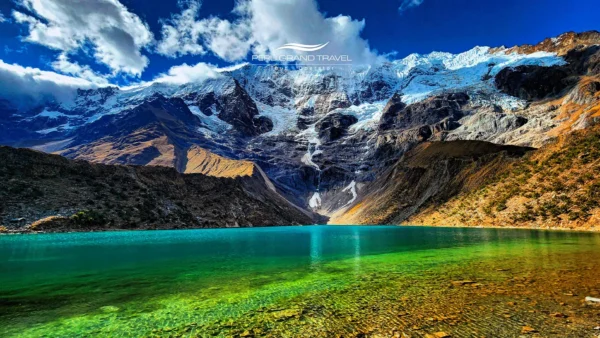
Many travelers arrive in the Sacred Valley with an overly simple idea: seeing it as a functional stretch between Cusco and Machu Picchu. In practice, that way of looking at it often leads to poorly planned itineraries, long days, superficial visits, and the strange feeling of having passed through an important place without fully understanding it.
Table of Contents
The problem is not minor. The Sacred Valley does not work well when it is reduced to a sequence of stops. It works when it is read as a territory with its own rhythm, distinct towns, lower and more manageable altitudes than Cusco, and a much more visible connection between landscape, agriculture, living history, and hospitality.
That is why talking about local experiences in the Sacred Valley should not mean listing pretty activities or photogenic scenes. It should mean something else: understanding what kind of contact with the place actually makes sense, which areas are worth prioritizing, how much time is really needed, and which mistakes tend to distort the experience from the very beginning.
Why do so many travelers get the Sacred Valley wrong?
The most common mistake is not logistical. It is conceptual. Many travelers think the Sacred Valley can be “done” in one day, as if it were a fixed and uniform excursion. It is not. It is a broad corridor, with towns that serve different purposes within the journey and with distances that, although they may not seem extreme, can completely affect the quality of the experience when combined poorly.
There is also another problem: many people travel with an accumulation mindset. More stops, more photos, more places checked off on the map. But in the Sacred Valley, seeing more does not always mean understanding more. Sometimes the opposite happens: the more packed the day is, the less readable the territory becomes.

The mistake of seeing it only as a stop on the way to Machu Picchu
Treating the Sacred Valley only as a stop before Machu Picchu weakens the journey in two ways. On one hand, the valley is reduced to a simple passage. On the other, Machu Picchu is visited without the context that helps make better sense of it.
Many of the things travelers later admire in Machu Picchu can already begin to be understood in the Sacred Valley: Andean agriculture, the relationship between mountains and settlement, the use of water, and the logic of the landscape. Passing through the valley without paying attention is like arriving at the most famous place of the trip without having properly read everything around it.
The Sacred Valley also has a practical advantage that many travelers overlook. It sits at a lower altitude than Cusco. While Cusco is around 3,399 meters above sea level, Urubamba is close to 2,871 meters, Ollantaytambo to 2,792 meters, and Pisac to around 2,972 meters. For someone who has just arrived, sleeping at a lower altitude can mean less fatigue and better rest.
When the trip starts in Cusco, moves quickly through the valley, and then continues straight to trains, transfers, or very early departures, the result is often the same: the body gets tired, attention drops, and the experience becomes more automatic than truly enjoyed.
What altitude, distances, and travel times really mean in practice
One of the most common mistakes is thinking the Sacred Valley is easy to explore just because it looks compact on the map. That is not always the case. The fatigue does not depend only on distance, but also on the combination of winding roads, stops, walks, entry times, and shifts in pace throughout the day.
That is why an itinerary in the valley should not be measured only in kilometers. It should be measured in real time, available energy, and the ability to enjoy each place without rushing.
| Route | Approximate distance | Estimated time |
| Cusco – Pisac | 35 km | 45 min to 1 hour |
| Cusco – Urubamba | approx. 53 km | 1 hr 20 min to 1 hr 40 min |
| Cusco – Ollantaytambo | approx. 72 km | 1 hr 45 min to more than 2 hours |
This has a practical consequence. A day that starts in Cusco, covers several points in the Sacred Valley, and then returns can lose a significant part of the day just in transfers.
If you also add long visits, lunch, market stops, archaeological sites, or a train connection, the route stops feeling fluid and starts to feel heavy.
Altitude, on the other hand, can work in your favor when the trip is well planned. For many travelers, spending time in the Sacred Valley before continuing on a more demanding route helps them adapt better than doing everything from Cusco. It does not completely eliminate altitude discomfort, but it can reduce fatigue.
The season also matters. Between November and March, rains can lengthen travel times. Between May and September, the weather usually makes transfers and walks easier, although demand is also higher and services often need to be booked further in advance.
In other words, this information is not useful only for informing. It helps you make better decisions. Understanding how long transfers actually take, which altitude is better for sleeping, and how packed the day will be helps build a trip that is more reasonable and less improvised.
What are local experiences in the Sacred Valley, really?
The term “local” is used often, but it does not always mean something real. Today, almost any activity can be presented that way. In the Sacred Valley, however, it only makes sense to speak of a local experience when there is a genuine connection to the land, to its rhythm, and to the culture that sustains it.
It is not enough to be in a rural setting or to include handicrafts, traditional food, or contact with a community. What matters is something else: whether that experience helps the traveler understand the place more clearly, or whether it simply uses that setting as a beautiful and quickly consumable scene.
The best local experiences in the Sacred Valley are not always the longest, the most expensive, or the most eye-catching. Very often, they are the ones that allow the valley to be seen more clearly. They help explain how people live there, how the land is worked, how water moves through the territory, how architecture changes from one town to another, and why certain crafts and trades still matter today.
The difference between a tourist activity and an experience connected to the land
A tourist activity can be well done, enjoyable, and even useful. But not every tourist activity is deeply connected to the place itself. The difference does not lie in the format, but in the level of relationship it has with the context.
For example, a textile workshop can be a valuable experience if it explains fibers, dyes, iconography, processes, and cultural continuity. It stops being so when it is reduced to a quick demonstration designed only to show color, allow for a photo, and encourage a sale.
The same happens with gastronomy. Eating in the Sacred Valley is not meaningful only because of the landscape. What matters is understanding which products come from that environment, how altitude and climate affect cultivation, and why certain ingredients remain part of the Andean tradition.
An experience connected to the territory leaves understanding behind. A tourist activity, by contrast, may leave only an image. The difference may seem small, but it changes the quality of the journey in a significant way.
How to recognize authentic options and avoid superficial versions
Many travelers make the mistake of looking for authenticity in signals that are too obvious. Traditional clothing, rustic décor, an emotional speech, or brief contact with a local family do not guarantee a meaningful experience on their own.
A better-designed experience usually shows something else. It has context, explains processes, does not force artificial closeness, and does not turn people into part of the scenery. Above all, it does not try to compress a complex culture into a quick and easy-to-consume scene.
It is also important to look at the balance between image and content. When the visual side carries more weight than the understanding of the place, the experience tends to become superficial. The same happens when something tries to appear authentic without explaining concrete elements such as techniques, materials, working times, or its relationship with the territory.
In practical terms, a more serious experience usually answers simple questions: who leads it, what knowledge it offers, how long it actually lasts, what level of participation it requires, and what part of the place it helps you understand. If that is not clear, it is likely offering less than it promises.
Which areas of the Sacred Valley are worth prioritizing?
One of the decisions that is most poorly handled in the Sacred Valley has less to do with budget than with perspective. Many travelers want to see everything without understanding that each area serves a different purpose. The result is usually an overloaded route, with rushed stops and too little time to truly understand each place.
Not every part of the valley serves the same function. Some areas are better for observing local life and markets. Others are more practical as a base for organizing the trip. And others require more time for the landscape, architecture, or local production to begin making real sense.
Pisac, Urubamba, and Chinchero: different profiles, different decisions
Pisac tends to attract travelers because of its market and archaeological site, but its value goes beyond those two points. It is a place where visitors can more clearly observe the relationship between daily life, the agricultural landscape, and Andean heritage. Visiting Pisac with enough time allows for a better understanding of how the valley still functions as a living territory, not just as a tourist setting. That is why it often works well as an entry point into the Sacred Valley for those seeking a first reading of the environment.
Urubamba offers a different kind of experience. It stands out less for a single attraction and more for its ability to slow the trip down. Its lower altitude compared to Cusco, its better connections to different parts of the valley, and its range of hotels and restaurants make it a good place to rest and move around with more balance. More than a place to “do many things,” Urubamba makes sense as a base for experiencing the valley at a slower pace and with a better-organized logistics.
Chinchero offers a more cultural experience, centered on visible traditions that are still rooted in the territory. The interest here often lies in textile work, agricultural memory, and the overlap between Andean heritage and colonial presence. It is not always the most comfortable place to stay, especially because of its altitude, but it can be a valuable visit for travelers who want to better understand certain local practices that still remain alive in the area.
Why Ollantaytambo matters beyond the train station
Ollantaytambo is often understood in a way that is too limited. For many travelers, it is simply the place where the train to Machu Picchu departs. That perspective greatly reduces its value and leaves out one of the most interesting stops in the Sacred Valley.
Its importance is not only logistical. Ollantaytambo brings together history, a walkable scale, and a very visible relationship between architecture, mountains, and daily life. Here, the town is not just a point of passage; it is a central part of the experience.
Walking through its streets makes it easier to understand its water channels, its ancient walls, and the continuity of an urban layout that still preserves features of the past. That gives the visit depth even before entering the archaeological site. And with a good guide, that reading becomes much clearer.
In addition, staying overnight in Ollantaytambo can be a very smart decision for travelers continuing on to Machu Picchu. It reduces transfers from Cusco, avoids part of the fatigue, and allows you to reach the train at a more manageable pace.
For that reason, Ollantaytambo should not be seen only as a departure point. It has value of its own and plays an important role in helping travelers better understand the transition between the Sacred Valley and Machu Picchu.

Which local experiences in the Sacred Valley make the most sense?
Not all local experiences offer the same value. Some help travelers better understand the Sacred Valley. Others simply fill the itinerary without adding real depth. The difference does not depend only on price or on the provider, but on something more basic: whether that activity truly helps explain the place.
When the choice is made well, the Sacred Valley stops feeling like a series of disconnected stops. It begins to read as a territory with its own meaning. The traveler understands better how people live there, how landscape, local production, and memory are connected, and why not every town should be experienced in the same way.
Textiles, agriculture, gastronomy, and short walks
Textiles in the Sacred Valley have real value when they are understood as part of a cultural system, not just as a visual demonstration. The fibers, natural dyes, patterns, and the way this knowledge is passed down all speak to a continuity that is still alive. The problem appears when the traveler expects only a quick, colorful, and easy-to-consume scene. In that format, the meaning loses strength.
A well-designed textile experience should explain materials, working times, techniques, and meanings. It is also useful to distinguish which parts of the process remain part of everyday life and which parts have been adapted for visitors. That distinction does not reduce the value of the experience. On the contrary, it helps make sense of it more honestly.
Agriculture offers another of the clearest ways to understand the valley. Here, the landscape is not just a beautiful backdrop. It is a productive structure. Understanding terraces, irrigation, ecological levels, and crop selection completely changes the way the environment is seen.
That has an important consequence. When the traveler understands the agricultural logic of the Sacred Valley, they also understand better why certain towns are located where they are, why some foods remain central, and why the terraces hold such historical value. What once seemed like scenery begins to take on function.
Gastronomy also becomes more meaningful when it is connected to that same logic. It is not enough to try local products. What matters is understanding why they exist there, how altitude and climate influence their cultivation, and how they relate to the Andean culinary tradition. In the valley, a good gastronomic experience does not need to be sophisticated. It needs context.
Short walks, finally, are often underestimated. Many travelers believe walking is only worthwhile if the route is long or demanding. But in the Sacred Valley, that is not always the case. Brief and well-chosen routes can reveal more than a day spent mostly in a vehicle. They allow travelers to notice changes in the landscape, the scale of the towns, the use of water, and the rhythms of daily life that are simply not perceived from inside transportation.
What these experiences actually add to the journey
The value of these experiences is not only in doing something different. It lies in correcting a superficial way of moving through the Sacred Valley. When chosen well, they add more substance to the journey and offer a layer of understanding that does not depend only on major archaeological sites or long transfers.
They also serve another important function: they help shape the rhythm of the itinerary. A well-planned trip does not need every day to have the same level of intensity. In Peru, it often works better to alternate more demanding days with others that are slower and more observational. In that sense, local experiences in the Sacred Valley add depth without always requiring long travel times or high physical effort.
They also prepare the traveler more effectively for what comes next. Machu Picchu is understood differently when one has already observed how Andean territory works on a smaller, closer scale. Stone stops being only something to admire. Slopes stop being only landscape. And the journey as a whole gains coherence.
That does not mean every local experience has value on its own. Some become unnecessary when they are inserted poorly into the itinerary or when they repeat the same content without offering a new perspective. That is why, in the Sacred Valley, choosing well matters more than doing more.
Which things to do in Ollantaytambo are truly worth your time?
In many itineraries, Ollantaytambo ends up underused. Travelers arrive, do a quick visit, wait for the train, or spend a night there without really paying attention to the place. That reduces much of its value. Few areas in the valley offer, within such a small space, such a clear combination of history, contemporary life, and a direct relationship with the surrounding terrain.
The question should not be only what to see in Ollantaytambo, but what truly deserves real time. Not everything requires the same level of attention. Some visits work well in an hour. Others lose meaning when done in a rush. Understanding that difference helps avoid a very common mistake: assuming that the entire town can be compressed into a tight schedule without losing something important.
The archaeological site, the living town, and the viewpoints
The Ollantaytambo archaeological site is one of the most physically demanding places in the valley for the average visitor. Not because of an extreme duration, but because of the combination of altitude, steps, and slope. The visit can take between 1 and 2 hours, depending on pace, level of interpretation, and how much time is spent stopping. For someone who has just arrived in the Andes, that effort often feels more intense than it appears in photos.
That means it is best to avoid two common mistakes: climbing without proper hydration or without a minimum level of acclimatization, and scheduling the visit at a point in the day already loaded with long transfers. The site is worth visiting, but it is much more rewarding when the body still has energy to spare.
The living town, by contrast, requires a different mindset. It is not about “doing” one specific activity, but about walking and observing. The urban layout, water channels, stone walls, narrow streets, and continuity of the settlement make Ollantaytambo one of the places where the past does not appear separated from present-day use. That coexistence is precisely what makes it so interesting.
For many travelers, this part ends up being more revealing than the archaeological site itself, as long as enough time is given to it. It does not demand major physical effort, but it does require attention. And that is often where those who arrive thinking only about the photo or the train tend to miss the point.
Viewpoints and areas such as Pinkuylluna add another layer. They are valuable, but not for everyone or at every moment. Their difficulty is moderate, with uphill stretches that can feel intense at that altitude. Total time can range from around 45 minutes to 1 hour and a half, depending on the route. The view is worth it, yes, but only when it fits well within the energy of the day. Forcing it into an already overloaded schedule usually reduces its value.
Common mistakes when visiting Ollantaytambo
The first mistake is treating it as a prelude rather than as a destination. That decision affects everything else. Travelers arrive late, visit in a rush, and leave without really understanding why the place matters.
The second mistake is underestimating the physical demands of the archaeological complex. For someone arriving from sea level or with little time to acclimatize, the stairways can change the tone of the day. It is not a serious issue, but it is something worth anticipating.
The third mistake is not separating functions. Some travelers try to visit the archaeological site, walk through the town, have lunch, and catch the train all within a short time window. In theory, it may fit. In practice, it leaves almost everything poorly resolved.
The fourth mistake is ignoring the advantage of staying overnight there. Spending the night in Ollantaytambo is not just a minor convenience. It can be a structurally better decision when the trip continues toward Machu Picchu. It reduces logistical stress and improves the overall rhythm of the itinerary.
Where should you stay to experience the Sacred Valley better?
Accommodation choices in the Sacred Valley are often made using criteria that are too superficial: the view, the category, the price, or the apparent closeness to certain points on the map. But staying in a well-located place does not only mean resting better. It means organizing the trip more intelligently, reducing logistical friction, and deciding from what kind of rhythm the territory will be experienced.
Many travelers book without thinking this through. They choose Cusco out of habit, or an isolated hotel in the valley because it looks appealing. In both cases, the problem appears later: unnecessary transfers, lost time, disconnection from local life, or the feeling of being physically in the destination while remaining operationally outside of it.

Staying in Cusco or staying in the valley: the real differences
Staying in Cusco has clear advantages. There are more hotels, more restaurants, more services, and a stronger sense of urban activity. It can also be a good option when the trip is focused on the city and the Sacred Valley only plays a minor role as a short visit.
But when the valley becomes a more important part of the itinerary, staying in Cusco all the time stops being as practical. Its altitude, around 3,399 meters above sea level, can feel more demanding during the first days. In addition, every trip to Pisac, Urubamba, or Ollantaytambo adds more road time and repeated transfers.
Staying in the Sacred Valley changes that dynamic. The lower altitude of places like Urubamba and Ollantaytambo often allows for more comfortable rest and a more gradual adjustment for many travelers. It does not completely remove altitude discomfort, but it can make the beginning of the trip easier to handle.
It also changes the way the destination is experienced. Instead of entering and leaving the valley as if it were an isolated excursion, the traveler begins to experience it with more continuity. That difference, although it may seem small, changes the trip in a meaningful way. The landscape stops being something you simply pass through and becomes part of the rhythm of the journey.
Ollantaytambo often works very well for travelers continuing on to Machu Picchu, because it reduces some of the logistical friction. Urubamba, on the other hand, tends to be a more flexible base for exploring different areas of the valley. The best choice depends on the itinerary. What matters is not assuming that Cusco will always be the most convenient base.
How to choose among luxury hotels in the Sacred Valley without becoming isolated from the surroundings
Luxury hotels in the Sacred Valley can greatly improve a trip, but they can also distance the traveler from what they came to understand. The most common mistake is assuming that a high level of comfort automatically guarantees a good location. That is not always the case.
A hotel may stand out for its design, spaciousness, or service and still be too isolated from the real rhythm of the valley. In those cases, rest is usually excellent, but mobility becomes less practical. The traveler depends more on transportation, loses time in transfers, and becomes disconnected from the everyday scale of the place.
That does not mean luxury is at odds with a well-planned experience. It means it is worth looking at more than just category. Location matters as much as comfort. Real proximity to walkable towns, train stations, archaeological sites, and cultural experiences also matters.
A good luxury hotel in the Sacred Valley should offer two things at the same time: high-level rest and intelligent integration into the itinerary. If it offers only comfort, it may become a pleasant but not very functional bubble. If it provides both, then it truly adds value to the trip.
It is also worth considering other factors: the altitude of the property, the level of quiet, the ease of early departures, and the kind of experience each traveler is looking for. Not everyone needs the same degree of isolation. For some, a more secluded property may work well as the final stage of the trip. For others, especially those who want to combine walks, cultural visits, and connections to Machu Picchu, a more integrated location will be the better choice.

What mistakes ruin the Sacred Valley experience?
The problem with the Sacred Valley is usually not a lack of attractions. It is, rather, an excess of poorly calibrated decisions. Travelers arrive with too many scattered expectations, underestimate the logistics, and end up moving through a complex territory as if it were a simple circuit.
The consequence is not always obvious in the moment. On the surface, the trip often seems to go well. Places are visited, photos are taken, stops are completed. But there is often a lingering sense that something was missing. As if something important had been there, but never fully came into focus.
Overloading the itinerary
This is probably the most common mistake. Trying to include too many places in a single day may seem efficient, but in practice it weakens the ability to properly read the territory. The Sacred Valley does not respond well to an accumulation mindset.
Each new stop adds more than just travel time. It adds entry time, fragmented attention, mental transition, and physical fatigue. When too many elements are packed into one day, the result is predictable: rushed visits, late lunches, less capacity to observe, and a constant feeling of running behind schedule.
This becomes even more problematic if the traveler is still adjusting to the altitude, if they are staying in Cusco and moving in and out of the valley, or if they need to connect with trains and fixed schedules. What looked like a “full” day ends up being a poorly paced one.
A better itinerary does not necessarily show less. It shows with better hierarchy. It decides what deserves depth and what can be left out without weakening the trip.
Choosing based on image rather than context
The second mistake is quieter, but just as damaging. Many travelers choose activities, towns, or accommodations based on how good they look in photos. That logic leads to weak decisions because it prioritizes surface over function.
An experience may look flawless and still add very little. A hotel may seem spectacular and still be poorly located. A town may not be the most photogenic and yet be the best base for understanding the valley or moving through it with less friction.
Choosing by context means asking less obvious questions: what this activity adds to the journey, what part of the territory it helps explain, how much time it really takes, what it demands physically, and how it connects with what comes before and after.
When those questions are not asked, the trip tends to be built on visual impulses. And the Sacred Valley, precisely, does not respond well to that kind of superficiality. It is a destination that cannot be understood by looking alone. It requires relationship, sequence, and judgment.
How can you plan a better trip through the Sacred Valley?
Organizing the Sacred Valley well does not depend on gathering more information, but on setting better priorities. Most mistakes appear when travelers try to give everything the same weight: culture, landscapes, rest, archaeology, gastronomy, trains, towns, and hotels. The trip improves when you decide what role the valley will play within the overall itinerary.
For some, it will be a transition stage before Machu Picchu. For others, it will be an area that deserves time in its own right. The problem is not choosing one option or the other. The problem is failing to understand the practical consequences of each.
When one day is enough and when it makes sense to stay longer
One day can be enough when the traveler has limited time, comes with a clear itinerary, and understands that they will only see part of the Sacred Valley. In that case, the most sensible choice is not to try to cover everything. It is better to choose two or three compatible places and explore them well.
It can also work when the valley is part of a smart transition within the trip. For example, leaving Cusco, visiting one or two meaningful places, and spending the night in Ollantaytambo before continuing to Machu Picchu. That kind of route can be very well planned, as long as it is not overloaded with too many stops.
Staying longer starts to make a difference when the traveler wants more than just a general overview. Two or three nights allow for a better distribution of the towns, the inclusion of local experiences with less pressure, and less dependence on constant vehicle transfers. They also help the body adjust more gradually to the altitude and allow for more consistent rest.
The difference between passing through for one night and staying longer is not just a matter of time. It changes the way the place is understood. When the Sacred Valley is rushed through, it functions like a route. When it is lived a little more slowly, it begins to function as a territory.
Why good guidance changes the quality of the journey
In the Sacred Valley, good guidance changes important decisions: where to stay, which places to prioritize, which combinations make sense, and how much time should be given to each area.
That matters because many variables are not obvious to someone visiting for the first time. On the map, everything looks close and simple. In practice, altitude, road times, train schedules, physical fatigue, and the order of the itinerary change the outcome considerably.
That is why local experiences in the Sacred Valley only work well when they are part of a coherent structure. It is not enough for them to be good on their own. They need to appear in the right place, at the right moment, and with the right rhythm.
The Sacred Valley is not understood by accumulating stops. It is understood by knowing how to read the territory. And that reading improves greatly when someone knows the region well, filters the options, and organizes the trip with sound judgment. That is where an expert agency can add value: not by filling the schedule, but by helping travelers avoid mistakes they often discover too late.
The Sacred Valley is best enjoyed when it stops being a rushed route and begins to be understood as a living territory. That is where every decision matters: where to stop, how much time to give each place, and which experiences truly add meaning to the journey. To experience it with better context, a better rhythm, and a more informed perspective, having the support of Peru Grand Travel can make a real difference.

Experiences

Machu Picchu Challenge 8D/7N
Cusco, Sacred Valley Humantay Lagoon, Rainbow Mountain & Machu Picchu.
View Tour
Colonial Lima and Sacred land of the Incas 7D/6N
Lima, Cusco, Sacred Valley & Machu Picchu.
View Tour